
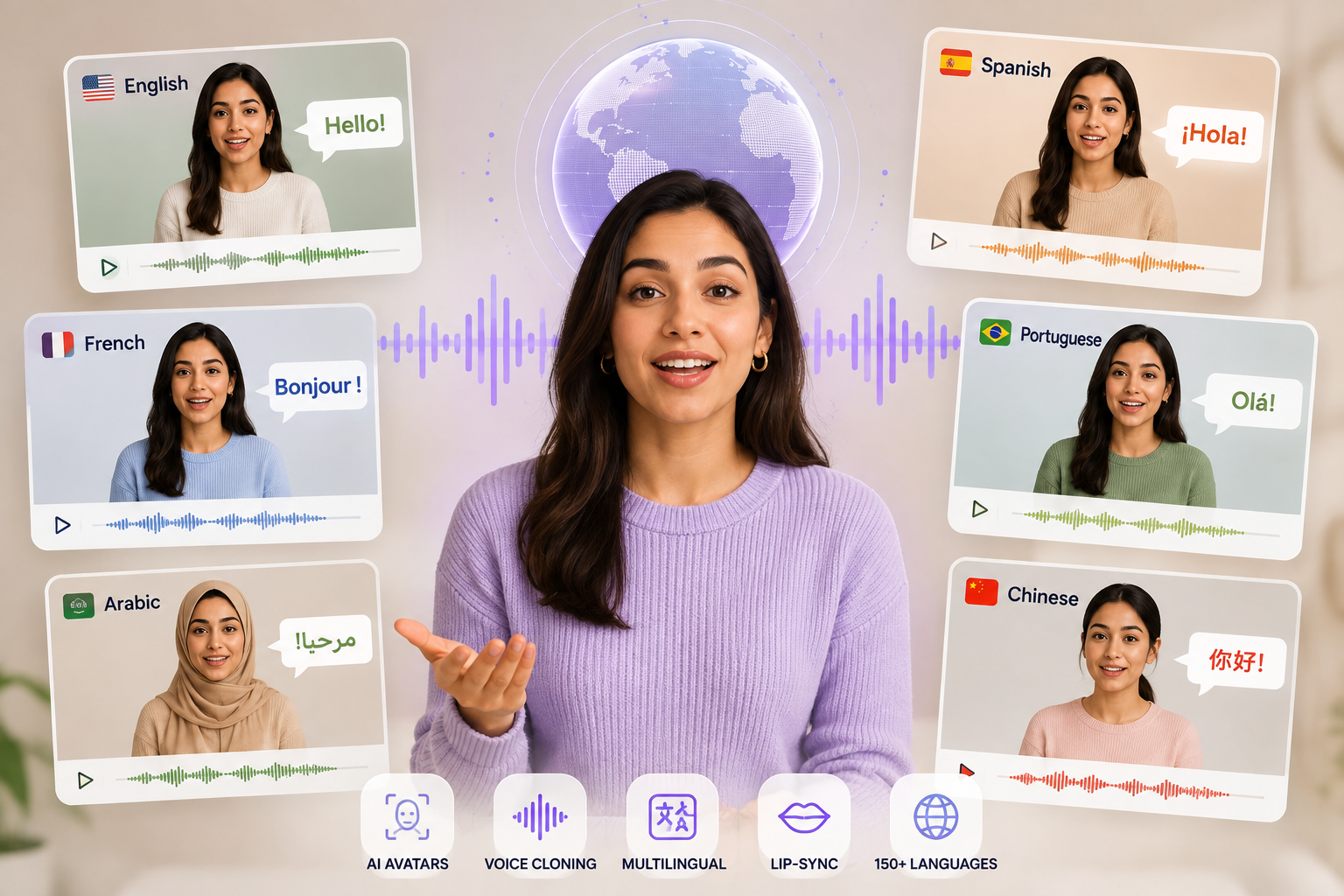
My cousin runs a small training company, and last month she showed me a video she’d recorded once in Urdu that somehow came out sounding fluent in Portuguese, mouth movements included. That’s basically the whole magic trick behind the top AI avatar tools for multilingual voiceovers everyone’s suddenly using.
Film once, type a script, get a dozen language versions without booking a single studio. I’ve poked around a handful of these platforms on actual paying projects, not just the polished demo reels, and the gap between “looks amazing in a sales pitch” and “survives a real deadline” is bigger than most write-ups let on. This one walks through what held up, paying close attention to voice cloning results and lip-sync timing, so you’re not the person discovering the flaws after the client’s already seen the draft.
Why This Suddenly Got So Much Simpler
Rewind five years and dubbing a video into six languages meant six separate bookings, six different voice actors, and a producer somewhere quietly losing it over sync timing.
That workload didn’t shrink because language models got better at grammar. It shrank because avatar generation and speech synthesis finally started running through the same pipeline instead of three unrelated vendors passing files back and forth.
Anyone shipping content across borders felt that shift immediately. Corporate trainers, course builders, marketing teams running the same campaign in five countries — they all used to eat the cost of reshooting for every single market. Most of that cost is just gone now.
It fits into a bigger pattern too. A lot of teams are stitching together broader AI automation stacks for their whole content pipeline, where video localization is just one piece connected to scheduling, distribution, and reporting tools running in the background.
What Separates the Good Tools From the Gimmicks

Every platform claims multilingual support somewhere on its homepage. Very few actually get the small details right that decide whether a video feels natural or slightly wrong in a way you can’t name.
Language count matters way less than people assume. Boasting 140 languages means nothing if the three you actually need — say, Vietnamese, Polish, and Arabic — come out sounding flat and mechanical. Check your actual target languages before you check the headline number.
Lip-sync precision is what breaks the illusion fastest. When a mouth closes on a vowel sound that doesn’t match what’s playing, viewers clock it within the first few seconds, even if they couldn’t explain why it bugged them.
Cloned voice accuracy determines whether the same presenter sounds consistent across five languages or like a stranger wearing their face. Some tools nail an English voice beautifully and mangle the German version. Test both before you sign anything.
Turnaround speed and per-minute pricing round things out. A platform producing gorgeous footage but charging by the second gets brutally expensive once you’re localizing an entire course library instead of one launch video.
Top AI Avatar Tools for Multilingual Voiceovers Worth Your Time
I’ve grouped these by strength rather than ranked them, because “best overall” stops meaning much once budget and use case enter the picture.
HeyGen
HeyGen’s whole identity is speed. Upload a script, pick a face, and it spits out a finished video without you ever stepping in front of a camera in the target language.
Users can pick from HeyGen’s language support, with the platform automatically translating scripts and generating matching voiceovers for global audiences. For teams pumping out dozens of localized clips monthly, that convenience is real, not just a bullet point in a pitch deck.
Where it wobbles a bit is longer content — expressiveness noticeably flattens past the two-minute mark. Great for short training clips, less convincing for anything emotionally weighty.
Synthesia
Synthesia leans corporate, and the polish reflects that. The avatars stay composed and consistent take after take, which matters when you’re producing compliance training nobody wants looking amateurish.
Synthesia’s voice library covers 160-plus languages, and the video player automatically plays back in whatever language the viewer prefers, so you’re managing one asset instead of a folder full of separate files per market.
Pricing sits toward the higher end, and customization feels more restrictive than some newer competitors. Still, for big organizations where reliability beats novelty, it earns the spot.
D-ID
D-ID lands in a comfortable middle zone — cheaper than the enterprise names, still respectable on lip-sync quality. Freelancers and small agencies gravitate here when they need multilingual output without an enterprise contract attached.
The avatar selection runs smaller than HeyGen’s or Synthesia’s, and voice options thin out fast once you move past major languages. For straightforward talking-head content in common languages, though, it gets the job done cheaply.
Colossyan
Colossyan built its whole thing around corporate learning specifically. Quizzes embedded directly into video, a script editor built for people who’ve never touched an editing timeline in their life.
Its multilingual output shines for the languages it prioritizes, mostly European ones, but coverage drops off outside that zone. Worth confirming your specific language list before assuming it’s covered.
Elai.io
Elai.io plays the budget card and mostly earns it. Converting slide decks straight into video is genuinely handy if your source material already exists as a bullet-point presentation somewhere.
Avatar realism trails behind pricier competitors, and it shows more in close-up framing. For social clips or internal updates where speed beats polish, that trade-off usually doesn’t matter much.
Hour One
Hour One built its reputation on presenters that look closer to filmed footage than animated characters. That realism carries into the multilingual versions too, which is genuinely rarer than the marketing suggests.
Cost runs high, and it leans toward business explainer content rather than casual creator work. If budget allows it, the visual quality alone makes it worth a look.
Where This Overlaps With Other AI Content Tools
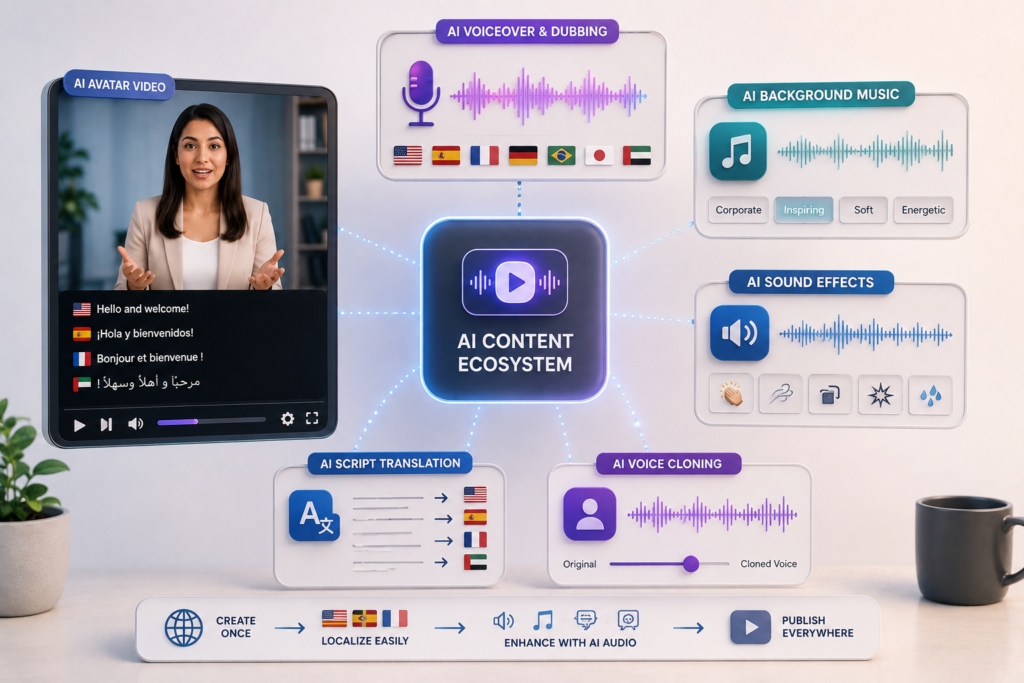
None of this happens in isolation anymore. Teams generating multilingual video are often the same teams experimenting with AI generated audio tools for background scoring or voice layering underneath the avatar’s speech.
That overlap matters practically. A localized training video with royalty-free scoring tailored per region feels more finished than one reusing the same generic stock track across every language version.
Quick Comparison of the Field
| Tool | Language Count | Best For | Starting Price |
| HeyGen | 140+ | Fast turnaround, high volume | Free tier, paid plans from ~$29/mo |
| Synthesia | 160+ | Enterprise training, compliance | Custom, typically higher tier |
| D-ID | 100+ | Solo creators, budget projects | Free tier, paid from ~$18/mo |
| Colossyan | 70+ | Interactive corporate learning | Free tier, paid from ~$28/mo |
| Elai.io | 65+ | Slide-based content, budget use | Free trial, paid from ~$23/mo |
| Hour One | 100+ | Realistic spokesperson videos | Custom, business-tier pricing |
Pricing shifts often enough on these platforms that I’d confirm current numbers before locking a budget around them.
Picking the Right Fit for Your Project
Don’t open with “which tool is best.” Open with “which languages do I actually need,” then narrow from there. A platform with a stunning English demo can still fumble Thai or Finnish pronunciation badly.
Test using your real script, not the sample text the platform hands you by default. Marketing copy reads nothing like product jargon or industry-specific terms, and that gap is exactly where synthetic voices tend to crack first.
Budget time for a second pass. Your first generated clip in a new language almost never nails pronunciation on brand names right away. Most platforms let you manually adjust phonetics — use that option freely instead of settling.
Frequently Asked Questions
Do AI avatar tools for multilingual voiceovers actually sound natural?
Quality shifts a lot by language and platform. Widely spoken languages like Spanish or Mandarin usually sound convincing, while rarer languages can still carry a faint synthetic edge in tone.
Can I use my own voice across different languages?
Yes, most leading platforms offer voice cloning that carries your vocal tone into other languages, though accuracy depends heavily on how much clean audio you provide during setup.
How much does multilingual avatar video production typically cost?
Costs span from free tiers with limited minutes to enterprise plans running hundreds monthly, depending on video length, avatar count, and how many languages you’re generating.
Is lip-sync accuracy consistent across every language?
Not always. Languages with mouth shapes and syllable patterns very different from English, like Japanese or Arabic, sometimes show slightly less precise lip-sync than Romance languages do.
Do these platforms require prior video editing experience?
Most are built for non-editors using script-to-video workflows with drag-and-drop scenes. Basic software comfort helps, but formal editing skills aren’t really necessary here.
Can small businesses realistically afford this technology?
Several platforms, D-ID and Elai.io especially, offer accessible entry-level pricing that suits smaller budgets, particularly compared to hiring voice actors and studio time per language.
What’s the biggest current limitation of this technology?
Longer videos lose some expressiveness past the two-minute mark, and emotionally nuanced content, like sensitive storytelling, still doesn’t match a real human performance consistently.
Should I use one platform or mix several for different languages?
Some teams combine tools, leaning on one platform’s strength in European languages and another’s better Asian-language coverage. It adds complexity but can genuinely improve final quality.
Conclusion
Picking among the top AI avatar tools for multilingual voiceovers isn’t really about crowning one winner. It’s about matching a platform’s actual strengths to what your specific project needs, which sounds obvious but gets skipped constantly when teams rush to just pick something and move on.
If you’re producing high volumes of training content across a handful of major languages, HeyGen or Synthesia will likely serve you well despite costing more upfront. Both have clearly invested in making the whole process feel like an actual production pipeline rather than a novelty toy.
If budget is the tighter constraint, D-ID and Elai.io get you into the game without an enterprise price tag attached, and honestly, the polish gap won’t matter to most audiences. Nobody watching an internal onboarding video is scrutinizing lip-sync frame by frame the way a reviewer might.
This category is still moving fast, worth remembering. What counts as top-tier right now might feel dated in eighteen months, the same way early text-to-speech sounded charmingly robotic by today’s standards. Whatever platform you land on, test it against your actual content before locking into a subscription plan. Sample scripts rarely expose the quirks that only show up once you’re feeding it your own brand names, terminology, and pacing quirks.
At the end of the day, this whole category exists to remove friction, not to become a new source of it. Pick whichever tool gets out of your way and lets the content speak for itself, in whatever language your audience actually needs to hear it in.

An IT career coach with 7 years of experience helping beginners map out certification paths that actually lead to interviews, not just another resume line. He’s guided dozens of career-switchers through their first AWS or CompTIA exam and writes for itechnova.io, covering IT certifications, cybersecurity, and the software tools people actually need to know.