


Every program brochure quotes its best case, and almost none of them mention the waiting that starts after the coursework ends. So when someone asks how long does it take to get a teaching certificate, I’d rather hand over a range than a single tidy number.
At time of writing (October 2026), the realistic range is about one to two years if you already hold a bachelor’s degree and go through an alternative or post-baccalaureate program. It’s four to five years if you’re starting from nothing with an education degree. A few accelerated programs advertise nine months, and one alternative provider says three to four months from enrollment to a classroom job. Treat those as the optimistic end.
Most of the time isn’t spent in lectures. It goes to student teaching, exam scheduling, background checks, and a state office working through a stack of applications.
That last piece catches people off guard.
Four clocks, not one

A teaching certificate takes time in four separate places, and they only partly overlap. There’s coursework, where you pick up teaching methods and, if needed, more subject content. There’s clinical practice, which means student teaching or a paid internship. There’s testing, usually one or more licensure exams. And there’s the state’s own processing, background check included.
Programs tend to quote you the first one. Add the other three and the number moves, sometimes by months. So the honest answer to “how long does it take to get a teaching certificate” is the sum of all four, not just the first. I think this is the biggest reason planning goes wrong: people budget for the course and forget the calendar.
A quick word on terms, because they’re a mess. States say certificate, license or credential, and some treat them as the same thing while others draw hard lines. California calls its document a credential. I’ll say certificate throughout and flag the spots where a state’s wording matters.
Also, a university “certificate program” can mean coursework that makes you eligible for the state document, not the state document itself. I suspect that mix-up sends a lot of searchers down the wrong page.
Timeline by route, side by side
Here’s how the main paths answer “how long does it take to get a teaching certificate,” using the ranges I found. Several of these figures come from companies that sell the service, so read the “fastest advertised” column as marketing and not as a promise.
| Route | Typical length | Fastest advertised | Who it fits |
| Bachelor’s in education | 4 to 5 years | About 3 years with AP or transfer credits | Starting from scratch |
| Teacher preparation program after a degree | 9 months to 2 years | Under 12 months | Degree holders who want a formal program |
| Alternative certification | 1 to 2 years | 9 months, or 3 to 4 months to a job (provider claim) | Career changers who want to teach while certifying |
| National Board (optional, later) | 1 to 3 years | n/a | Teachers with 3 years of experience |
Sources disagree on “how long does it take to get a teaching certificate” for the traditional route. American Board says two to four years, while Moreland University and SimpleK12 say four to five. My guess is the difference is the starting line. If you’ve already finished two years of college somewhere, the remaining stretch does come out shorter.
I couldn’t find a dependable source for master’s programs that include licensure, so I’ve left them out of the table. Ask any program for its actual cohort schedule instead of trusting a rule of thumb, mine included.
The bachelor’s degree route

The classic path is a four-year bachelor’s degree in education with methods courses along the way and a final semester spent student teaching. Moreland’s timeline puts the whole thing at four to five years. So for a traditional student, “how long does it take to get a teaching certificate” mostly means “how long is the degree.” SimpleK12 agrees, and adds that AP or transferred college credits can pull it down to about three, while starting at a community college can stretch it to five.
For an eighteen-year-old who knows what they want, this route is simple and slow. For nearly anyone else it’s the wrong tool. A person with a finished chemistry or accounting degree shouldn’t spend four more years redoing general education credits. That’s a bias of mine, and I hold it firmly.
The part that stings is the final semester. Moreland notes that student teaching is often full-time and unpaid, so the last few months of the timeline are the ones where your income can drop to zero.
Plan for that early. I’d guess most people who wait until the spring before they graduate end up scrambling for savings.
Programs for people with a degree
Once you hold a bachelor’s degree in something other than education, the standard move is to enroll in a state-approved educator preparation program. Moreland puts these at nine months to two years, with a student teaching block of about twelve weeks tucked inside. I’d guess the wide spread comes from format, with a full-time cohort at the fast end and a part-time schedule built around a day job at the slow end, though programs don’t all spell that out.
For anyone asking “how long does it take to get a teaching certificate” after a non-education degree, that spread is the whole story, so I’d weigh it carefully. A nine-month program that requires you to quit working for a semester can cost more in lost income than an eighteen-month one you can do evenings. The shorter number looks better on a brochure. Your bank statement might disagree.
One more wrinkle. These programs often have set start dates, so missing a cohort can add a few months before anything begins. I haven’t found a source that quantifies how often that happens, but it’s worth asking about on your first call.
Alternative routes and the nine-month claim

Alternative certification exists for people who already have a bachelor’s degree and want to be in front of a class sooner. Across the sources I read, “how long does it take to get a teaching certificate” this way gets a typical answer of one to two years. Moreland says one to two, and describes its own TEACH-NOW program as finishing in as little as nine months. SimpleK12 mentions programs completed in under twelve months.
American Board goes furthest. It describes three to four months from enrollment to employment: roughly four to eight weeks preparing for two exams (a subject exam and a professional teaching knowledge exam), a couple of months to sit them, then the job hunt and final state requirements. One graduate it quotes studied about six weeks and was hired two months after passing.
I’d call nine months achievable and three months a best case where everything breaks your way. Your degree has to fit a subject schools are hiring for. You have to pass both exams first time. Your state has to allow the route. And a district has to hire you promptly, which depends on the school calendar more than on you.
Alternative routes also change what the clinical part looks like. American Board describes candidates as full-time teacher of record, running their own classroom with mentor or coach support, in place of unpaid student teaching. How you pay for the year changes completely.
How common are these routes? NCES data show that about 18 percent of public school teachers in 2015-16 had entered through an alternative route program. The share was 37 percent in career and technical education, 28 percent in natural sciences and 25 percent in high schools, but only 13 percent in elementary schools. Those numbers are a decade old, so newer ones may differ.
The pattern makes sense to me, though. Faster routes seem to show up where schools struggle to hire. That’s my inference, not something NCES states.
How long does it take to get a teaching certificate in Texas?
Texas makes a good case study, because it leans heavily on alternative programs and the steps are public.
TEA’s guidance says many programs can be finished in one year, during which you may teach as a paid intern with supervision and mentoring. The probationary certificate is valid for one calendar year, and if you haven’t finished by then it’s sometimes possible to extend it to two. There’s also a hard ceiling: you can’t teach more than three school years in Texas public schools on temporary credentials before you receive an initial standard certificate. A criminal background check comes into play when you apply for the probationary certificate and again before the standard one.
240 Certification, which is a program provider and so not a neutral source, lays the Texas path out at twelve to eighteen months. Its phases run like this: two to four weeks for application and enrollment, then two to three months for early requirements (coursework, observation hours and the content exam, which earns a Statement of Eligibility). Hiring comes next, tied to the school calendar with a peak from March to August. After that comes a full school year of internship, and one to two months for the standard certificate once the internship ends. It also says retaking the content exam is the most common cause of delay.
So how long does it take to get a teaching certificate in Texas? Somewhere between 12 and 22 months, depending on when you start.
Here’s a made-up but plausible example of how the calendar bites. Say you enroll in October 2026 and finish the early requirements by January 2027. Hiring season is a few months off, so you start teaching in August 2027. You complete the internship in June 2028, and the standard certificate arrives around August 2028.
That’s about 22 months from enrollment, not 12, even though you’d be earning a teacher’s salary for the last twelve of them. Nobody lied to you. The program itself took about a year, and the school calendar supplied the rest.
Treat the dates as an illustration. Your program and your district will set the real ones.
How long is student teaching?
Of everything behind “how long does it take to get a teaching certificate,” student teaching is the piece with the clearest numbers. Magoosh’s Praxis guide says it usually lasts three to four months, which works out to twelve to sixteen weeks and lines up with a university semester. Some states permit as little as eight, nine or ten weeks. Some schools ask student teachers to commit for six months or even a year. The state sets a minimum, but your program sets the actual schedule.
The Southern Regional Education Board compiled state minimums in its document on student teaching requirements in SREB states. I can’t tell you how current each entry is, so confirm with your state before planning around them. A sample:
| State | Minimum noted |
| Texas | 12-week full-day or 24-week half-day experience |
| North Carolina | 16-week internship |
| Tennessee | At least 15 weeks |
| Kentucky | Full-semester internship, at least 70 school days |
| West Virginia | At least 12 weeks |
| Oklahoma | 12 weeks or 360 clock hours |
| Arkansas | 60 full school days or 420 contact hours |
| Louisiana | Minimum 270 clock hours, 180 of them teaching |
| Virginia | At least 300 clock hours, 150 in direct teaching |
Look at the units. Some states count weeks, others count school days or clock hours, which makes comparing them awkward.
Texas’s half-day option is the one I’d look at twice. Twenty-four weeks of half days stretches the calendar to about six months but leaves your afternoons free, which could matter if you’re juggling a job. Whether a given program offers it is a different question, and I wouldn’t assume.
Exams and score waits

Exams rarely come to mind when people ask “how long does it take to get a teaching certificate,” and they add less time than most fear, as long as you pass. Moreland puts the exam stage at one to two months. American Board describes four to eight weeks of prep for its two exams. State tests vary: SimpleK12 lists Praxis Core, TExES, edTPA, NES, FTCE and MTTC among the common ones, and which you take depends on where you certify.
Score reporting is the waiting part. Magoosh reports that Praxis official scores arrive roughly ten to eleven business days after the test date for selected-response tests, and fifteen to sixteen business days for constructed-response tests. That’s a few weeks of dead time before you can submit anything. Booking your exam late in a program is a mistake I’d avoid.
Failing costs far more time than studying does. A retake means more prep, a new appointment and another round of waiting, and the Texas provider above named content-exam retakes as the most common cause of slow certification.
If you want another source of practice questions, some candidates try AI study tools for flashcards and drills. I’d treat them as a supplement and lean on the official prep materials from your test provider first, since those match the real exam format.
Working while you certify
Whether you can keep earning depends on the route, and for “how long does it take to get a teaching certificate” I think that matters more than the month count. Moreland’s description of the traditional path says the student teaching semester is often full-time and unpaid. On an alternative route, TEA’s page describes the chance to teach as a paid intern, and American Board describes teacher-of-record work. Two people who both take about a year can end up with very different bank balances.
If you’re on the traditional path and can’t stop working, check whether a half-day arrangement is allowed where you live. And ask programs straight out how many hours per week the clinical placement demands, because a course listing may not spell it out.
My pet peeve here is how rarely this gets mentioned in the “how long” conversation. A faster timeline that costs you a semester of income isn’t faster in any way your budget would recognize.
Background checks and state processing
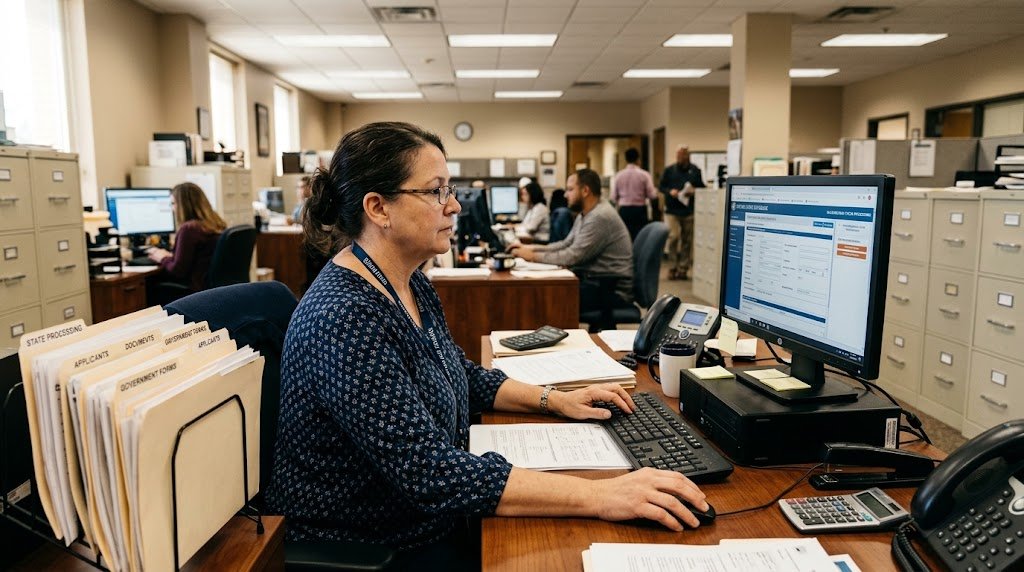
State processing is the least glamorous part of “how long does it take to get a teaching certificate,” and the one you control least. California’s Commission on Teacher Credentialing publishes some of its timing in its credentials FAQ. Paper applications take two to three weeks just to be logged into the system after they arrive. Once processed, the document should be available to view and print on the Commission’s website within ten working days, excluding holidays. Credentials are no longer mailed.
Fingerprints are where the gap opens up. California residents using Live Scan are quoted three to seven business days. Non-residents submitting fingerprint cards are quoted ten to twelve weeks. The page also warns that those windows can run significantly longer.
If you’re moving to California to teach, that single step can add nearly three months before anything else matters.
I only have California’s numbers in hand, so I won’t generalize. Other states run their own offices with their own backlogs. What I’d take from it is a habit: find your state agency’s published processing times before you pick a start date, and treat them as a minimum. They’re also the kind of figure that changes, so check the live page.
What slows people down
Several things stretch “how long does it take to get a teaching certificate” past the brochure number. Failed exams top the list in the sources I read. A missed hiring window comes next. If you finish in November, you may wait until spring for the main wave of openings, though mid-year vacancies do happen. Out-of-state fingerprinting can add weeks, as California’s figures show.
Probationary certificates expire too. Texas allows one calendar year with a possible extension to two, so a slow finish isn’t only annoying. It can cost you the certificate you’re teaching on.
There’s a softer cause as well. Unpaid student teaching pushes people to postpone it, and postponing means a semester or a year gets tacked on. That one is my observation of how the incentives work, not a measured statistic.
Career changers and CTE teachers
People coming from industry change the answer to “how long does it take to get a teaching certificate,” so they deserve their own note, since career and technical education leaned hardest on alternative routes in that NCES data, at 37 percent. A welder, a nurse or a network technician already has the content knowledge. What they lack is teaching method and the state paperwork.
Requirements for CTE teachers vary a lot from state to state, and I haven’t verified any single state’s rules here, so check yours directly. Some states may count work experience or industry credentials toward eligibility. Some may not.
If you’re coming from IT, it helps to know what employers already recognize, and this overview of IT certifications covers the common ones. Whether a CTE program counts any of them is a question for the program. Ask before assuming.
Choosing the route that fits

Rather than ranking routes, it’s more useful to match them to your situation, because “how long does it take to get a teaching certificate” gets a different answer for each.
If you have no degree yet, the bachelor’s route is the straightforward choice, and AP or transfer credits are worth pursuing early because they can shorten it. If you hold a degree in a subject schools struggle to staff, such as the sciences, math or career and technical fields, an alternative route may get you into a classroom fastest, going by that NCES pattern.
If you hold a degree and have savings, a full-time preparation program with student teaching might suit you, since the clinical semester is easier to absorb. If you need income throughout, a paid internship route is the one to look at, with the caveat that you’ll be running a classroom with support while you learn.
And if you’re moving states, add the processing time for the new state before you compare anything else. A route that looks quickest on paper can lose that lead to a ten-week fingerprint wait.
I wouldn’t pretend this is a formula. People’s lives are messier than four tidy categories, and the best fit often shows up in a conversation with a program advisor, not in an article.
Moving states mid-process
Relocating halfway through changes “how long does it take to get a teaching certificate” in ways nobody can quote reliably. I couldn’t find a trustworthy, current average for how long reciprocity takes, so anyone quoting you a confident number deserves some skepticism.
What I can say is that the pieces that vary by state (exams, student teaching hours, fingerprints) are the ones most likely to need redoing or re-submitting. California’s ten to twelve weeks for non-resident fingerprint cards is one example. Start the paperwork for the new state before you move, and keep your original transcripts and program letters in a place you can find them.
Terms you’ll run into
Program websites throw a lot of vocabulary at you, and the same idea gets different names in different states. This is how the sources I read use the common ones.
| Term | What it means here |
| Educator preparation program (EPP) | A state-approved program you enroll in after your degree (Moreland’s wording) |
| Student teaching | Supervised classroom practice inside a program, often unpaid, about 12 weeks in many places |
| Teacher of record | Leading your own classroom as the responsible teacher, with mentor support (American Board’s wording) |
| Statement of Eligibility | A Texas milestone reached after early requirements, including the content exam (per 240 Certification) |
| Probationary certificate | A Texas temporary certificate valid for one calendar year, sometimes extendable to two (TEA) |
| Preliminary and clear credential | California’s first credential, valid up to five years, then a clear credential through induction or National Board (CTC) |
| Live Scan | Electronic fingerprinting for California residents, quoted at 3 to 7 business days (CTC) |
Other states will use different labels for similar steps, so match the idea, not the word. That matters when you search “how long does it take to get a teaching certificate” for your own state.
What people get wrong about the timeline
The common mistake when asking “how long does it take to get a teaching certificate” is counting only the coursework. A program says nine months, so you mark nine months on the calendar and plan your job notice around it. Then the exam score takes three weeks, the fingerprints take two, the school year doesn’t start for two more months, and nine turns into fourteen.
Another is treating a university certificate program as the state certificate itself. Finishing the program makes you eligible to apply, and the state still has to issue the document.
A third is assuming alternative means easy. Alternative routes skip the unpaid student teaching semester, but you’re running a classroom with a mentor, and that’s hard in a different way. I’d rather a candidate know that going in.
Build your own estimate
Averages only go so far. If you want to work out how long does it take to get a teaching certificate for your own situation, add up the steps yourself and keep a fast column and a slow column.
Here’s my arithmetic for a Texas-style alternative route, using the provider’s phase lengths where it gave them. The hiring wait and the length of a school year are my assumptions, so swap in your own.
| Step | Fast case | Slow case |
| Application and enrollment | About 0.5 month | 1 month |
| Early requirements and content exam | 2 months | 3 months |
| Wait for a teaching job | 1 month | 6 months |
| Internship (one school year, call it 10 months) | 10 months | 10 months |
| Standard certificate processing | 1 month | 2 months |
| Total | About 14.5 months | 22 months |
That lands above the provider’s twelve to eighteen months at the slow end, and I think the gap is mostly the hiring wait, which depends on the calendar and not on the program. A failed exam would push either column out further, by a few weeks at least, since you’d need to study, book and wait for scores again.
Adjust the rows for your state. If you’re a non-resident sending fingerprint cards to California, for example, ten to twelve weeks belongs in the slow column. If your program is a traditional student-teaching semester, replace the internship row with roughly twelve to sixteen weeks and add the coursework before it.
The point isn’t precision. It’s seeing which row is biggest for you, because that’s where a month saved matters.
Questions to ask a program
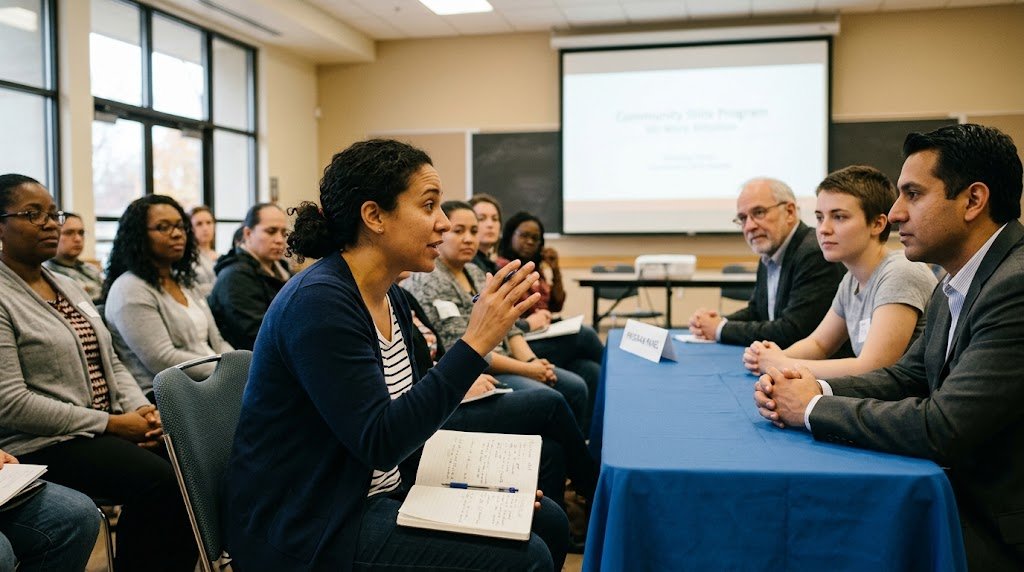
Anyone can tell you how long does it take to get a teaching certificate on average. What you need to know is how long it takes through this particular program, and the only way to learn that is to ask pointed questions.
Ask for the next three start dates and what happens if you miss one. Ask what the clinical placement demands each week and whether the program finds your placement or you do. Ask which exams you’ll need, when most candidates take them, and what the program does if someone fails. Ask who files the state application and who pays for fingerprinting.
Then ask the question I’d care about most: what share of candidates finish within the advertised time? Plenty of programs won’t have a clean answer. A vague reply tells you something too, and I’d weigh it more heavily than any slogan on the website.
If you can, find two people who completed the program and ask them how many months it took from enrollment to a standard certificate. One honest answer from a graduate is worth more than ten pages of marketing copy.
Ways to shave months

If you want a shorter answer to “how long does it take to get a teaching certificate,” book exams early and sit them before or during your program, not after. Request official transcripts and send fingerprints as soon as your state allows, since those are waits you can start in parallel.
Ask programs about credit for prior coursework. SimpleK12 notes that AP or college credits can bring a bachelor’s route down to about three years. Pick a start date that lands your internship at the front of a school year, because a fall start usually beats a January one. And check when districts near you post jobs, so your finish date and the hiring window don’t miss each other.
Paperwork is a project, so treat it like one. A shared checklist with dates, a folder of scanned documents and reminders for every deadline cost almost nothing. Some people use productivity tools to keep that sort of thing organized, though a plain spreadsheet works fine.
After the first license
Even once you’ve answered “how long does it take to get a teaching certificate,” the first certificate usually isn’t the last stop. California’s preliminary credential is valid for a maximum of five years, and you move to a clear credential through a Commission-approved induction program or National Board Certification, according to the Commission’s multiple subject leaflet. In Texas, the provider breakdown above says the standard certificate arrives one to two months after the internship ends.
National Board Certification, if you want it later, takes one to three years and requires three years of teaching before you apply, per SimpleK12. That’s a long view, but it’s worth knowing the first certificate starts a longer clock in some states.
FAQs
How long does it take to get a teaching certificate if I already have a bachelor’s degree?
Usually one to two years through an alternative or post-baccalaureate program, with some programs advertising under twelve months.
Can you get a teaching certificate in less than a year?
Some programs advertise nine months, and one provider claims three to four months to a job, but that assumes first-time exam passes and fast hiring.
How long is student teaching?
Typically twelve to sixteen weeks, though state minimums vary, such as 12 weeks full-day in Texas or a 16-week internship in North Carolina.
How long does the state take to process an application?
It varies by state. California quotes two to three weeks to log paper applications, then up to ten working days to post the document, plus fingerprint time.
Do I have to student teach on an alternative route?
Often a paid internship or teacher-of-record year replaces it, but rules differ by state, so confirm with your program.
Final thoughts
If you remember one thing, make it this: the number in the brochure is a floor, not an estimate. The question of how long does it take to get a teaching certificate has a short answer of one to two years with a degree and four to five without, but the true answer for you depends on four clocks that only partly overlap. Coursework, clinical practice, exams and state processing each take their own time, and the gaps between them are where most plans slip.
A few habits cover most of the risk. Sit your exams early. Start fingerprints and transcripts in parallel. Match your internship to the school calendar. And find your state’s published processing times before you set a date, because those are the waits nobody warns you about.
My own view is that money deserves as much attention as months. The route that gets you in front of a class fastest isn’t always the one that leaves you solvent, and the unpaid student teaching semester is the hidden cost in the traditional path. If you can’t stop working, a paid internship route may be worth more to you than a shorter timeline. I’m less sure which is better for someone with strong savings, and I’d treat that as a personal call, not a rule.
I’d also be wary of any source, mine included, that sounds too certain. Most of the figures above come from program providers, which have a reason to quote the quick version, and state rules change. Use these ranges to plan, then confirm each step with your state agency and your program. Teaching is a job where preparation pays off for years, so an extra month spent getting the plan right is rarely wasted, and a rushed start that stalls halfway through a probationary year is a lot harder to fix than a slow one done well.
So here’s what I’d do this week. Pick your state and bookmark its education agency’s certification page. Ask two or three programs for their actual start dates, exam requirements and clinical hours, and ask how many of their candidates finish on schedule. Then build a simple timeline with a buffer of a couple of months for waits you can’t control. If it still looks doable, you’re ready to apply.

An IT career coach with 7 years of experience helping beginners map out certification paths that actually lead to interviews, not just another resume line. He’s guided dozens of career-switchers through their first AWS or CompTIA exam and writes for itechnova.io, covering IT certifications, cybersecurity, and the software tools people actually need to know.