

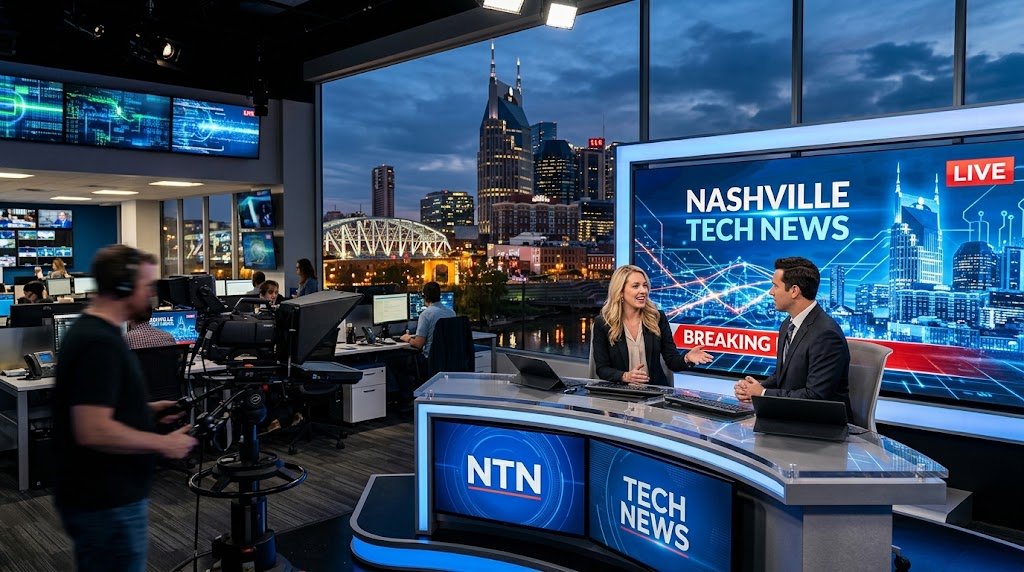
If you’d asked me two years ago whether Nashville tech news was worth following outside of Tennessee, I probably would’ve shrugged. It was healthcare IT, some music-tech novelty apps, and a handful of insurance companies quietly hiring engineers nobody talked about.
That’s changed. I spent the better part of a month digging through funding announcements, talking to a friend who works recruiting for a Nashville-based fintech, and reading through more accelerator cohort lists than I care to admit — and the picture that emerges is a city that’s stopped being a footnote. If you’re trying to keep up with Nashville tech news right now, you’re not chasing a niche story anymore.
You’re watching a mid-size market figure out how to punch above its weight class, and for anyone thinking about a career in the field, entry-level cybersecurity roles are actually part of that story too, since a decent chunk of the new hiring sits in security and compliance functions tied to healthcare data.
This isn’t a puff piece about Music City reinventing itself as “Silicon Hollow” or whatever cute nickname gets tossed around in press releases. Some of what’s happening is genuinely notable. Some of it is the usual regional-booster spin you find in every mid-tier city’s economic development materials. I’ll try to separate the two.
What’s Actually Happening in Nashville Tech News Right Now

Let’s start with the concrete stuff instead of the narrative. As of this year, Nashville’s startup ecosystem sits north of 1,000 active companies and has crossed roughly $1.5 billion in cumulative funding, with two companies having reached unicorn status. Fifty thousand-plus tech workers call the metro home, and a lot of that talent pipeline traces back to Vanderbilt and the handful of coding bootcamps that popped up over the last decade.
More specifically, in 2026 alone, the ecosystem pulled in around $212 million across 247 deals — a 23% jump year over year, with average round sizes hovering near $3 million. That’s not Austin or Atlanta money, but it’s not nothing either, and the growth rate is honestly more interesting than the raw dollar figure. Anyone following Nashville tech news closely will notice the deals skew smaller and earlier-stage than a few years back, which suggests more founders are starting companies here rather than just relocating existing ones.
June 2026 gave a good snapshot of what’s actually moving. Optura, a Nashville-based healthtech company focused on enterprise AI return-on-investment tools, closed a $17.5 million Series A led by Salesforce Ventures, bringing its total raised to $25 million.
That same month, Durham’s Arpio — an AI-native cloud recovery platform — landed a $15 million round from S3 Ventures and Paladin Capital Group, a reminder that “Southeast tech” roundups often blend cities together even when a piece is framed around one. You can see the full breakdown in a recent funding roundup that tracks Southeast startup activity month by month, and it’s a decent habit to check if you want raw Nashville tech news without the marketing gloss.
Why Nashville Is Becoming a Real Tech Hub (Not Just a Healthcare Footnote)
Here’s the thing most outsiders get wrong: they assume Nashville tech is entirely healthcare, and historically that was fair. HCA Healthcare’s headquarters presence created a gravitational pull that shaped the whole ecosystem for decades. But the industry mix has diversified in ways that don’t show up in the “Music City = healthcare hub” headline.
The current breakdown, based on active company counts, looks something like this — healthtech still leads by a wide margin, but SaaS and cloud, fintech, data and analytics, and even manufacturing/robotics have carved out real space.
| Sector | Approx. Active Companies | Notable Players |
| Healthtech | 35+ | Thyme Care, Monogram Health, Skylight Health |
| SaaS & Cloud | 19+ | Bridge Connector, GoodShip |
| Biotech | 12+ | Harrow Health |
| Medtech | 11+ | Various device startups |
| Fintech | 9+ | Rain, Built Technologies |
| Data & Analytics | 8+ | Emerging enterprise tools |
| Manufacturing & Robotics | 7+ | XOi Technologies |
| Artificial Intelligence | 7+ | Optura, UnityAI |
Figures reflect company counts at time of writing and shift as new startups register or exit.
What’s driving the diversification isn’t some grand strategic plan from city hall, honestly. It’s cost. Nashville still runs noticeably cheaper than Austin, Denver, or the Bay Area for office space and salaries, and remote-friendly hiring post-2021 meant companies could plant a flag here without sacrificing access to national talent pools. A founder I spoke to for an unrelated project once put it bluntly: “We didn’t move to Nashville for the scene. We moved because we could hire three engineers here for the price of two in Austin.” That’s not romantic, but it’s honest, and it’s the actual engine behind a lot of the growth you see reflected in Nashville tech news coverage this year.
Which Startups Are Actually Raising Money in 2026?
The names that keep surfacing aren’t always the ones with the flashiest branding. Silicon Ranch Corporation — technically a solar energy company with heavy software and grid-tech components — remains one of the highest-scoring startups in the ecosystem by most tracking metrics, and its growth-stage funding activity has stayed consistent through 2025 into 2026.
XOi Technologies, which builds field-service software for HVAC and plumbing trades, has quietly become one of the better-funded vertical SaaS plays out of Nashville, reportedly raising in the $230 million range across its lifecycle. That’s a bigger number than most people following Nashville tech news casually would guess, and it says something about how unglamorous B2B software can still produce serious outcomes.
On the fintech side, Rain has raised over $557 million to date, which is a startling figure for a company most people outside the industry have never heard of. It’s a payroll-advance and earned-wage-access platform, and its scale suggests investors see real staying power in that model even as regulatory scrutiny around earned-wage products increases nationally.
Then there’s the healthcare cluster — Monogram Health ($375 million raised), Thyme Care, and UnityAI, which closed an $8.5 million Series A back in March 2026 focused on agentic AI for healthcare operations. Skylight Health closed a $13 million round in 2025 targeting specialty care access. If you strip away the AI branding that gets slapped on nearly everything now, most of these are solving fairly mundane operational problems in healthcare delivery — scheduling, claims, care coordination — just with better tooling than the previous generation of enterprise health IT.
Is Healthtech Still the Center of Gravity?

Short answer: yes, but the margin is shrinking. Healthtech still represents the largest single vertical by company count and by total dollars raised. That’s not surprising given HCA’s presence and the broader density of health systems, insurers, and health IT vendors already headquartered in the metro.
What’s shifting is the type of healthtech getting funded. A few years ago it was mostly EHR integration tools and telehealth platforms. Now it’s leaning harder into AI-driven operations — things like Optura’s “return on AI investment” positioning, or UnityAI’s agentic operations tools. That’s partly a reflection of where national VC dollars are flowing generally, and partly specific to Nashville’s advantage of having actual health systems next door to pilot software on before it scales nationally.
I’ll admit some skepticism here. A lot of “AI for healthcare ops” pitches sound identical to each other, and the actual differentiation often comes down to which sales team gets the pilot contract with HCA or a regional hospital network first, not necessarily whose technology is better. That’s not a knock on the founders — it’s just how healthcare enterprise sales works, and it means some of the excitement in Nashville tech news headlines about “AI healthtech” should be read with a little caution about what’s substance versus positioning.
The Entrepreneur Center’s Role — Bigger Than People Realize
The Nashville Entrepreneur Center, based at 41 Peabody Street, functions as the connective tissue for a lot of this activity, and it’s worth understanding if you want context beyond the funding headlines. In early 2026, its spring accelerator cohort included 71 startups led by 88 founders — one of the organization’s largest groups yet — running from late February through pitches at Nashville Entrepreneur Day in May.
That scale matters because accelerators are where a lot of the earliest, least-covered Nashville tech news actually originates. Most of these companies won’t raise a Series A. Some won’t make it past year two. But the density of programming — plus Launch Tennessee’s statewide coordination, including the 36|86 pitch competition — creates a pipeline that didn’t exist a decade ago. There’s also a growing cluster of specialized programs inside what people are calling the Nashville Innovation District, targeting healthcare and enterprise tech specifically, which adds a layer of density that used to only exist in places like Boston’s Kendall Square or Research Triangle Park.
I’d push back a little on treating every accelerator graduate as evidence of ecosystem health, though. The real test — and something worth checking before trusting any program’s marketing — is how many alumni actually raised follow-on funding and what their post-program valuations looked like. A lot of accelerators are really coaching platforms wearing accelerator branding, and that distinction matters more than the cohort size headline suggests.
Fintech’s Quiet Rise in Music City

Nobody talks about Nashville as a fintech town the way they talk about it as a healthcare town, but the numbers tell a different story than the reputation. Built Technologies, a construction-lending fintech platform, reached Series D status with over 200 employees — a scale that a lot of “hot” Nashville tech news items don’t match despite getting more press attention.
Rain’s earned-wage-access model, mentioned earlier, is the headline name here, but there’s a broader cluster of smaller fintech plays building around lending, payments infrastructure, and financial wellness tools aimed at the service-industry workforce that’s so central to Nashville’s hospitality and music economy. That’s a genuinely clever niche, honestly — a city built partly on tourism and gig-adjacent hospitality work has a built-in customer base for earned-wage and financial-flexibility products, and local fintech founders seem to understand that better than an outside investor parachuting in would.
I don’t think fintech will ever eclipse healthtech as Nashville’s signature vertical. The infrastructure advantage HCA and the broader health system provide is too structural to overcome. But as a secondary pillar, it’s more substantial than most coverage gives it credit for, and it’s worth tracking if fintech is your specific interest within the broader Nashville tech news landscape.
Is There a Talent Pipeline Problem?

This is where things get genuinely uncertain, and I don’t think anyone covering Nashville tech news optimistically enough addresses it directly. Fifty thousand tech workers sounds like a lot until you compare it to the demand curve these funding numbers imply. A $212 million-plus funding year across 247 deals means a lot of companies are trying to hire simultaneously, and Nashville’s university pipeline — mainly Vanderbilt, plus Belmont and MTSU to a lesser degree — isn’t producing engineers at the volume that, say, Georgia Tech feeds into Atlanta.
The workaround has been twofold: remote hiring, which lets Nashville-based companies pull talent nationally without requiring relocation, and a genuine boom in coding bootcamps and certification programs aimed at career-changers. Nashville Software School has been the anchor institution there for years, but I’ve also noticed a steady rise in people entering tech through beginner-friendly certifications rather than four-year degrees, particularly in IT support, cybersecurity, and cloud administration roles that don’t require a CS degree to break into.
Speaking of which — cybersecurity specifically is an underrated part of Nashville’s hiring story. With that much healthcare data flowing through the metro (HIPAA compliance isn’t optional, obviously), security roles have grown faster than general software engineering roles in some job-market breakdowns I’ve seen. If you’re weighing career paths, it’s worth tracking broader hiring trends in tech alongside local numbers — healthcare-adjacent markets like Nashville tend to show disproportionate demand for compliance and security talent relative to their overall population size. That’s a pattern, not a coincidence.
None of this means the talent gap is solved. Companies I’ve heard from still describe six-month-plus searches for senior engineers, and salary compression relative to coastal markets means Nashville sometimes loses candidates to remote offers from companies elsewhere paying San Francisco rates for the same skill set. It’s a real tension, and it’s one of the less-discussed threads running through Nashville tech news if you dig past the funding headlines.
Climate Tech’s Unlikely Anchor: Silicon Ranch
I mentioned Silicon Ranch earlier, but it deserves its own moment because it doesn’t fit the usual “Nashville tech” narrative at all. It’s fundamentally a solar energy development company, but its operations depend heavily on proprietary software for grid management, land analytics, and asset performance monitoring — enough that most startup trackers classify it firmly within the tech ecosystem rather than treating it as a pure energy utility play.
Its consistent growth-stage funding activity puts it at or near the top of Nashville’s highest-valued private tech-adjacent companies, which is a genuinely surprising fact if you assumed the city’s tech story began and ended with hospital software. It’s also a useful reminder that climate tech isn’t confined to the coasts. If you follow climate tech funding nationally, Nashville rarely gets mentioned in the same breath as Denver or the Bay Area on this front, but Silicon Ranch alone suggests there’s more capital and infrastructure here than the reputation implies.
I don’t expect Nashville to become a climate-tech hub in the way Denver has positioned itself. But one large, well-capitalized anchor company can shift how a region’s talent pool develops over a decade — engineers who cut their teeth on grid software at Silicon Ranch don’t necessarily stay there forever, and some of that expertise eventually seeds new companies. That’s a slow-moving dynamic, but it’s real, and it’s one more reason the “just healthcare” framing undersells what’s actually happening.
How Does Nashville Stack Up Against Other Mid-Size Tech Hubs?
This is the comparison people ask about most, and it’s worth being straight about it: Nashville isn’t competing with Austin or Atlanta for the “next major tech hub” title, and pretending otherwise does the city a disservice. It’s playing in a different tier — closer to Charlotte, Raleigh-Durham, or even international comparisons like emerging European scenes that punch above their population size through cost advantages and a specific vertical focus rather than broad-based tech dominance.
What Nashville has that a lot of comparable cities lack is a genuinely dominant anchor industry (healthcare) that creates real demand for the software being built locally, rather than software companies existing in a vacuum hoping to sell nationally from day one. That’s a structural advantage. Companies here can pilot with actual regional health systems before scaling, which shortens the sales cycle in ways that pure-software cities without a dominant local industry can’t replicate.
The downside of that same structure is dependency. If healthcare enterprise spending contracts — and there have been periods of hospital-system budget tightening nationally — Nashville’s tech ecosystem feels it more acutely than a more horizontally diversified market would. That’s the trade-off, and it’s one worth keeping in mind before assuming the growth trajectory in recent Nashville tech news is guaranteed to continue linearly.
What Should You Actually Be Watching Next?
A few things I’d keep an eye on heading into 2027, based on what’s visible right now. First, whether the AI-in-healthcare wave produces genuine differentiation or just a crowded field of similarly-pitched startups competing for the same handful of health-system pilot contracts — that consolidation, when it happens, will be a bigger Nashville tech news story than any individual funding round.
Second, watch what happens with the Vanderbilt University Innovation Neighborhood, which was up for a crucial Metro Council vote in early September 2026. Depending on how that development proceeds, it could meaningfully expand the physical and institutional infrastructure supporting the ecosystem, similar to what university-adjacent innovation districts have done in Pittsburgh and Research Triangle Park. You can track the broader civic and startup calendar through Nashville’s ongoing venture activity log, which does a genuinely thorough job cataloging events most outlets miss.
Third — and this one’s less exciting but more consequential long-term — keep watching state-level economic development announcements. Tennessee’s Department of Economic and Community Development has a track record of landing headquarters expansions and job-creation commitments, like a recent state expansion deal that brought more than 70 new tech jobs to Davidson County. Those deals move slower than venture funding rounds, but they add stable, non-speculative job growth that startups alone can’t guarantee.
Frequently Asked Questions
Is Nashville actually becoming a legitimate tech hub, or is this overhyped?
It’s real but proportionate — Nashville’s growth is genuine and outpacing the national average in some metrics, but it’s a mid-tier hub, not a challenger to Austin or the Bay Area.
What industry dominates Nashville’s tech scene?
Healthtech, by a wide margin, driven largely by HCA Healthcare’s presence and a dense network of related health systems and insurers.
Is Nashville a good place to start a tech career right now?
Yes, particularly in healthtech, fintech, and cybersecurity, though salary levels still trail coastal markets and competition for senior roles is genuinely tight.
Which Nashville startups have raised the most funding?
Rain (fintech, $557M+), Monogram Health (healthtech, 375M),andXOiTechnologies(field-serviceSaaS,~230M) currently lead by cumulative funding raised.
Where can I follow ongoing Nashville tech news reliably?
Local outlets like Hypepotamus and Venture Nashville track funding rounds and ecosystem events more consistently than national tech press, which only covers Nashville sporadically.
Final Thoughts
Here’s where I land after spending real time in the data instead of just skimming headlines: Nashville’s tech scene is one of those stories that’s simultaneously overhyped in some press coverage and underappreciated in others, depending on which outlet you’re reading. The funding numbers are genuinely solid for a city this size — $212 million-plus in a single year, 23% year-over-year growth, and two unicorns is not a small-town statistic. But it’s also not the explosive, headline-grabbing growth that Austin or Miami saw during their respective boom periods, and I think honest coverage needs to hold both of those facts at once.
What impresses me most isn’t any single funding round or startup name. It’s the structural stuff — the fact that healthcare gives local software companies a built-in customer base to pilot with, that the Entrepreneur Center and Launch Tennessee have built real infrastructure over a decade rather than throwing up a coworking space and calling it an ecosystem, and that the cost advantage over coastal markets is real and durable rather than a temporary pandemic-era blip. Those are the ingredients that produce sustainable growth rather than a bubble that deflates the moment venture sentiment shifts nationally.
The risks are real too, though, and I don’t think it’s useful to pretend otherwise. Healthcare dependency cuts both ways. Talent supply is tight relative to demand. And a lot of the “AI-powered” positioning in recent healthtech funding announcements deserves a skeptical eye rather than blind enthusiasm, because plenty of it is repositioning rather than genuine innovation.
If you’re a founder considering Nashville, the case is stronger than it was five years ago — lower costs, an improving capital base, and a specific industry advantage worth building around. If you’re a job seeker, the opportunity is real but requires patience and probably a willingness to specialize in healthtech, fintech, or security rather than expecting the kind of horizontal software job market you’d find in a bigger hub.
And if you’re just someone who likes tracking regional tech scenes for the sake of it, Nashville tech news is worth a recurring spot in your reading rotation — not because it’s the next Silicon Valley, but because watching a mid-size market actually mature in real time is more instructive than watching an already-saturated one. Keep checking back. This story’s still being written.

An IT career coach with 7 years of experience helping beginners map out certification paths that actually lead to interviews, not just another resume line. He’s guided dozens of career-switchers through their first AWS or CompTIA exam and writes for itechnova.io, covering IT certifications, cybersecurity, and the software tools people actually need to know.