

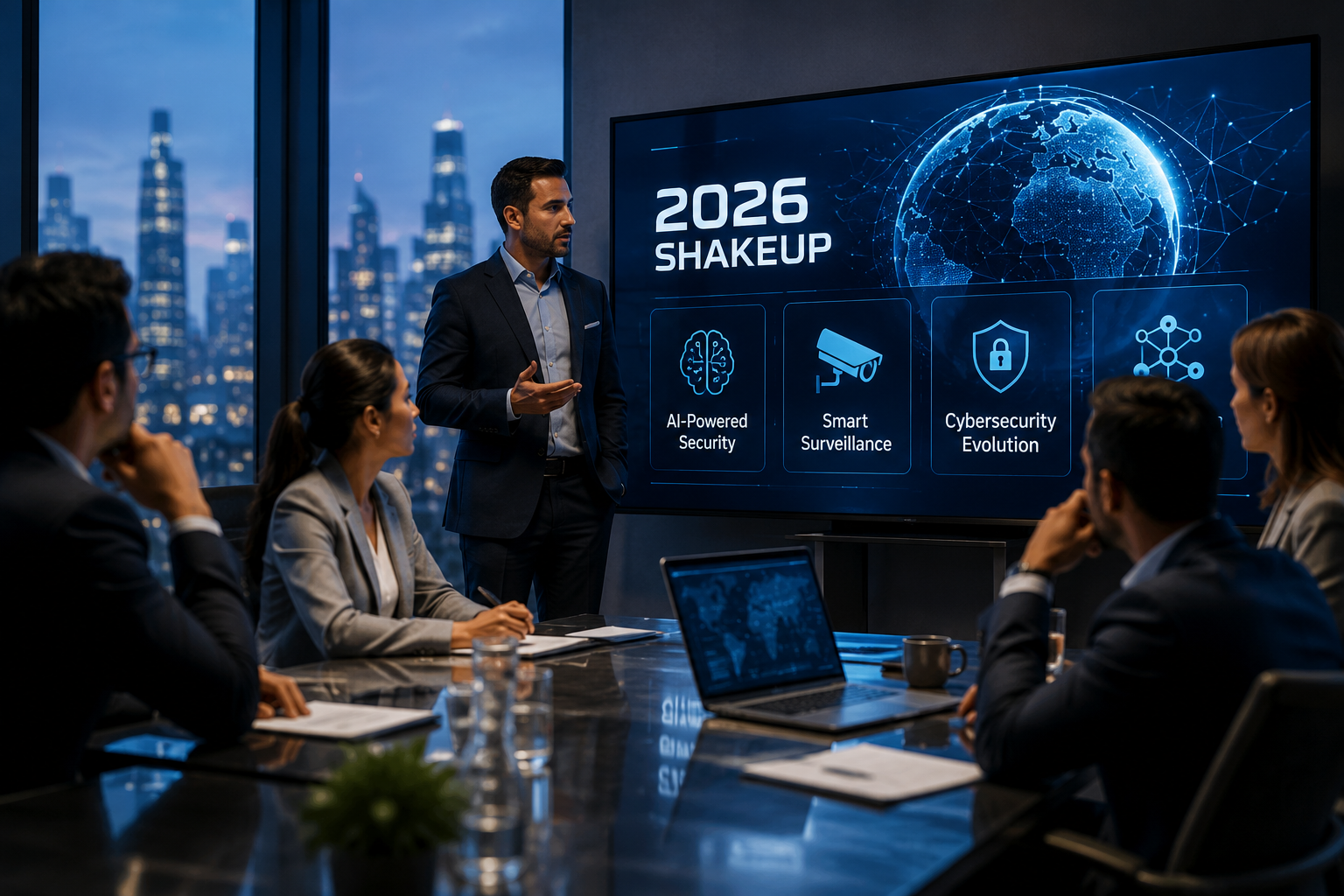
Doug Walsh said something at a security conference that stuck with me longer than most quotes from these events do. He called AI “a utility, not a buzzword,” which sounds small until you realize how much of the Securitas tech news cycle this year has revolved around exactly that shift.
Reading through the latest Securitas tech news, one thing became obvious fast — this isn’t a company dabbling in trends for a press release. The 2026 outlook, the acquisitions, the cloud push, it’s all pointing the same direction. Grab a coffee, because there’s more here than the headlines usually capture.
A VP Said “AI Isn’t a Buzzword Anymore,” and the Report Backs Him Up
Somewhere around page twelve of the Global Technology Outlook Report, the tone shifts from cautious to confident. AI stopped being a “someday” feature and became the thing 30% of surveyed clients said they’re actually budgeting for next year.
That number matters more than it looks. Security budgets are notoriously conservative — nobody wants to be the department that gambled on hype and lost. When almost a third of decision-makers rank AI as their top investment priority, that’s not marketing spin, that’s procurement.
Why This Round of Securitas Tech News Feels Different
Every year brings some version of “the future of security is here.” Most of it’s noise. This year’s Securitas tech news actually has receipts — survey data pulled from over 4,500 clients across 17 countries, plus an independent check from 575 outside decision-makers.
Doug Walsh, the company’s VP of technology strategy, put it plainly in comments picked up by industry press: AI is now “augmenting the human agent,” not replacing the guard at the desk. That distinction matters if you’ve been worried this is another round of “robots take your job” coverage.
The Three Trends Everyone’s Actually Talking About
Cut through the report’s 40-plus pages and three things keep surfacing. Generative AI for natural-language search tops the list, letting operators ask a system plain-English questions instead of digging through menus.
Cloud-based systems come second, mostly because clients are tired of maintaining on-site servers that need babysitting. Third is sensor fusion — LiDAR, radar, and environmental sensors working together instead of as separate bolt-on products.
| Trend | What It Solves | Adoption Signal |
| Generative AI search | Slow manual system queries | 30% ranked AI as top investment |
| Cloud-based platforms | On-site server maintenance | Rising across 17 surveyed countries |
| Sensor fusion (LiDAR, radar) | Blind spots in perimeter coverage | Expanding beyond intrusion-only use |
None of these are radical on their own. Together, they explain why this year’s report reads less like a wishlist and more like a roadmap companies are already following.
Florida Just Became a Bigger Piece of the Map
Outside the report itself, the acquisition side of Securitas tech news picked up steam too. Sonitrol Ft. Lauderdale and Level 5 Security Group both joined the company in December, adding decades of regional expertise to an already sprawling North American footprint.
What’s worth noting is the CORE cloud platform coming along with Sonitrol — audio verification technology that’s apparently been cutting false alarms for years. Pairing that with Securitas Technology’s existing infrastructure is a good example of the cloud push showing up in practice, not just in a survey chart. Coverage of the Florida acquisition expansion details lays out exactly how the two companies plan to combine resources.
Sensors Are Doing More Than Catching Intruders Now
The sensor story deserves its own paragraph, honestly. Vape detection, temperature monitoring, humidity sensors — none of that used to fall under “security tech” a few years back.
Now it’s tied into sustainability goals, of all things. Heating and lighting controls piggybacking on the same sensor network that flags a broken window is a genuinely clever use of infrastructure nobody wants to pay for twice.
Where the Skepticism Should Live
Not everything in this round of Securitas tech news deserves a standing ovation, though. Survey data from your own client base is useful, sure, but it’s not exactly neutral — companies tend to report optimism about tools they’ve already bought.
The third-party check with 575 outside professionals helps balance that a bit. Still, worth remembering that “clients plan to invest more in AI” and “AI is delivering measurable results” are two very different claims, and the report leans harder on the first one.
How This Connects to the Broader Public Safety Conversation
None of this happens in a vacuum. Municipal and public-sector buyers are watching the same AI-and-sensor trends play out, often for very different reasons than a commercial building owner. Anyone tracking the wider public safety technology coverage on this site will notice a lot of overlap — real-time monitoring, proactive response models, the same cloud-first thinking showing up across sectors.
That overlap isn’t a coincidence. Vendors serving both markets tend to develop one core platform and adapt it, which is partly why security tech trends move in such tight lockstep across industries.
What This Actually Means If You’re Buying Security Tech in 2026
Skip the report’s executive summary if you’re short on time — the real value’s in the specific stats buried in the middle sections. Pay attention to what percentage of respondents in your industry, specifically, are prioritizing which technology.
Don’t buy AI features just because a vendor mentions them. Ask what specific problem the natural-language search or generative layer actually solves for your site, because plenty of “AI-powered” marketing labels sit on top of fairly basic automation.
Budget conversations should include cloud migration costs upfront, not as an afterthought. Companies that treated cloud as a bolt-on last year are the same ones scrambling to catch up now, based on what’s showing up across recent Securitas tech news coverage.
My Take After Reading Through All of This
Eight years running the same report gives a company real credibility, and it shows in how specific this year’s findings are compared to the vague “AI is coming” tone from a few cycles back. The Sonitrol and Level 5 acquisitions back up the survey data with actual moves, which is more than most industry reports can claim.
That said, keep a healthy skepticism about client-sourced survey numbers. They tell you what people plan to spend, not necessarily what’s actually working once installed. The gap between those two things is where most disappointing tech rollouts live.
Frequently Asked Questions
What’s the biggest trend covered in recent Securitas tech news?
Generative AI for natural-language search tops this year’s report, with cloud migration and sensor fusion close behind it.
Did Securitas Technology make any acquisitions recently?
Yes — Sonitrol Ft. Lauderdale and Level 5 Security Group both joined the company in December, expanding coverage across Florida.
Is the 2026 Global Technology Outlook Report based on real survey data?
Yes, it combines responses from over 4,500 Securitas clients with an independent survey of 575 outside security professionals.
How is AI actually being used in Securitas security systems?
Mainly for natural-language queries, contextual understanding, and automating routine monitoring tasks alongside human staff.
Are sensor technologies expanding beyond basic intrusion detection?
Yes — vape detection, humidity monitoring, and temperature sensors are increasingly tied into broader building management systems.
Should smaller businesses care about this level of enterprise security tech news?
Somewhat — trends set by large providers often trickle down into mid-market pricing and features within a year or two.
What should buyers be skeptical about in vendor-published tech reports?
Client-sourced optimism doesn’t always match measured outcomes, so treat investment intent and proven results as separate claims.
Conclusion
Reading through a full year of Securitas tech news back to back tells a more coherent story than any single press release does on its own. The 2026 Global Technology Outlook Report, the Sonitrol and Level 5 acquisitions, the growing sensor ecosystem — none of these are isolated moves. They’re pieces of a company betting heavily on AI-augmented, cloud-first security becoming the default rather than the exception.
Whether that bet pays off the way the survey numbers suggest is still an open question. Client intent surveys are useful signals, not proof of results, and the real test comes when these systems get stress-tested in the field over the next year or two. Watching Sonitrol’s CORE platform integrate with the broader Securitas Technology infrastructure will probably tell us more than the next annual report will.
For anyone making buying decisions in this space, the practical takeaway is simple: don’t chase every AI label a vendor slaps on a product page. Look at what specific problem it solves for your actual site, ask for real numbers instead of survey percentages, and budget cloud migration as a real line item rather than a footnote. The direction of travel is clear from this round of Securitas tech news. How fast individual businesses should move with it is still worth deciding case by case, not because a report told you to.

An IT career coach with 7 years of experience helping beginners map out certification paths that actually lead to interviews, not just another resume line. He’s guided dozens of career-switchers through their first AWS or CompTIA exam and writes for itechnova.io, covering IT certifications, cybersecurity, and the software tools people actually need to know.
1 thought on “Securitas Tech News: Proven, Essential 2026 AI Insights”