

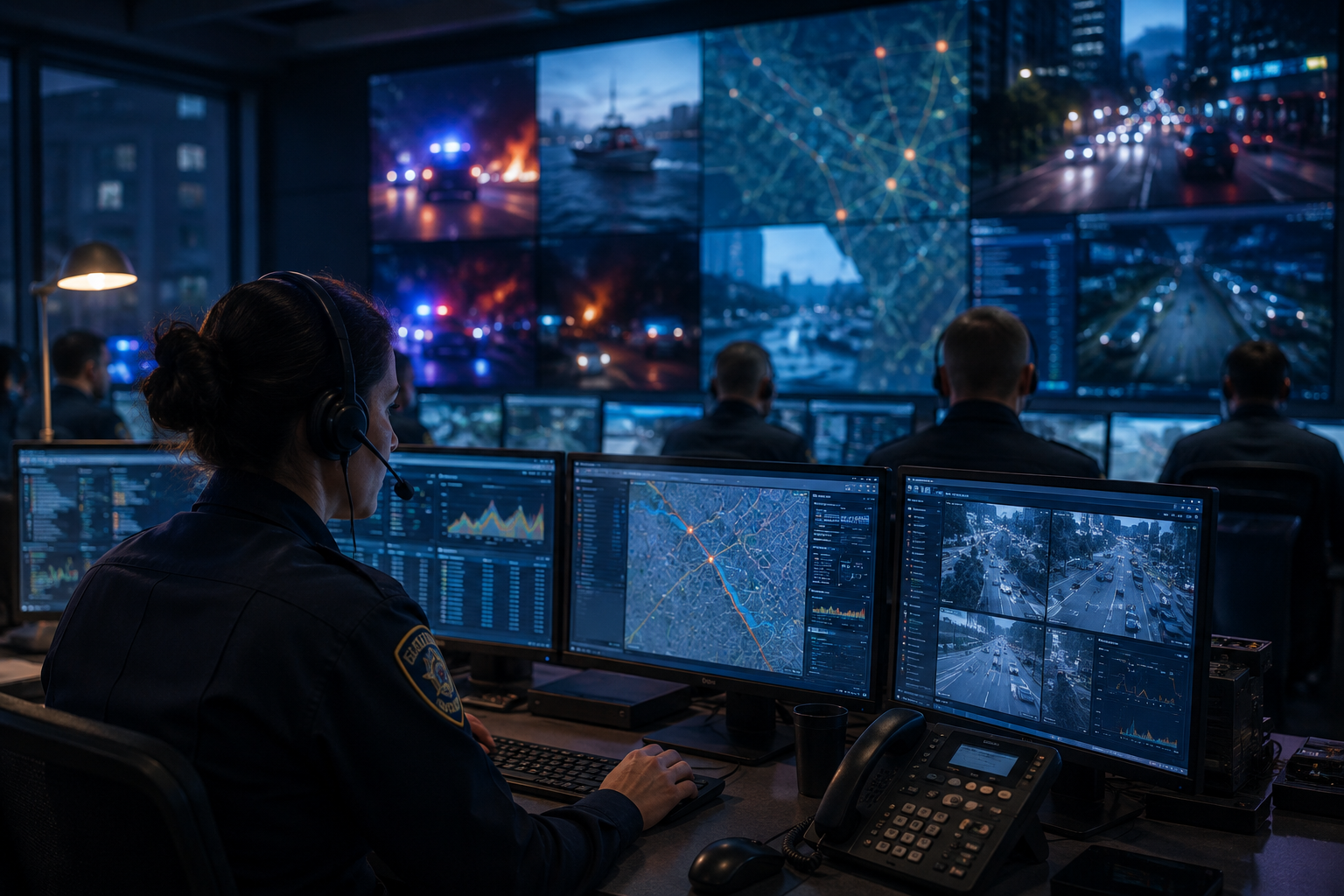
I’ve spent enough time around emergency response circles to know that most public safety tech news gets written by people who’ve never sat in a dispatch center at 3 a.m. This piece isn’t that. Grab your chai, because we’re going through what’s genuinely shifting — not the polished press-release version, the actual on-the-ground version.
Some of it is exciting tech, some of it is a headache waiting to happen, and honestly, a chunk of it is still being figured out as departments go. If you follow public safety tech news even loosely, you’ve probably noticed the pace has picked up. It’s not slowing down anytime soon, either.
Why Public Safety Tech News Keeps Piling Up This Year
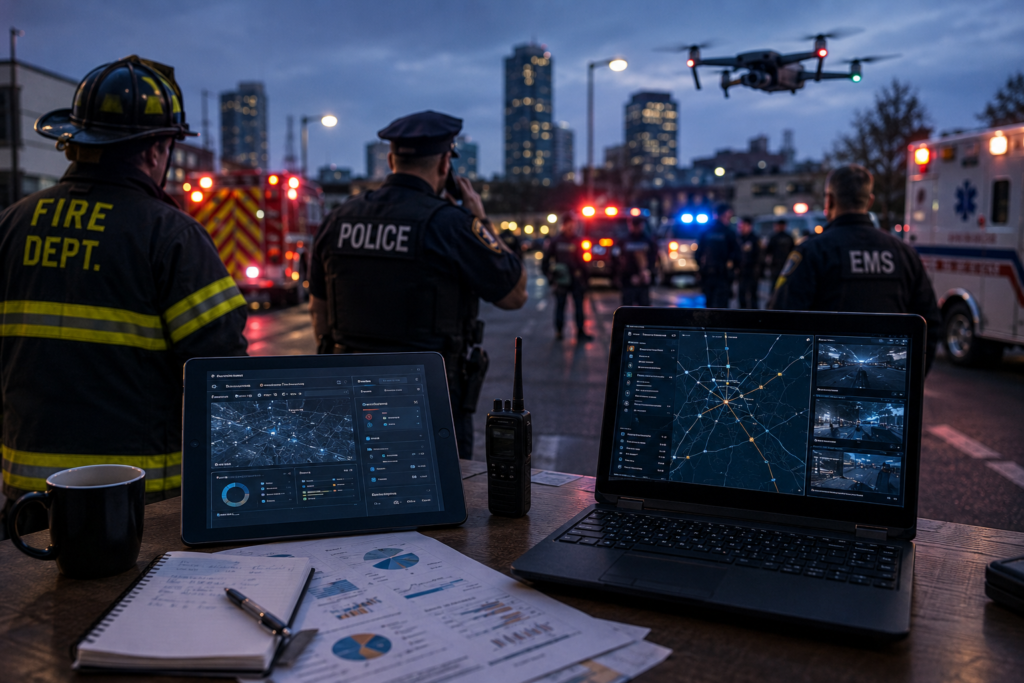
Budgets loosened a bit, grant money moved faster than usual, and suddenly every vendor with a drone or an AI dashboard wants a meeting with the fire chief. That’s the blunt version.
There’s also a real driver behind it: staffing shortages. Departments across the country are running thin, and tech is being pitched — sometimes fairly, sometimes not — as the fix. A tired dispatcher covering three roles at once isn’t going to say no to something that promises to lighten the load.
So the news cycle fills up. Not every story deserves the attention it gets, but a handful of trends are worth your time.
Drones Taking Over the First Few Minutes of a Call
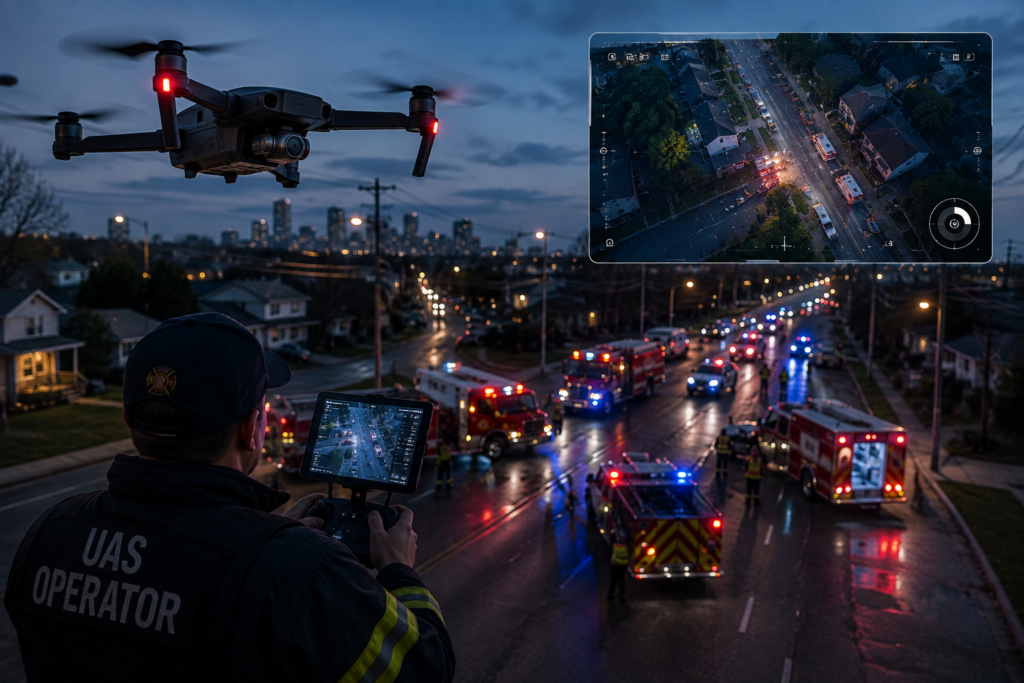
Drone-as-first-responder programs are probably the single biggest story in this space right now. The idea is simple: a call comes in, a drone launches from a rooftop dock before an officer even leaves the station, and by the time patrol arrives, someone already has eyes on the scene.
Chula Vista’s program gets cited constantly, and for good reason — their average response time dropped to under two minutes, less than half the national average. That’s not a marketing number, that’s a documented operational shift.
What doesn’t get mentioned as often is how much airspace coordination this requires. You can’t just launch drones into a city and hope for the best. Companies building out these programs, including Axon’s drone division, are having to solve for beyond-visual-line-of-sight flight rules alongside the actual public safety use case. That’s a regulatory puzzle as much as a technical one.
I’ll admit a mild opinion here: I think DFR is one of the few public safety tech news trends that’s actually earning its hype, rather than just riding it.
The Radio Problem Nobody Likes Talking About
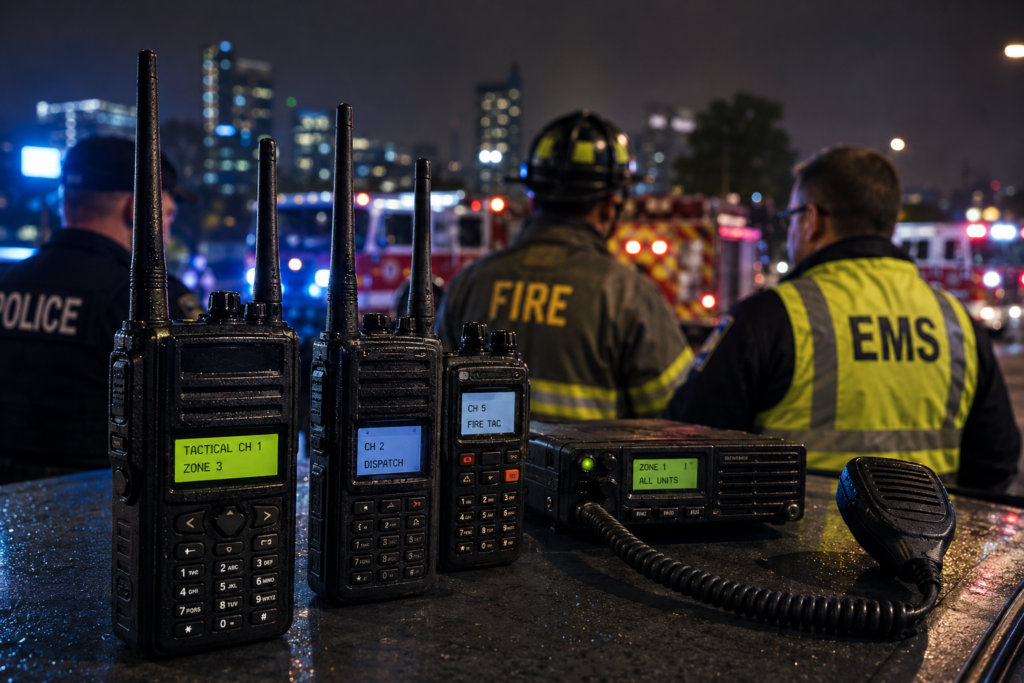
Here’s the less glamorous side. Land mobile radio — the stuff first responders have relied on for decades — is still the backbone of most departments, and it’s aging badly. Interoperability between agencies remains a genuine mess in a lot of regions.
Federal researchers have been chipping away at this for years now. The NIST public safety communications program has been the primary lab pushing broadband standards and location-based tech forward for first responders, and their work rarely makes flashy headlines, but it underpins a lot of what eventually shows up in the field.
Two agencies unable to talk to each other during a joint response isn’t a hypothetical. It happens, and it’s usually the boring communications layer that’s to blame, not some dramatic technology failure.
AI Dispatch Tools — Helpful or Overhyped?
This is where I get a little skeptical, honestly. AI-assisted dispatch is being sold as a way to triage 911 calls faster, flag priority incidents, and reduce human error under pressure.
Some of that is legitimate. Pattern recognition genuinely helps when a dispatcher is juggling a dozen incoming calls during a mass event. But I’ve also seen vendors overpromise accuracy in ways that make experienced dispatchers roll their eyes.
The honest take? These tools work best as a second set of eyes, not a replacement for trained judgment. Departments that treat AI dispatch as a full autopilot are setting themselves up for a bad headline eventually.
| Tech Category | Primary Use Case | Adoption Speed | Common Concern |
| Drone-as-First-Responder | Rapid scene assessment | Fast, growing | Airspace/BVLOS rules |
| AI Dispatch Assist | Call triage, prioritization | Moderate | Over-reliance, bias in flagging |
| Broadband/LMR Upgrades | Interagency communication | Slow, underfunded | Legacy equipment costs |
| Wearable Sensors | Officer/firefighter vitals | Early stage | Data privacy, battery life |
| Body-Worn Camera AI | Auto-transcription, redaction | Fast | Storage and review workload |
Body Cameras and Data Overload
Body-worn cameras stopped being new a while back, but what’s changed is what happens after the footage is recorded. Automated transcription and redaction tools are now standard offerings from major vendors, and they’re solving a real problem — departments were drowning in unreviewed footage.
That said, more footage doesn’t automatically mean more accountability. Someone still has to build the review process, and a lot of smaller departments haven’t gotten there yet. The tech outpaced the policy, which is a pattern you’ll see again and again in this space.
What Small Departments Are Actually Buying
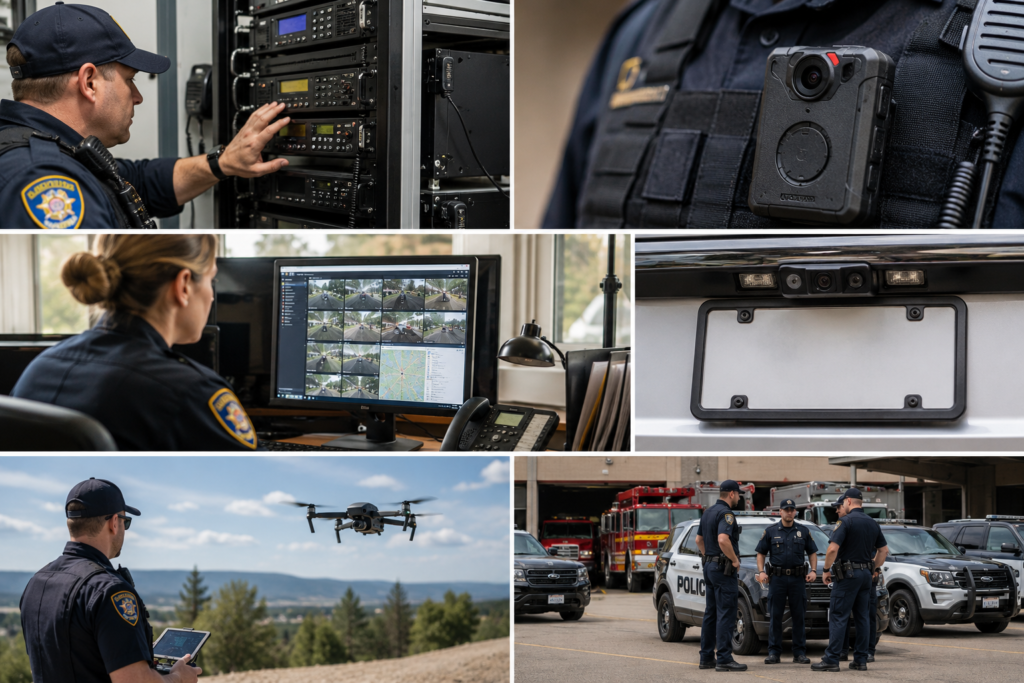
Big-city programs get the coverage, but small and mid-sized departments are where the interesting budget decisions happen. Most can’t afford a full drone fleet or an AI dispatch overhaul. So what are they picking?
- Shared regional radio upgrades funded through state grants
- Entry-level body camera packages with cloud storage bundled in
- Basic license plate readers, often the first “smart” tech a small department adopts
- Mutual-aid drone access through neighboring larger agencies
It’s less exciting than the flagship stories, but it’s arguably where the real, incremental improvement is happening across the country.
Where This Public Safety Tech News Trend Goes Next
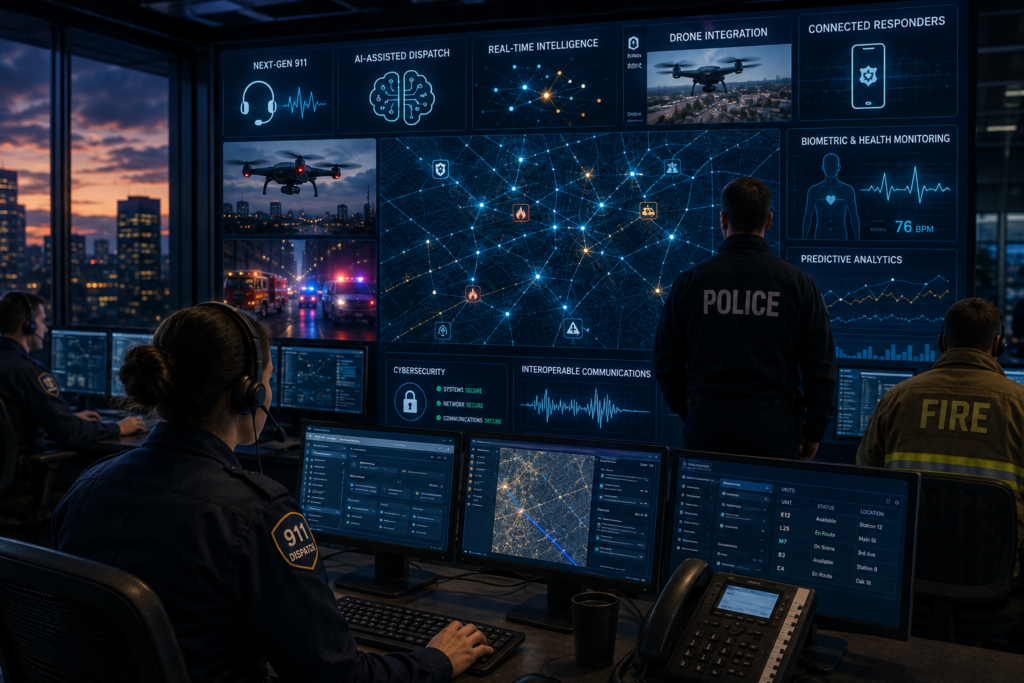
If I had to bet, the next 18 months look like consolidation rather than flashy new categories. Vendors are already merging drone, camera, and dispatch platforms into single ecosystems — Axon’s acquisition activity is a good example of that pattern playing out.
Expect more departments asking a harder question too: not “what can this tech do,” but “can we actually staff, maintain, and pay for it in year three.” That question gets skipped a lot during the initial pitch meeting, and it shouldn’t.
Conclusion
Public safety tech news moves fast, and it’s easy to get swept up in the shinier stories — the drone launching before officers even leave the lot, the AI dashboard that promises to catch what a tired dispatcher might miss. Some of that genuinely deserves the attention. Drone-as-first-responder programs, in particular, are producing measurable results, not just marketing claims, and that’s worth taking seriously if you’re evaluating where a department’s budget should go next.
But the less glamorous stuff matters just as much, maybe more. Radio interoperability, data storage policy, and the plain question of whether a small department can afford to maintain what it buys — none of that gets a press release, yet it’s what determines whether new tech actually helps on a bad night or just becomes an expensive shelf item.
If you’re tracking this space, my honest advice is to be a little skeptical of anything sold as a total fix. The tools that are earning their reputation right now tend to be the ones solving one specific, well-defined problem — faster scene awareness, better interagency comms, less manual footage review — rather than promising to transform an entire department overnight. That’s usually a good filter for separating real progress from a good sales pitch.
Public safety tech news will keep piling up. Reading past the headline is going to matter more than ever.
FAQs
What is driving so much public safety tech news lately?
Loosened budgets, faster grant approvals, and ongoing staffing shortages are pushing departments to consider tech solutions faster than before, which is why coverage of this space has picked up noticeably over the past year or so.
Are drone-as-first-responder programs actually effective?
Early data suggests yes — cities like Chula Vista have documented response times under two minutes, roughly half the national average, though results vary depending on airspace rules and program maturity in each region.
Is AI dispatch technology reliable enough to trust fully?
Not yet as a standalone system. It works best as a supporting tool for trained dispatchers rather than a replacement, since accuracy claims from vendors sometimes outpace what’s realistic in high-pressure, real-world call environments.
Why is radio communication still a problem for first responders?
Much of the country still relies on aging land mobile radio systems, and interoperability between neighboring agencies remains inconsistent, which continues to be a genuine operational risk during joint emergency responses.
What tech are smaller departments actually adopting?
Smaller agencies tend to favor shared regional radio upgrades, entry-level body camera packages, basic license plate readers, and mutual-aid drone access, since full drone fleets or AI platforms are usually out of budget reach.
Does more body camera footage automatically improve accountability?
Not by itself. Automated transcription and redaction tools help manage volume, but departments still need a solid review policy in place, and many smaller agencies haven’t fully built that structure yet.
What should departments consider before adopting new public safety tech?
Beyond the initial purchase, agencies should evaluate long-term maintenance costs, staffing needs, and data storage requirements, since many programs stall in year two or three once the novelty and initial funding wears off.
Where is public safety technology headed next?
Expect more platform consolidation, with vendors merging drones, cameras, and dispatch tools into single ecosystems, alongside tougher budget conversations about whether departments can realistically sustain these systems long-term.

An IT career coach with 7 years of experience helping beginners map out certification paths that actually lead to interviews, not just another resume line. He’s guided dozens of career-switchers through their first AWS or CompTIA exam and writes for itechnova.io, covering IT certifications, cybersecurity, and the software tools people actually need to know.
2 thoughts on “Public Safety Tech News: The Real Shifts Worth Watching”