

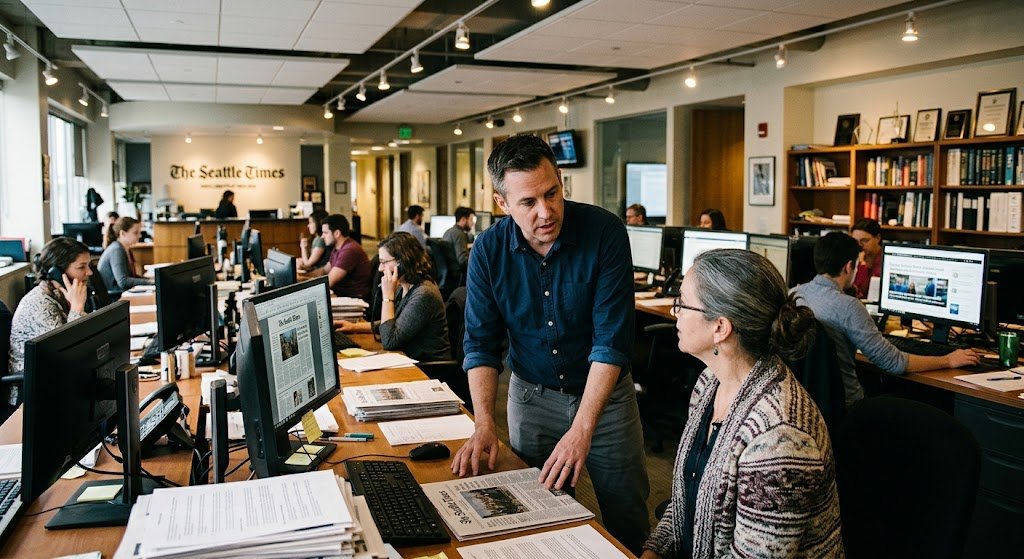
Most American newspapers stopped being family businesses decades ago. Nobody really argues about that anymore — it’s just accepted as how things went. The Seattle Times didn’t get that memo, though. And honestly, that’s the whole reason this story is worth fifteen minutes of your time.
In January 2026, Ryan Blethen took over as publisher of the Seattle Times. He’s the eighth Blethen to run the newspaper since his great-great-grandfather Alden bought a failing local sheet back in 1896. That’s 129 years, if you’re counting, and a newsroom of 170 journalists came with the job, per Editor & Publisher. This isn’t some ceremonial milestone people trot out for an anniversary post. The Seattle Times is one of the only working examples left that local journalism can actually survive without a hedge fund’s name on the deed.
Why family ownership is the real headline here
Here’s the bit most people skim right past: newspaper consolidation didn’t skip the Seattle Times by luck. It skipped Seattle because the Blethens kept saying no, over and over, for a century.
They said no while the Bancroft family — owners of the Wall Street Journal since 1902 — finally caved and sold to Rupert Murdoch in 2007. The Seattle Times pointed this out itself at the time, noting it was marking 112 years of unbroken family ownership the exact same week that WSJ deal closed. Not subtle. Also not wrong.
They said no to buyout after buyout as chains like Knight-Ridder got torn apart by unhappy shareholders. Worth being precise, though — “family-owned” doesn’t mean zero outside money. Chatham Asset Management, which also owns McClatchy, currently holds a 49.5% stake in the Seattle Times. The Blethens just never let that turn into control.
The bet that actually kept the lights on
If there’s one genuinely useful business lesson buried in here, it’s this. Back in 2012, the Seattle Times made a deliberate call to stop chasing ad dollars and start charging readers directly instead. A former Times executive told Editor & Publisher, more or less, that advertising had become a commodity and the real asset was always the content. That’s the same logic behind the New York Times’ well-documented digital pivot — except the Seattle Times ran this experiment without a national brand cushion or a billionaire owner to eat the losses while it figured things out.
Eleven Pulitzers, and one that still stings a little
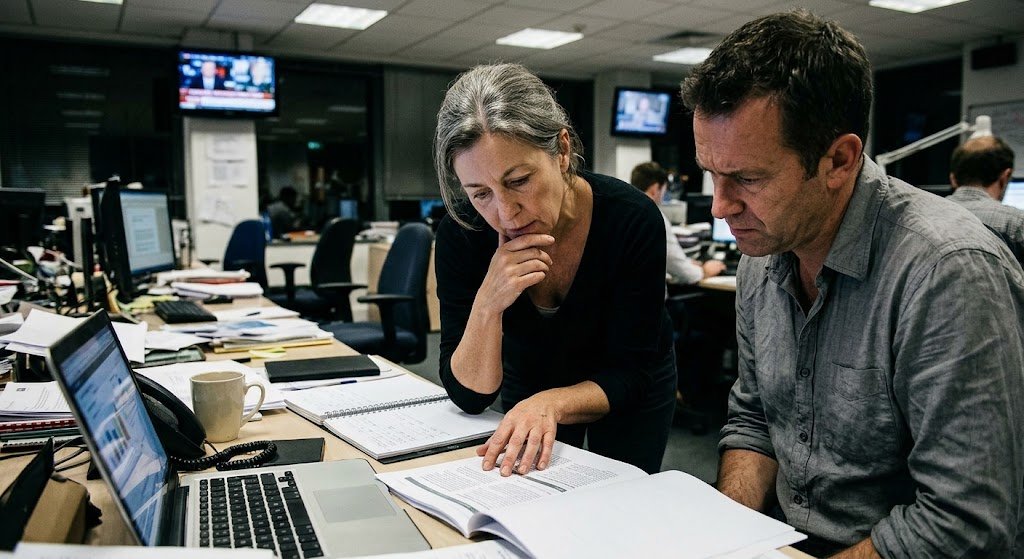
Eleven Pulitzer Prizes. For a mid-sized regional paper, that’s a frankly ridiculous number. The first landed in 1950, for exposing a Red Scare-era political frame-up of a UW professor. More came for the 1989 Exxon Valdez coverage, and — more recently, and more painfully — for Seattle Times reporting that helped unravel the design failures behind two deadly Boeing 737 MAX crashes.
That last one isn’t just trophy-counting. Seattle Times reporters dug into an aerospace giant headquartered practically down the street and found regulatory holes the FAA itself had missed. The newspaper’s also been a finalist 14 more times, which is a track record plenty of metro dailies three times its size can’t touch.
What the newsroom looks like today
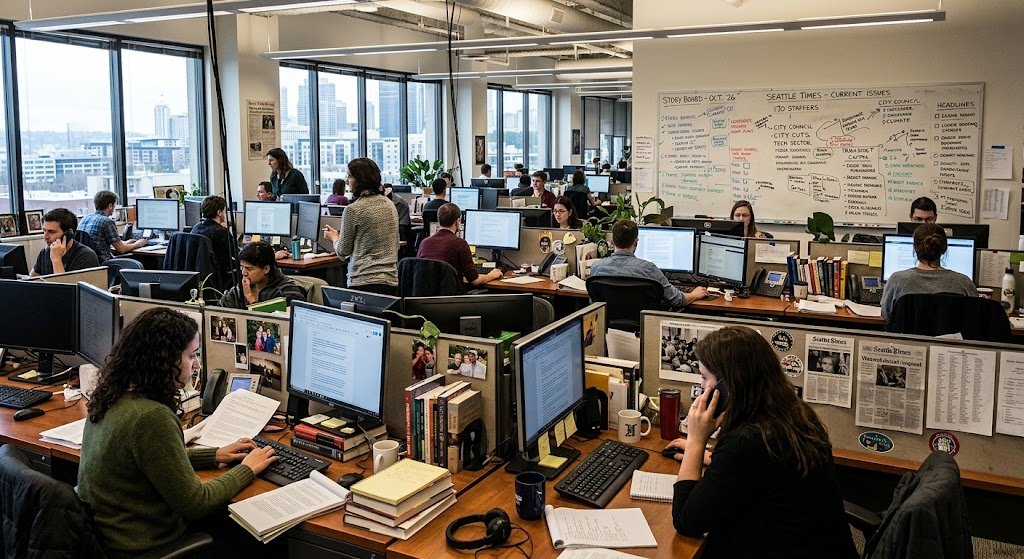
170 journalists sounds modest until you compare it to what’s left standing elsewhere. Plenty of cities Seattle’s size now run newsrooms a fraction of that, or nothing at all — Pew Research has tracked this collapse pretty thoroughly. The Seattle Times isn’t the powerhouse it was in the ’90s. Nobody’s pretending otherwise. But 170 working journalists in 2026 is itself a small headline, given how many comparable papers gutted their staffs after 2008 and never rebuilt.
Ryan Blethen isn’t acting like the pressure’s off, either. He told Editor & Publisher he doesn’t want to be “the Blethen who screws it up” — a blunt line for a brand-new Seattle Times CEO, and a decent sign the family treats this as a business they could genuinely lose.
A succession that moved faster than expected
Frank Blethen ran the Seattle Times for four decades. Nine of the eleven Pulitzers happened on his watch. His son didn’t step in because of some slow retirement wind-down — Frank stepped down at 80, on December 31, and handed the Seattle Times to a 52-year-old who’d already spent close to thirty years working nearly every level of the operation.
What actually caught my attention, though, is who’s coming after Ryan. Eleven members of the fifth Blethen generation have worked at the Seattle Times at one point or another; three are still there full-time. And the sixth generation is already circling — Ryan’s two daughters are in college studying journalism and have worked Seattle Times newsroom summers. Most family papers don’t make it past generation three without professional managers quietly taking the wheel. This one’s on five, angling for six.
The part that isn’t a feel-good story
None of this makes the Seattle Times bulletproof. Regional papers everywhere are getting squeezed by the same forces — shrinking print ad revenue, Google and Meta soaking up digital ad dollars, subscription fatigue setting in. The Seattle Times bought a Maine newspaper group back in 1998 and eventually had to sell it off once it turned into a financial drag. Even disciplined family operators make expensive mistakes.
If there’s a takeaway for anyone watching local media right now, it’s this: family ownership buys patience. It doesn’t buy immunity. The losses just get absorbed by people whose actual last name is on the masthead.
Final Thoughts
This isn’t really a nostalgia piece about print journalism dying slowly. It’s a live case study in what it takes for the Seattle Times to survive four decades of industry collapse — a subscription bet placed early, a family willing to eat losses no chain would tolerate, and enough ambition left to keep landing Pulitzers.
Whether Ryan Blethen manages to hand the Seattle Times off to a sixth generation is genuinely up in the air. But it’s worth watching, because not many newspapers are left where that question even matters anymore.

An IT career coach with 7 years of experience helping beginners map out certification paths that actually lead to interviews, not just another resume line. He’s guided dozens of career-switchers through their first AWS or CompTIA exam and writes for itechnova.io, covering IT certifications, cybersecurity, and the software tools people actually need to know.