


Most “crypto news roundup” content is recycled filler wearing a trench coat. I’ll say that upfront because it’s true and because it matters for what comes next. A friend texted me last month — should she be reading cryptocurrency news ftasiamanagement every morning, is it actually any good. I didn’t answer right away. Not because I’d never heard of it (I had, while digging through the broader cryptocurrency market for a client thing) but because “is it good” and “does it exist” are two different questions and people mix them up constantly.
Short answer, then the long version. Cryptocurrency news ftasiamanagement is real, it’s a legitimate editorial lane tied to fintech reporting out of Asia-Pacific, and it’s actually useful if you want crypto coverage that isn’t just US-and-Europe-with-an-afterthought. It’s not flawless. It’s not the only thing you should read. But writing it off outright would just be lazy, and I try not to do lazy.
So let’s get into it.
What Cryptocurrency News FTAsiaManagement Actually Is
Peel off the branding and you’ve got a coverage niche — digital asset markets, blockchain regulation, adoption trends, all filtered through an Asia-Pacific lens. It’s less one monolithic outlet, more a framing that a cluster of fintech-adjacent publications lean on when they cover crypto.
The subject matter isn’t different. Bitcoin is Bitcoin no matter who’s writing about it. What’s different is where the emphasis lands. Cryptocurrency news ftasiamanagement pulls regulatory detail from Singapore’s MAS, Japan’s FSA, shifting positions out of India and Indonesia — places that get one paragraph, maybe, in a typical Western crypto wrap-up, despite driving a genuinely massive share of trading volume and developer talent.
Quality swings hard though. I went through a stack of these pieces for a comparison project once and some read like a reporter who’s actually lived in the region. Others read like “crypto news Asia” got typed into something and the output got published unedited. Same branding, wildly different bar. Worth keeping in mind before you trust any single piece blindly.
Why Regional Framing Changes The Picture

Say Bitcoin drops 4% overnight. A generic global roundup tells you “macro uncertainty,” shrugs, moves on. Fine. Useless, but fine.
Cryptocurrency news ftasiamanagement covering that same dip? It’ll usually mention Japanese retail exchanges saw a spike in yen buy orders during the drop. That Korean won pairs barely budged. That a proposed MAS rule on digital payment tokens quietly dropped the same week — maybe connected, maybe not, but worth knowing about. Suddenly there’s texture behind the number instead of just the number.
That’s the actual value here and it’s not small. Asia isn’t a crypto bloc. It’s a dozen-plus jurisdictions, each with its own rules, risk tolerance, adoption speed — and treating them as one thing, the way most global coverage does, loses real information. A trader in Jakarta is operating under a completely different rulebook than one in Tokyo. Flatten that into “Asia” and you’ve thrown away half the story.
What Gets Covered, Week To Week
Follow this beat for a couple weeks and a rhythm shows up. Not random. A handful of recurring buckets, roughly:
Regulatory movement — new guidance, license approvals, enforcement actions. This is the backbone honestly, because Asian regulation moves faster and messier than in the US.
Exchange activity. Volume shifts, new listings, the occasional security incident (a few of those over the years are worth reading closely, not skimming).
Institutional and startup funding — venture rounds into blockchain infrastructure out of Singapore, India, South Korea get more airtime here than most places.
Layer 2 and DeFi development. Scaling networks like Arbitrum and Base tracked specifically for developer activity coming out of the region.
If raw numbers are what you actually want — daily movers, percentage swings — a dedicated tracker beats a written summary every time. Today’s biggest percentage movers is a better fit than any headline recap, which is already stale by the time you’re reading it anyway.
Bitcoin, Ethereum, And The Asian Trading Story
Pushback time, a little. Loads of “Asia crypto” writing treats the region as either fully bullish or fully cracking-down, and neither survives contact with actual data. It’s messier than that.
Below’s a rough snapshot — regulatory posture and market character across a few jurisdictions this beat covers most. Volume-share figures are compiled estimates from industry surveys and on-chain analytics; methodology differs by source, so treat these as directional, not exact.
| Region | Regulatory Stance (at time of writing) | Notable Focus |
| Singapore | Licensed, closely supervised digital payment token regime | Institutional custody, stablecoin frameworks |
| Japan | Established legal framework since 2017, FSA oversight | Exchange security standards, retail protections |
| India | Taxed but legally ambiguous; stablecoin use in trade settlement expanding | Remittance use cases, high retail participation |
| South Korea | Strict KYC and real-name banking requirements | Won-denominated trading volume, DeFi developer activity |
| Indonesia | Regulated as commodities, shifting toward finance ministry oversight | Retail adoption growth, mobile-first trading |
What jumps out isn’t any single row, it’s how little overlap there is between them despite being neighbors on a map. Singapore doesn’t look like India. Japan’s post-2017 framework is arguably more mature than most Western setups, and that barely gets mentioned outside specialist coverage.
How Regulation Shapes The Headlines
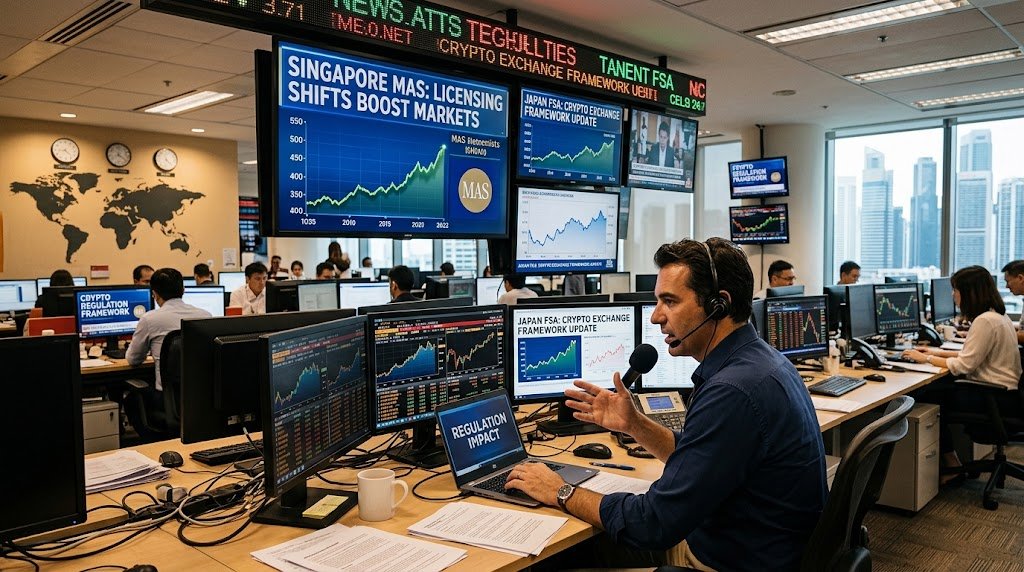
Singapore and Japan came up twice already, so here’s why. The MAS’s regulatory approach to digital payment token services has basically become a template other regulators reference even when they don’t copy it outright. Japan’s FSA runs one of the longest-standing formal frameworks for virtual currency exchanges anywhere, full stop — a fact that gets buried under flashier headlines about hacks.
Cryptocurrency news ftasiamanagement leans on that regulatory backbone constantly. Should. A price move with no context is noise. A price move tied to “this happened three days after a licensing change” — that’s usable.
Where I get twitchy is when coverage starts predicting regulatory outcomes instead of reporting confirmed ones. Seen a few pieces speculate confidently about rule changes that just… never happened. Not unique to this niche, crypto media has a speculation problem generally, but good to know going in.
DeFi, Layer 2s, And The Developer Angle No One Talks About

This is the part I find genuinely most useful, and probably the least discussed by casual readers. There’s a real story around Layer 2 scaling networks — Arbitrum, Base, a couple others — pulling developer talent from South Korea, Japan, Singapore specifically.
Why care if you’re not a developer? Because where builders go, capital tends to follow eventually. Not always. Often enough.
If the mechanics are still fuzzy — what’s actually happening on-chain when people say mining, staking, validation — get that straight before the jargon starts blurring together. How proof-of-work mining actually functions is a decent place to start, because a lot of “advanced” crypto writing assumes a baseline a lot of readers, me included at one point, just didn’t have yet.
So Is This Source Actually Credible?
Fair question. Not dodging it with “it depends” and leaving it there.
Credibility under the cryptocurrency news ftasiamanagement label varies by outlet, by writer, sometimes by the day. Some pieces cite verifiable stuff — on-chain metrics, government filings, named documents. Others feel assembled to hit a word count (an irony I’m aware of, given what you’re reading, but bear with me).
My rule, learned the expensive way after trusting a source that was basically aggregating rumors: check if a piece names its sources. Not “industry experts say” — an actual regulator, filing, disclosure. No named document behind a policy claim? Treat it as a maybe.
A Mistake I Watched A Friend Make
Different friend, this one works in ops, not new to investing generally. Got into crypto about two years back almost entirely off headline-chasing. Read a piece under this kind of Asia-crypto banner about a token gaining traction in a Southeast Asian retail market, bought within the hour, panic-sold three days later when momentum cooled.
Did that four times before we actually talked about it. The news wasn’t wrong exactly — the underlying trend piece was usually accurate. The mistake was treating a regional adoption story as a trading signal. Those are not the same thing and conflating them is probably the single most expensive habit I see with crypto news, any outlet, not just this one.
If you’re trying to build an actual position instead of chasing headlines, a proper framework for entering the market is worth reading before any single news cycle gets to dictate your next move. News tells you what happened. It doesn’t tell you what you should do — that’s your risk tolerance, your timeline, your temperament under pressure, and no article writes that for you.
Free Tier Versus Paid — Does It Even Matter

Most publications in this space run freemium. Daily news, breaking regulatory stuff, no paywall. Deeper research, quarterly funding analysis, occasional regulator interviews — behind a subscription.
Worth paying? For most casual readers, no. Free tier covers the news cycle fine. Paid tier earns its keep if you’re making real capital decisions and need the deeper research — Asia-Pacific venture funding aggregated across a full quarter instead of one deal at a time.
Context worth remembering: the SEC’s approval of spot Bitcoin ETFs in early 2024 changed the credibility math for the whole industry, Asia included. Regional coverage picked that up fast, and honestly it’s a decent litmus test for a source — did they connect a US regulatory event to downstream effects on Asian exchange listings, or cover it like an isolated American story. The better cryptocurrency news ftasiamanagement pieces did the former. Not all of them.
Security Basics Still Beat News, Every Time
Rarely gets said enough — no amount of good reporting saves you if your own security habits are sloppy. Read excellent, well-sourced analysis once, then scrolled the comments and saw people asking questions that suggested they didn’t understand how a crypto wallet actually works at a basic level.
Not a knock, everyone starts somewhere. Just a reminder that reading news and understanding mechanics are separate skills. One doesn’t cover for the other. Read the news, sure. Learn the boring fundamentals separately. Don’t skip them because the reporting felt smart.
Common Mistakes Readers Make Here
Patterns I’ve noticed, some mine, some watched from the sidelines:
- Treating regional adoption stories as buy signals. Covered above, worth repeating.
- Assuming “Asia crypto news” means one unified view. It doesn’t — see the table.
- Skipping the sourcing check. No named document behind a claim, don’t treat it as fact.
- Assuming paid automatically means better. Sometimes free is genuinely enough.
- Reading one piece and calling it research. Cross-check against a second regional source or the primary document. Ten extra minutes, saves real grief later.
Frequently Asked Questions
Is cryptocurrency news ftasiamanagement a single company or a coverage category?
More of an editorial focus tied to fintech reporting than one unified company — quality and sourcing shift depending on who’s publishing under that framing.
Does it cover coins beyond Bitcoin and Ethereum?
Yeah — altcoins with strong regional volume, stablecoins in cross-border settlement, Layer 2 activity all get regular attention.
Is the free tier enough for a casual reader?
For most people, yes. Paid tiers mostly add value through deeper research and quarterly funding data.
How’s this different from mainstream global crypto news?
Mainly regulatory and market depth specific to Asia-Pacific, instead of the default US-and-Europe framing most global outlets fall back on.
Should trading decisions be based on this news alone?
No single source should be your only input, this one included. Pair it with your own research and a clear risk plan.
Final Thoughts
Worth trusting? Cautiously — meaning treat it as one solid input, not gospel. Cryptocurrency news ftasiamanagement fills a real gap generic global coverage leaves wide open. Regulatory texture, market nuance, specific to a region that trades an enormous share of global crypto volume and gets a fraction of the reporting depth it deserves.
What I told my friend, texting her back eventually: use it for regulatory context and developer-activity signals, that’s where it beats broader coverage cleanly. Don’t use it as a trading trigger. And don’t assume every piece under that banner clears the same bar — some clearly do more homework than others, and telling the difference is on you, not the publication.
Bigger lesson, past this one keyword even. Crypto moves fast. Regulation moves unevenly across borders, sometimes contradicting itself within the same country over a few months. No single news source, however well-regionalized, replaces your own homework. Read broadly. Cross-check anything dressed up as a prediction. If a headline’s nudging you toward an impulsive trade — that’s usually the exact moment to close the tab and sleep on it instead.
Building a real crypto reading habit means starting with fundamentals, layering in regional coverage like this for context, and letting your own risk tolerance drive decisions instead of whatever’s trending that hour. That combination’s worked better for me than chasing any single source ever did, and I doubt that changes anytime soon.

An IT career coach with 7 years of experience helping beginners map out certification paths that actually lead to interviews, not just another resume line. He’s guided dozens of career-switchers through their first AWS or CompTIA exam and writes for itechnova.io, covering IT certifications, cybersecurity, and the software tools people actually need to know.