

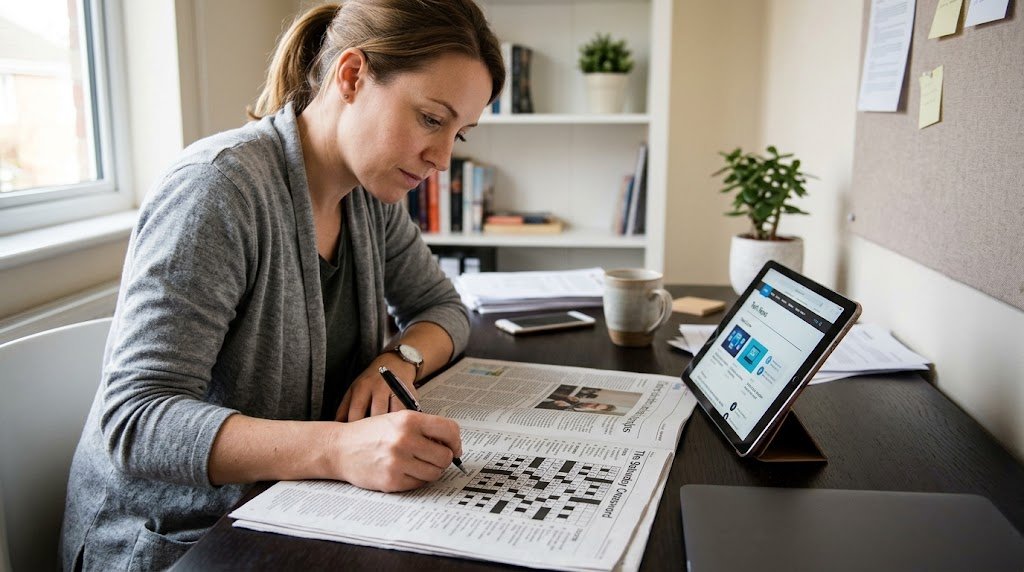
Nobody stuck on a tech news site crossword clue wants an essay. You’ve got a pencil, a handful of empty squares, and maybe two minutes before the coffee’s gone. So the answer comes first, and the reasoning trails behind it. Everything below is about the tech news site crossword answers that come up again and again, sorted by how many squares they fill. If you’d rather build your own instincts, skim a few daily tech feeds for a week and the names start sticking on their own.
The answer to a tech news site crossword clue depends on the letter count. Four squares: CNET. Five: WIRED, VERGE or ZDNET. Eight: ENGADGET or MASHABLE. Ten: TECHCRUNCH. Three letters usually means ARS or TNW. Count first, then test a crossing.
Who Types This Into Google?
Different people, different needs.
There’s the stuck solver, mid-grid, one or two crossing letters in hand. For that person a tech news site crossword clue is a plain lookup job and speed beats everything, so the table further down is the part to grab.
Then the curious one, who finished the puzzle and wants to know why the answer was what it was. The history bits matter here, because they explain why a tech news site crossword keeps circling back to the same dozen brands.
Third: the blogger or site owner who isn’t solving anything and is wondering if a puzzle would work on their own pages. I wrote the build section for you.
And a smaller crowd of students and newcomers, using puzzles as a sneaky way to learn who’s who in tech media. Fair enough. Recalling a name in context sticks better than reading it off a flat list.
Whichever you are, a tech news site crossword gets solved the same way: squares first, crossing second, commitment last.
Three People Who Changed Jobs
The modern tech news site crossword owes a surprising amount to a few people switching employers.
Peter Rojas co-founded Gizmodo, walked away, and started Engadget, which launched in March 2004 and turned into one of the web’s first big gadget blogs. It grew up inside a blog network that AOL bought in 2005.
Then it happened again. In March 2011 Joshua Topolsky, Engadget’s editor-in-chief, announced he was leaving to start The Verge. One small circle of editors, three of the best-known names in the category. Same taste for short, punchy branding, same era.
Why should a solver care? Because constructors don’t dream up a tech news site crossword entry from nothing. They borrow from the culture, and tech-media culture is packed with compact names built from friendly letters. GIZMODO has that Z and two O’s. ENGADGET has doubled E’s and G’s. VERGE is five clean letters with a nice consonant-vowel bounce.
I think the family tree is the best memory aid on offer. If you can recall who left which site to start the next one, you can rebuild half the answer list from the tree alone.
The second reason is blunter. The names are short. A grid is cramped, and a ten-letter brand like TECHCRUNCH is hard to seat without forcing ugly crossings, so four- and five-letter names slide in far more easily. That’s why CNET and WIRED keep turning up in whatever tech news site crossword lands on your table.
Tech News Site Crossword Answers by Length
This is the table I’d have wanted years ago. Fourteen well-known sites, sorted by letter count, each with a hook to help the name stick. Founding details come from public records and were checked at time of writing (2026). Ownership moves around a lot, so treat anything about who owns what as fluid.
| Letters | Answer | What to remember |
| 3 | ARS | Short for Ars Technica, founded in 1998 by Ken Fisher. Usually clued “___ Technica.” |
| 3 | TNW | The Next Web, shortened to its initials. |
| 3 | BGR | Initialism for a site covering phones and gadgets. |
| 4 | CNET | A 1990s pioneer of online tech coverage and reviews. |
| 5 | WIRED | Began as a print magazine in 1993, now a large web publication. |
| 5 | VERGE | Started by former Engadget staff in 2011. THE VERGE runs eight. |
| 5 | ZDNET | Business and IT news, consonant-heavy, easy to spot. |
| 5 | PCMAG | Online home of the long-running PC Magazine brand. |
| 6 | RECODE | Launched in 2014, later folded into Vox, still alive in older grids. |
| 7 | GIZMODO | Launched in 2002 under Gawker Media; tech, science and culture. |
| 8 | ENGADGET | Launched March 2004 by Peter Rojas after his Gizmodo days. |
| 8 | MASHABLE | Started 2005, broader than tech, often clued as digital culture. |
| 8 | SLASHDOT | Late-1990s community site, “news for nerds.” |
| 10 | TECHCRUNCH | Launched 2005, all about startups, funding and Silicon Valley. |
A few that didn’t fit above: TECHDIRT is eight, TECHRADAR and READWRITE are nine, and ARSTECHNICA stretches to eleven when a constructor wants something showy.
Which ones show up most? My read is CNET, WIRED and VERGE, since they’re built from common letters and grid builders love them. ENGADGET is the default mid-length pick whenever the clue smells like gadgets.
Blank row in front of you? Memorize the four- and five-letter names first. They cover most of what you’ll meet.
Reading the Wording
The clue itself leaks hints, and most people skim straight past them. These are typical shapes for a tech news site crossword clue, not quotes from any particular puzzle.
“Gadget review site” points at ENGADGET, CNET or PCMAG, and the count settles it. “Silicon Valley news source” is nearly always TECHCRUNCH. “Tech site, for short” flags an abbreviation, so lean toward CNET, ZDNET, TNW, BGR or ARS.
Then the wordplay ones. “Site on the edge?” is VERGE, since an edge is a verge. “Hard-wired publication?” is WIRED. A question mark is a tell. So is a clue that feels a bit too pleased with itself.
Notice something about those two. WIRED and VERGE are ordinary English words, which is why they get puns. ENGADGET and TECHCRUNCH can’t be punned on, so they get dull, straight definitions.
Handy, that. Punny clue, try the English-word names first. Plain definition, expect an invented brand.
Which Names Grid Builders Prefer
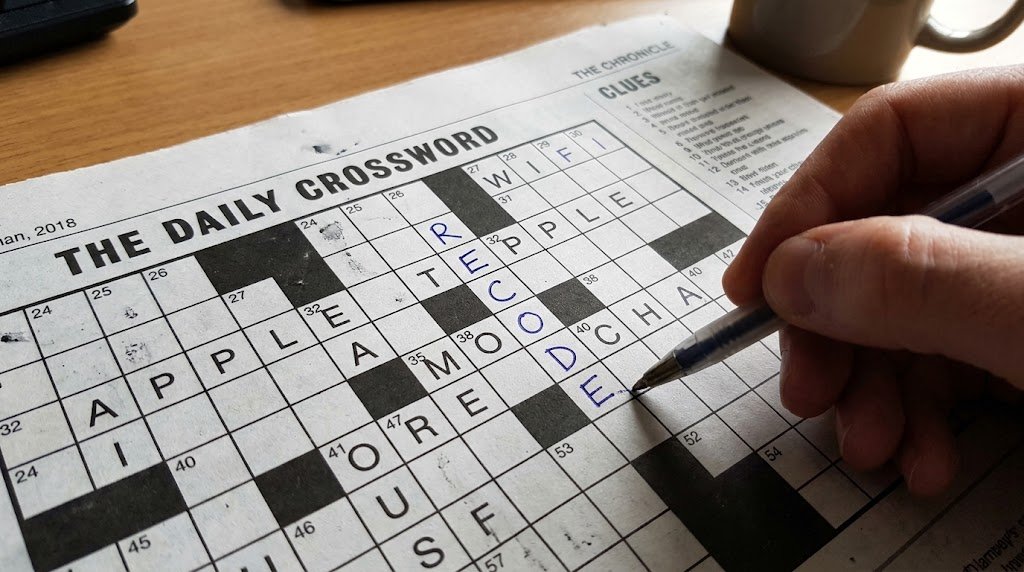
Vowels tell you a lot. A grid is built from crossings, and every crossing wants a mix of vowels and consonants, so names lopsided in either direction are harder to seat. Take TECHCRUNCH: ten squares and only two vowels, E and U. That’s a tough customer, and I suspect it’s why you’ll see it less often than its fame suggests. Or CNET, with a single vowel in four squares, which works only because it’s so short.
Now compare ENGADGET (E, A, E out of eight), GIZMODO (I, O, O out of seven) and VERGE (E, E out of five). Those spread their vowels around, and they cross with lots of ordinary words. RECODE is nearly perfect on that score, three vowels in six squares.
So a tech news site crossword tends to favor names that behave like ordinary words, even when the site itself isn’t ordinary at all. That’s a claim about tendencies, not a rule, and I can’t prove it from a dataset. Still, if you’re torn between two candidates and both fit, take the one with the friendlier letters. Odds are decent the constructor did too.
There’s a flip side. When a name is awkward but famous, constructors sometimes use it as a showpiece, deliberately, and build the surrounding words around it. A tech news site crossword with TECHCRUNCH running across the middle is probably a themed puzzle, so expect other startup and funding words nearby.
Let the Crossings Do the Heavy Lifting
Even with a table, you’ll hit spots where the count fits two or three answers. Five squares could be WIRED, VERGE, ZDNET or PCMAG. Eight could be ENGADGET, MASHABLE, SLASHDOT or TECHDIRT. That’s where the crossing entries earn their keep.
When a tech news site crossword entry won’t budge, this is the order I’d try:
- Count the squares. It kills most of the list in one go.
- Fill any crossing letter you trust, especially the first.
- Look at the last letter. CNET, ZDNET, ENGADGET and SLASHDOT all end in T. WIRED ends in D, VERGE in E.
- Hunt for doubles. ENGADGET has two G’s and two E’s, GIZMODO has two O’s. Those are fingerprints.
- Pencil it in lightly.
If interlocking entries are new to you, a short read on how grids work clears up a lot, since most mistakes on a tech news site crossword come from trusting one guess over what the crossings say.
And when a clue says “site,” think about what the constructor is dodging. They rarely want .COM or URL for a tech news site crossword clue. If those don’t fit, don’t force them.
When Five or Eight Squares Fit Too Many Names

Five and eight are where a tech news site crossword gives you the most grief, because so many decent candidates land there.
At five, the suspects are WIRED, VERGE, ZDNET and PCMAG. The first two are plain English words, so they travel with wordplay and with clues about magazines or edges. ZDNET and PCMAG are acronym-flavored, so they turn up when the clue mentions IT departments, business tech or personal computers.
Look at the second letter. WIRED has I, VERGE has E, ZDNET has D, PCMAG has C. One crossing in that slot separates all four. Lovely.
At eight, ENGADGET is the gadget answer. MASHABLE is the digital-culture answer, a broader publication than pure tech, so its clues tend to say “viral” or “social.” SLASHDOT is the nerd-community answer. TECHDIRT is the rare bird, mostly showing up with clues about tech policy and legal fights.
My unpopular opinion: constructors love ENGADGET more than any other eight-letter tech name, and solvers who default to it are right most of the time. The letters (E, N, G, A, D, G, E, T) cross with dozens of everyday words.
Got a year or a product in the clue? Go with the site tied to that era. Early blog culture leans Engadget or Gizmodo. Startups lean TechCrunch. A 1990s web portal leans CNET or ZDNet.
The Short Ones and the Long Ones
Short entries are the backbone of a grid, so any tech news site crossword leans on them hard.
Three letters: ARS wins, thanks to the fill-in-the-blank clue “___ Technica,” a free pass for anyone who knows the long-running Ars site. TNW needs a hint about abbreviations or “The Next Web.” BGR is rarer still, a favorite of constructors who like rewarding people who follow mobile news.
Four letters: CNET is close to a monopoly. I can’t think of another well-known answer that fits four squares so neatly, which is exactly why it keeps coming back. Nothing else in mind? Pencil in CNET and test the crossings.
The short list stays short for a boring reason. Most tech news brands are built from hard consonant clusters, and ZDNET, five letters of near-pure consonants, is awkward enough that it shows up less than WIRED or VERGE. One warning though: three-letter entries are the likeliest to be something else entirely. ARS is also a plain Latin word. Trust the tech framing, but don’t ignore the crossings, because a tech news site crossword entry that fights its crossings is usually wrong.
Up at nine letters you get TECHRADAR, READWRITE, SLASHGEAR and MACRUMORS. TECHRADAR is broad consumer tech. READWRITE was founded in 2003 by Richard MacManus. SLASHGEAR leans gadgets and vehicles. MACRUMORS is Apple-focused, so the clue nearly always says Apple, Macs or rumors.
Ten letters is TECHCRUNCH, rarely contested. Eleven is ARSTECHNICA, and only in a themed or oversized puzzle. Two-word forms sneak in as well: THEVERGE at eight, THENEXTWEB at ten. If a tech news site crossword clue wants a name and the short form won’t fit, try adding THE.
Long entries get pointed clues. Nobody clues TECHCRUNCH vaguely.
A Walk Through One Clue
Numbers only go so far, so here’s a made-up example. Clue: “Gadget site that started as a Gizmodo spin-off.” Eight squares, and a crossing has handed you an N in the second spot.
Eight squares leaves ENGADGET, MASHABLE, SLASHDOT and TECHDIRT. The second letter is N, and only ENGADGET has an N there (MASHABLE has A, SLASHDOT has L, TECHDIRT has E). The clue’s “gadget” and “Gizmodo spin-off” both point at Engadget, launched by a Gizmodo co-founder. Everything agrees.
Fifteen seconds, give or take. The same routine handles nearly every tech news site crossword clue you’ll meet.
Now flip it. “Startup news source,” ten squares. One realistic candidate, TECHCRUNCH, so you could skip the crossings. Test one letter anyway. It costs nothing and keeps you honest.
And when nothing fits? Move on. A stubborn tech news site crossword entry often cracks itself once its neighbors fill in.
A Trap Worth Knowing
Not every clue is friendly. Here’s a second made-up example, this time with a snare in it.
Clue: “Magazine with a digital edge.” Five squares, no crossings yet. WIRED jumps out, and it’s probably right, since it began as a print magazine in 1993 and has been online ever since. But the word “edge” should make you pause. VERGE is five letters too, and “edge” is what a verge is.
Two answers, both defensible. This is the moment a tech news site crossword tests patience instead of knowledge. Don’t write either in ink. Find one crossing, any one, in the second position. If it’s I, that’s WIRED. If it’s E, that’s VERGE.
The lesson: when the clue offers a second hint (here, “magazine” pulls toward WIRED and “edge” pulls toward VERGE), constructors are usually giving you both readings on purpose. One of them will be wrong, and only a crossing can say which.
Answer Pages Lie a Bit
Be careful with lookup sites. While researching this piece I read a stack of pages promising the answer to a tech news site crossword query, and the quality was uneven. Several felt mass-produced, repeating the same definition of the clue over and over without ever committing to a name.
One even called a chopped-off version of a site’s name a “crossword staple.” I couldn’t find any evidence for that, and it doesn’t match how constructors treat brand names, which are almost always used whole.
My test: a good answer page shows the letter count, names the answer, and lists other names of the same length. A bad one spends four paragraphs explaining what a crossword is.
Check anything doubtful against your own squares, especially a tech news site crossword answer that only one page mentions. The grid is the fact-checker. No page has ever beaten a solid crossing. If you know a puzzle person, ask them instead. Slower, sure, but people rarely invent things.
Old Names, Moved Furniture
Puzzles get built months before you solve them, and constructors don’t always track which brands are still alive. So a tech news site crossword can hold names that feel dated by 2026. RECODE is the clearest case. It was folded into Vox and doesn’t publish under its own banner the way it once did, yet it sits in plenty of word lists, and it’s a handy six-letter entry.
Ownership shuffles are the other trap. Engadget grew up in a blog network AOL bought in 2005, and Yahoo has operated it since September 2021. Corporate reshuffles rarely change how a site is clued, but they do change trivia, so if a clue names an owner, check the era before committing.
GIZMODO is a survivor. Launched in 2002, it has changed hands and layouts and kept the name, which is precisely what a crossword wants.
Practical upshot: when you solve any tech news site crossword, assume the puzzle is a few months old and reflects last year’s media landscape. Names that have been stable for a decade are safest. Names that were hot for one summer are risky.
How Site Names Get Squeezed Into Squares
Grids don’t have room for spaces, dots or hyphens, so brand names get flattened. The Verge becomes THEVERGE or, more often, just VERGE. PC Magazine becomes PCMAG. The Next Web becomes THENEXTWEB or the initials TNW. Anything with punctuation in the official spelling loses it on the way in.
Digits are a bigger problem. A site with a number in its name is awkward, because most constructors avoid numerals inside answers. So names like that tend to appear spelled out or not at all, and I wouldn’t spend memory on them for a tech news site crossword.
Domain endings are worth a thought too. A clue might nudge you toward “.com” style answers, but as I said earlier, those rarely appear in a tech news site crossword unless the clue says something like “Site suffix.” Read for the word “suffix” or “ending” before you write COM.
One more quirk: constructors often trim a site to its most recognizable word. GIZMODO stays whole, ENGADGET stays whole, but longer names lose their tails. If the whole name doesn’t fit, try the first or last word before you give up.
Filler Words Around the Answer
A tech news site crossword clue never sits alone. Its neighbors come from a small family of tech crosswordese, and learning that family makes your crossings easier.
Three letters: APP, URL, ISP, RAM, ROM, USB, LAN, WAN, CPU, GPU, API, SSD. Four: BYTE, WIFI, BIOS, CHIP, DATA, CODE, HOST, PORT, LINK, BLOG. Longer: PIXEL, CACHE, ROUTER, SERVER, CURSOR, KERNEL, STREAM.
They show up because they’re short and vowel-friendly. APP and URL are gifts to constructors, since they cross so cleanly.
If this vocabulary feels shaky, brushing up on basic IT vocabulary helps a lot. Half of these clues are just defined terms in a costume. Know what a router does and you can solve from meaning instead of guessing from letters.
Abbreviations deserve a second look. “Briefly,” “for short,” “abbr.” all mean an acronym. “Tech site, briefly” points at CNET or ZDNET almost every time.
A useful mental split: vocabulary clues are meaning clues. Site clues are memory clues. Different muscles, and knowing which you’re facing saves time.
Does Any Tech Outlet Run Its Own Crossword?
Not that I could confirm. When I went looking for a tech news site crossword hosted by a major tech publication, I found mostly auto-generated answer pages, not official puzzle sections. As of 2026 I couldn’t verify a big tech outlet with a regular daily crossword. That doesn’t prove none exists, so check a site’s games or puzzles section yourself.
General-interest publishers have run word games for ages, and the appeal isn’t hard to see. A puzzle gives people a reason to come back tomorrow.
Which leaves a gap, and I find it interesting. If you run a tech blog, a themed puzzle could set you apart, because hardly anyone in the category offers one. A tech news site crossword built from your own coverage doubles as a weekly recap.
Not a guaranteed traffic engine. It’s a retention feature, and it only works if your readers like puzzles at all. But it’s cheap to test.
Building a Tech News Site Crossword From Scratch

You don’t need special software or a design team. You need a theme, a word list and an afternoon. Here’s how I’d approach a first tech news site crossword.
Pick the theme before the words
A themed puzzle beats a random one. Choose one thread, like “this week in cybersecurity” or “web history” or “AI tools,” and build the list around it. A tight theme makes clues easier to write and makes the puzzle feel like part of your site instead of a bolt-on.
Web history is a rich vein. You could build an entire grid around milestones in how the web got faster, from caching and compression to CDNs, since each term is short, familiar and fun to clue.
Jot down twenty or thirty candidate words, then trim to the ones sharing common letters. ROUTER, CACHE and SERVER cross easily. QUANTUM and KUBERNETES are awkward, so save them for long slots.
A few starter words if you’re staring at a blank page. Networking: ROUTER, MODEM, PORT, LAN, PING. Software: APP, CODE, BUG, PATCH, CLOUD. Hardware: CHIP, RAM, GPU, SSD. Security: VIRUS, PHISH, TOKEN. Pick one group and pull eight to twelve words, then add two site names as bonus entries. That alone turns a generic puzzle into a proper tech news site crossword, and readers feel rewarded when their industry knowledge shows up in the grid.
Some theme ideas for a tech news site crossword, if you’re short on inspiration: a week of ransomware headlines, a tour of hardware startups, a history of browsers, a glossary of cloud terms, or the year’s biggest product launches. Any of them works as long as you can produce twenty or so short, well-known words on the topic. If you can’t, the theme is too narrow, so widen it.
Write clues that point back at your own pages
Here a tech news site crossword becomes more than a word game. Write clues that lead somewhere you’ve published. “Protocol upgrade that made pages load faster” can send a reader to an explainer of yours.
Mix the difficulty. A few gimmes for confidence, a middle band, two or three tough ones for your regulars. All hard and people quit. All easy and nobody feels anything.
Steer clear of clues that go stale fast. Prices, version numbers and rankings change, and a puzzle that’s wrong next month feels sloppy. Stick to concepts and history, and flag anything time-sensitive with the year.
Four clue styles to borrow
If you’re writing clues for your own puzzle, four styles cover almost everything.
A straight definition: “Wireless network standard.” Clean, fair, best for vocabulary entries. A fill-in-the-blank: “___ Technica.” Quick to write and satisfying to solve, and a good fit for site names. Wordplay, marked with a question mark: “Site on the edge?” Use it sparingly, once or twice per grid, or solvers get tired. And a reference clue that points at your own coverage: “Topic of last week’s security roundup.”
Rotate through them. A tech news site crossword with only definitions reads like a glossary, and one with only puns reads like a dad joke collection. A mix keeps people going.
Whatever the style, make sure each clue has exactly one answer that fits. Before you publish, try to solve every clue a second way and see whether another word also works. If it does, tighten the clue.
Start with a mini grid
Five by five, or seven by seven. Smaller grids are quicker to build, check and solve, which suits readers who only have a few minutes.
Every answer should be a real word or a clearly defined proper noun, and every crossing has to work both ways. Then read the clue list aloud against the grid. The commonest error in a homemade puzzle is a clue that matches a different word than the one in the squares.
Test it on two or three people
Hand it to friends who haven’t seen it and watch where they stall. One stuck person means revise that clue. Everyone stuck on the same clue means it’s the clue, not them.
After publishing, watch how long people stay and whether they return. Those two signals tell you more than any survey. Positive? Add a weekly slot. Flat? Change the theme before you abandon the idea.
A small tech news site crossword won’t rebuild your traffic overnight. It can give readers a reason to spend a few extra minutes on your pages, which is worth an afternoon.
Quick Answers to Odd Variations
A few clue shapes don’t fit the sections above, so here they are in one place.
If the clue mentions a “blog,” think ENGADGET or GIZMODO, since both started life as blogs. If it says “community” or “forum,” think SLASHDOT. If it says “IT pros” or “enterprise,” think ZDNET. If it mentions Apple only, MACRUMORS at nine squares is the one to test. And if it says “startup” anywhere, TECHCRUNCH is the safe first guess.
Sometimes a tech news site crossword clue names a person instead of a site: “Site founded by Peter Rojas” could be GIZMODO or ENGADGET, since he co-founded one and launched the other, so the count decides. A clue naming Ken Fisher points at ARS. One naming Richard MacManus points at READWRITE.
Keep a small notebook of those person-to-site links. They’re rare, but they turn a tricky tech news site crossword entry into a freebie when they appear.
Reading Habits That Pay Off
Solving improves faster through reading than through memorizing lists. The best tech news site crossword solvers aren’t the ones with perfect recall of every domain name. They read widely enough that the names feel familiar.
Pick a handful of sources and skim them daily. A wide mix of broader technology coverage exposes you to company names, product categories and jargon all at once, which is the raw material puzzle makers use.
Read three or four outlets each morning and notice which site names come up. Keep a scrap list of odd brand names and acronyms. Once a week, quiz yourself on the ones you forgot. Solve a mini every day, because repetition builds pattern recognition faster than one marathon session.
Read outside your lane now and then, too. If you follow consumer gadgets, try some enterprise IT. If you follow startups, look at security news. Crosswords draw from the whole field, and the gaps in your knowledge are exactly where you’ll get stuck.
Ten minutes a day beats a two-hour cram. After a few weeks a tech news site crossword clue stops feeling like trivia and starts feeling like recognition.
Paper or App?
The medium changes how you should tackle a tech news site crossword.
On paper you can’t check yourself, which is both the charm and the danger. Use pencil. Write small. Don’t commit to a brand name until one crossing agrees. Paper also rewards patience, since you can set it down and come back with fresh eyes.
Apps give you check and reveal buttons plus a digital pencil mode. Useful learning tools that can become a crutch. If you reveal a tech news site crossword answer, spend ten seconds asking why it fits, and a reveal turns into a lesson.
Timers are fun, but I’d skip racing on any puzzle where you’re still learning brand names. Speed comes from familiarity, and familiarity comes from slow solving. Many apps also let you browse an archive, which shows how often an answer repeats. Spot CNET or WIRED in four different grids and you’ve learned more about constructor habits than any answer page could teach.
Solving with a friend? Split the roles: one takes site names, the other takes vocabulary. A tech news site crossword divides neatly between memory and meaning.
Easy Days and Hard Days
Many newspaper-style puzzles ramp up in difficulty through the week, with early-week grids friendlier and late-week ones nastier. If you’re working a tech news site crossword from a weekly series like that, expect the site names on an easy day to come with straightforward clues, and on a hard day to arrive wrapped in puns or vague references.
That should change your strategy. On an easy day, trust the first name that fits. CNET at four squares is CNET. On a hard day, assume the obvious answer might be a decoy, and hold your pencil looser.
Standalone tech puzzles don’t always follow that pattern, so check the puzzle’s own difficulty label if it has one. A themed tech news site crossword built for a blog, for example, might keep everything easy on purpose.
If you’re building your own, this is worth copying. A gentle first puzzle brings people in, and a slightly harder second one keeps them. Ramp up slowly.
One-Minute Cheat Sheet
Screenshot this if you like. Four squares: CNET, nearly the only serious candidate. Five: WIRED, VERGE, ZDNET, PCMAG, split by second letter (I, E, D, C). Six: RECODE. Seven: GIZMODO, spotted by its doubled O. Eight: ENGADGET first, then MASHABLE, SLASHDOT, TECHDIRT. Ten: TECHCRUNCH, usually no crossings needed.
Two habits sit on top. Read the wording for wordplay, because a question mark on a tech news site crossword clue nearly always means WIRED or VERGE. And treat every guess as pencil until a crossing agrees.
Follow just those and a typical tech news site crossword stops feeling like a memory test and starts feeling like a short logic puzzle. The names are finite, the lengths are distinct, the crossings do the rest. Everything else here is garnish.
Mistakes That Cost Solvers Time
Most errors trace back to a few habits.
Committing in ink too early is the big one. A tech news site crossword entry often has two or three plausible answers, and pen locks you into a wrong path.
Ignoring the count is next. It sounds obvious, but plenty of people read the clue, think “TechCrunch,” and start writing without counting. At five squares, TechCrunch can’t be right however sure you feel.
Then there’s full name versus short name. The Verge is VERGE at five, THEVERGE at eight if the constructor uses the whole thing. Read the count carefully and consider both.
Trusting lookup pages blindly, as covered earlier. Use them to jog memory, not replace crossings.
And overthinking. Constructors want you to finish, even on a tricky tech news site crossword. If the obvious answer fits the squares and crossings, it’s probably right. Save the elaborate theories for when the simple ones fail.
Where Tech Clues Are Heading in 2026
Tech vocabulary keeps growing, and puzzles follow with a delay. A few years ago few grids carried LLM, GPU or PROMPT. In 2026 all three are plausible entries, along with words tied to generative tools and automation.
Good news if you follow the field. A tech news site crossword built this year is likely to mention newer names beside the classics, so the mix stays fresh.
To keep your general knowledge current, watch AI coverage, the fastest-moving area and the likeliest source of brand-new crossword fill. Names of models, tools and companies that didn’t exist a few years ago now share puzzles with WIRED and CNET.
My prediction, and it’s only a prediction: CNET, WIRED and ENGADGET stay in grids for a long time because their letters are too useful to drop. The clue vocabulary around them changes. Expect more AI terms, more security terms, more cloud and chip hardware.
As of 2026 that’s the trend I’d bet on. Classics stay, the surroundings evolve, and solvers who read regularly adapt without much effort.
FAQs
What is the answer to a tech news site crossword clue?
It depends on the letter count. CNET fits four squares, WIRED, VERGE or ZDNET fit five, ENGADGET or MASHABLE fit eight, and TECHCRUNCH fits ten.
What is the most common tech news site crossword answer?
CNET, WIRED and VERGE are the likeliest, because their short, friendly letters slot easily into a grid. ENGADGET is the usual pick for eight letters.
How do I solve a tech news site crossword clue with only three letters?
Try ARS, short for Ars Technica and often clued as “___ Technica,” or TNW and BGR if the clue hints at an abbreviation.
Do any tech news sites publish their own crossword puzzles?
I couldn’t confirm a major tech outlet with a regular daily crossword as of 2026, so check a site’s games or puzzles section directly.
Can I make a tech news site crossword for my own website?
Yes. Choose a theme, write clues that link to your own coverage, start with a small grid, and test it on a few readers before you publish.
Final Thoughts
If you keep one thing from this guide, keep the order of operations. Count the squares, read the clue for hints, let the crossing letters split the candidates. That routine solves most any tech news site crossword clue faster than a search engine can, and it survives every variation you’ll meet.
The names deserve a little memorizing. CNET for four. WIRED, VERGE and ZDNET for five. RECODE for six, GIZMODO for seven, ENGADGET, MASHABLE and SLASHDOT for eight, TECHCRUNCH for ten. That covers the overwhelming majority of what a constructor is likely to ask, and ARS and TNW handle the three-letter slots.
Hang on to the family tree, too. The path from Gizmodo to Engadget to The Verge isn’t just trivia. It’s the reason so many of these names share the same friendly rhythm, and it’s the quickest way to rebuild the list when memory fails.
Treat lookup pages with suspicion. The best answer is the one that fits your squares and agrees with your crossings, and no page can check that for you. Use them as a nudge and let the grid make the call.
On whether tech publishers should offer puzzles, I lean yes. A tech news site crossword is cheap to build, easy to theme, and odd enough in this category to stand out. It won’t fix everything. It does hand readers a reason to return, which is hard to manufacture any other way.
So here’s my direct recommendation. Tomorrow, when the next tech news site crossword clue shows up, don’t reach for your phone. Count the squares, pencil in your best candidate, check the crossings. Stuck after two minutes? Glance at the table above, then go back to the grid. Do that for a couple of weeks and the names will start arriving on their own.
And if you run a tech blog, build a mini puzzle from last month’s articles this week. Start small, test it on a friend, see whether it earns a second look. Worst case you get a fun afternoon and a closer look at your own archive.
One last thought on the bigger picture. Puzzles about technology news are a small thing, but they capture something true about the industry. Names rise, get bought, get merged, and fade, and a crossword freezes a few of them in place for a season. Solving one is a tiny history lesson in disguise.

An IT career coach with 7 years of experience helping beginners map out certification paths that actually lead to interviews, not just another resume line. He’s guided dozens of career-switchers through their first AWS or CompTIA exam and writes for itechnova.io, covering IT certifications, cybersecurity, and the software tools people actually need to know.