
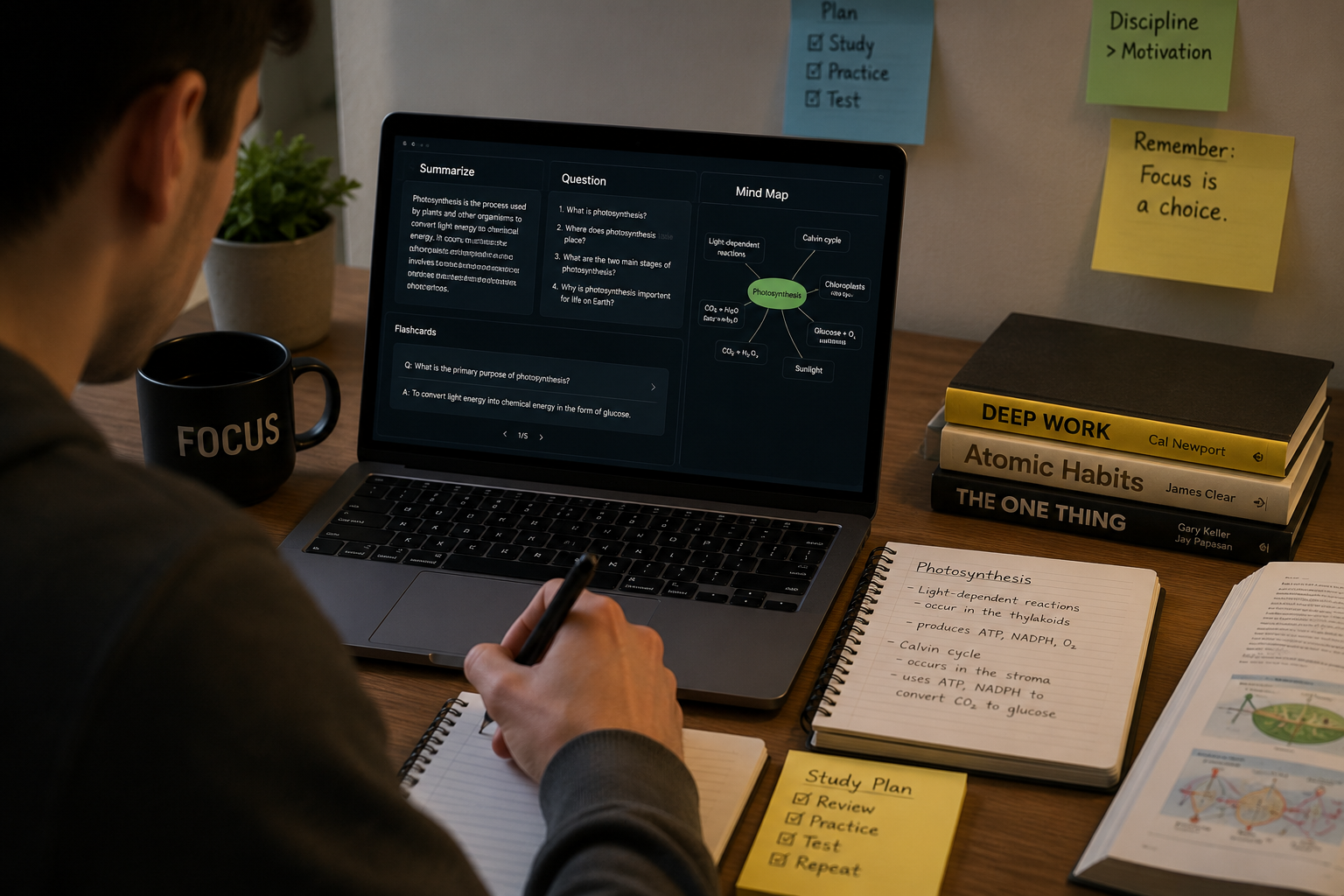
These ai study tools that are better than ChatGPT track what you forget, schedule your review, and actually improve exam scores without the guesswork.
Nine hours before a pharmacology exam, I sat there asking ChatGPT to quiz me over and over. It asked one question, I answered, and then — nothing. There was no circling back, no record of what I’d gotten wrong minutes earlier — the conversation simply moved forward like nothing had happened. Sitting there at 1 a.m., it hit me that ChatGPT is designed to respond, not to keep score. It’ll happily chat with you all night, but it isn’t built to hold onto your mistakes the way a study partner would. That missing piece is basically the entire reason the search for ai study tools that are better than ChatGPT exists in the first place.
Ranking this worst to best tells the story fast. Worst option — treating ChatGPT as your entire study system and expecting a chat window to somehow become structured revision. Middle option — running ChatGPT alongside a basic flashcard app, which helps a bit but leaves you juggling two tools that don’t talk to each other. Best option — software actually engineered around how memory works, where recall, spacing, and testing are the whole point rather than an afterthought. When students actually type ai study tools that are better than ChatGPT into a search bar, it’s usually this third category — the purpose-built, memory-driven kind — that they end up meaning.
So What Do We Actually Mean By “Better Than ChatGPT” Here?

Nobody typing this phrase into Google wants “another chatbot.” What they want is something that notices they bombed a topic last Tuesday and quietly resurfaces it at the right moment. ChatGPT doesn’t do that on its own — its memory features are built for conversation continuity, not for tracking whether you actually mastered mitochondrial function. Anki, RemNote, Quizlet’s newer AI modes, and smaller platforms like Knowt were built around the opposite priority: knowing exactly where your gaps are.
A systematic review published through the Journal of the American College of Radiology looked at eight qualifying studies and found statistically significant score improvements in five of them after students used spaced or retrieval-based methods. Not a massive number, I’ll admit — but real, and produced by mechanics that a chat window simply isn’t set up to run. ChatGPT explains a concept well the first time you ask. It has no built-in reason to bring that concept back to you eight days later.
Curious how AI tools generally get evaluated against each other in academic contexts? There’s a solid breakdown in positioning AI writing platforms that’s worth a look if you’re weighing more than just study apps.
Why the Difference Actually Changes Your Grades

Here’s something that took me embarrassingly long to notice. ChatGPT is built to be agreeable — it wants the interaction to feel smooth and helpful. But real learning needs friction. Cognitive scientists call it desirable difficulty: struggling a little to pull an answer out of memory is what makes that memory stick. ChatGPT removes that struggle almost entirely. You ask, it answers, you nod along feeling informed. Then exam day arrives and half of it has evaporated.
I’ve watched sharp students fall into exactly this trap. Three hours “studying” with ChatGPT, total confidence walking out, and then a blank stare during the test because reading someone else’s clear explanation isn’t the same skill as retrieving the answer yourself. Tools built for recall flip that order — they make you attempt the answer first, before ever showing you if you got it right. That one mechanical difference is doing most of the heavy lifting.
What Separates a Real Study Tool From a Chat Window
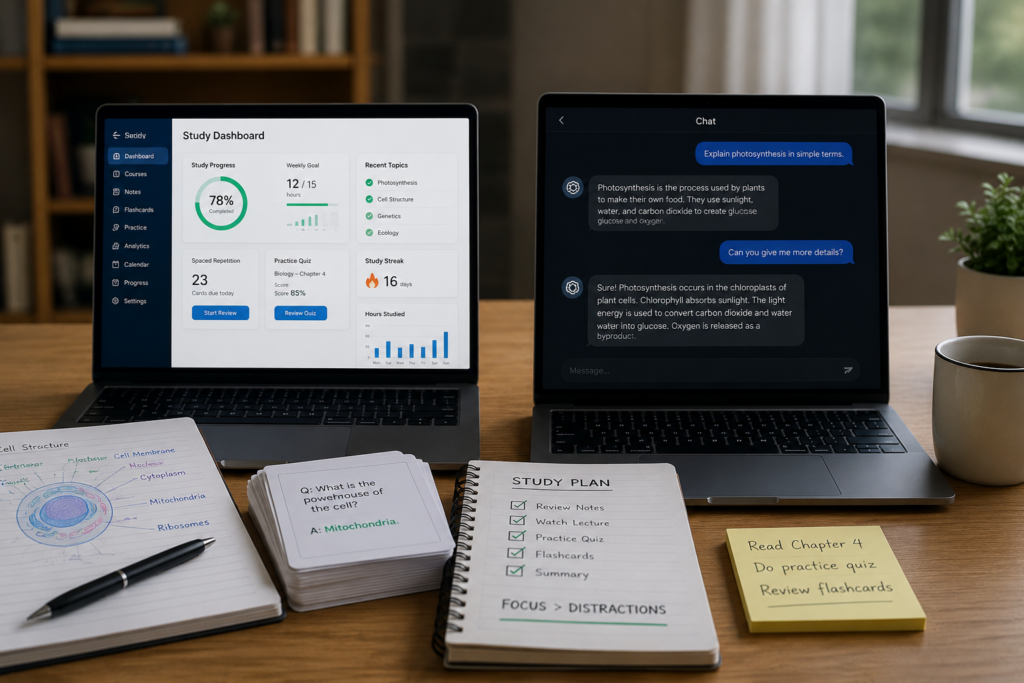
A few things show up again and again in software that outperforms ChatGPT for actual retention:
- Review intervals that shift based on how you personally performed, not a fixed weekly schedule
- Prompts that demand a typed or spoken answer before revealing the correct one
- Dashboards tracking weak spots across weeks, not just today’s session
- Questions generated straight from your own notes, so you’re not studying someone else’s syllabus
Anki still leads here even though its interface looks frozen in 2009 — and honestly, I’ve grown fond of how unfussy it is. With RemNote, your notes and your flashcards live in the same place, so you’re never bouncing between two separate systems just to review. Quizlet took a similar step forward — its AI now pulls practice questions straight from whatever document you drop in, which quietly solves something ChatGPT still struggles with: it has zero awareness of your syllabus unless you keep feeding it the same material over and over.
The Mechanics Running Underneath These Tools
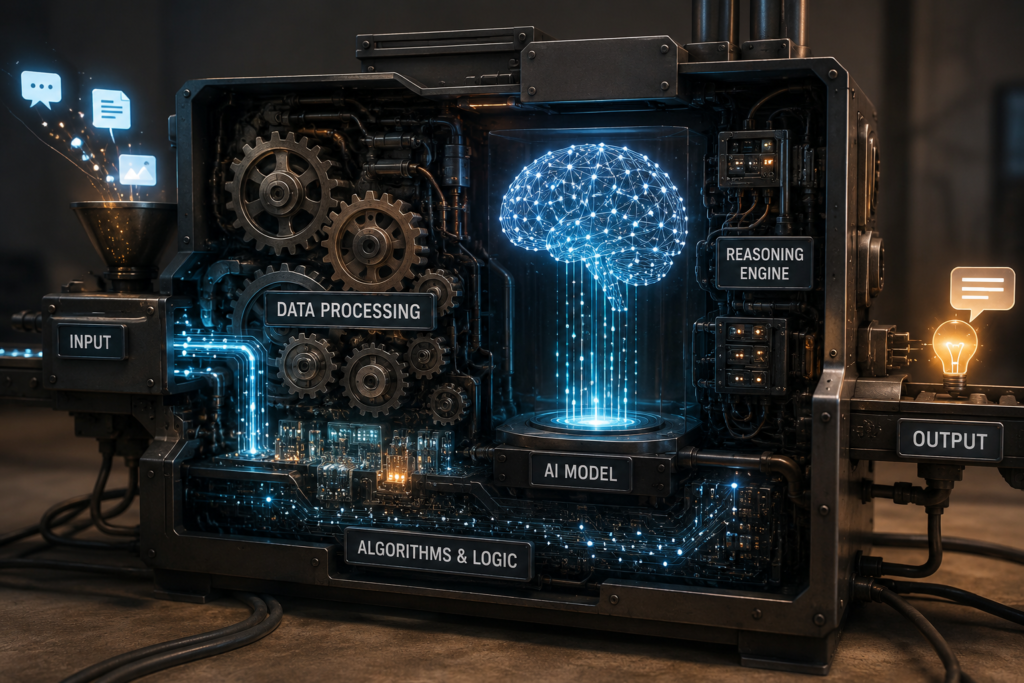
Most serious ai study tools that are better than ChatGPT rely on some descendant of the SM-2 algorithm, first built for Anki back in the late 1980s and tweaked constantly since. Every answer you give gets scored for both accuracy and confidence, and the system uses that to decide whether the next round on that item should come sooner or later. Evidence-based education research makes a strong case that spacing paired with active retrieval leaves simple re-reading far behind, and that the act of testing yourself — not just glancing over notes again — is what actually cements a memory long-term.
ChatGPT has nothing comparable running in the background. It might explain the Krebs cycle beautifully on request, but it won’t independently flag that you’re due for a review of it four days from now based on how you answered last time. There’s no scheduling engine sitting underneath the conversation.
Types and Features
These tools break down into a few distinct categories, each solving a different piece of the studying puzzle.
Spaced repetition systems — Anki and RemNote anchor this group. Cards resurface right before you’re statistically likely to forget them, based on scheduling research that predates modern AI by several decades.
Automated note-to-quiz converters — Quizlet AI and Notion AI can transform a page of scanned notes into ready-made flashcards or short quizzes within minutes, removing the manual setup that used to eat up study time before review even started.
Writing feedback platforms — Grammarly and Turnitin’s feedback tools evaluate structure, clarity, and citation consistency across multiple drafts, something a single chatbot reply doesn’t track over time.
Focus and distraction trackers — Apps like Forest and Focusmate rely on behavioral patterns rather than conversation, catching drift toward distraction before an entire study block gets derailed.
Comparison Table
| Tool | Best For | Free Tier | Tracks Progress Over Time |
| ChatGPT | Explaining concepts, brainstorming | Yes, limited | No |
| Anki | Long-term memorization | Yes, fully | Yes |
| Quizlet AI | Fast flashcard generation | Yes, limited | Yes |
| RemNote | Note-taking plus spaced repetition | Yes, limited | Yes |
What You Actually Gain by Switching
Moving away from a pure ChatGPT workflow reshapes your study sessions more than you’d expect. They get shorter, more frequent, spread across days instead of crammed into one long night — which research keeps favoring over marathon sessions. You also get blunter feedback. Plenty of students don’t realize how much ChatGPT’s friendly tone was softening their sense of how well they actually knew something, until a tool just marks the card wrong and moves on without cushioning it.
Cost matters too, and it flips the usual assumption. Anki is free, open source, and has been for years. RemNote’s free tier covers a lot of ground. Quizlet’s premium tier usually runs cheaper month-to-month than a ChatGPT Plus subscription, which quietly breaks the assumption that the more effective option always costs more.
Where These Tools Genuinely Struggle
I won’t pretend this is a flawless swap. Spaced repetition shines for facts, vocabulary, formulas, discrete chunks of knowledge — but it’s noticeably weaker at helping you build an essay argument or reason through an open-ended problem. That’s still ChatGPT’s territory. Building your own decks also eats time upfront, and a lot of people quit halfway through because card-making starts to feel like extra homework layered on top of the real homework.
There’s a learning curve too. Anki scares off plenty of new users with its dated layout, and RemNote’s outline structure takes a week or two before it clicks. So the fair conclusion isn’t “drop ChatGPT completely.” It’s closer to this: let ChatGPT handle explanation and brainstorming, and hand the memory work to something actually built for it.
A Workflow That Blends Both
Here’s the routine that’s actually held up for me and a couple of students I swap study tips with. Open with ChatGPT whenever a topic feels tangled — and don’t settle for its first explanation if it doesn’t click, just ask it to try again from a different angle. Then convert that explanation into five or six flashcards inside a spaced repetition app. Go through those cards every day, and don’t peek at the answer until you’ve committed to one yourself. Then, once a week, pull up whatever dashboard is tracking your weak spots and take those specific gaps straight back to ChatGPT for round two. Explain it, turn it into a card, pull it back from memory, then start over.
That loop uses each tool for what it’s genuinely good at. But if the question is strictly which single option wins for long-term retention, the honest answer leans toward dedicated ai study tools that are better than ChatGPT — retention was the entire reason they exist in the first place.
Mistakes I See Students Make Constantly

A few habits keep showing up no matter who I talk to. Someone will crank out a few hundred cards in a single late-night session fueled by coffee, then completely burn out trying to review the pile the next day — instead of just adding cards steadily as each class actually covers the material. Others paste entire textbook paragraphs onto a single card, which defeats the purpose since recalling one giant block isn’t the same skill as recalling a specific fact. And a lot of people quit within three days because the review queue looks intimidating, without realizing it shrinks fast once you stay consistent for even a week.
If you want to zoom out and see how AI products carve out their identity once you get past the surface-level pitch, comparing AI tool positioning has some genuinely useful angles on that.
Frequently Asked Questions
- Are ai study tools that are better than ChatGPT backed by actual research?
- Yes — spaced repetition and active recall carry decades of cognitive science support, including recent systematic reviews. ChatGPT doesn’t apply these mechanisms unless you build the structure yourself.
- Should I drop ChatGPT entirely and switch to a flashcard app?
- No, combining both usually works best. Use ChatGPT for explanations, then move key facts into a recall-based tool for actual retention.
- What’s the strongest free option in this category?
- Anki remains the most research-backed free choice, running an algorithm that most newer competitors still borrow from.
- Do these tools help with essay-based or argument-heavy subjects?
- Not really — they’re strongest with facts and formulas, while essay synthesis still leans on ChatGPT’s conversational flexibility.
Final Thoughts
If one thing deserves to stick from all this, it’s that the real debate was never ChatGPT versus everything else — it’s passive review versus active retrieval. ChatGPT explains, summarizes, and answers on demand better than almost anything else out there, and I don’t think anyone should quit using it for that. But when the question becomes whether you’ll actually remember the material three weeks later, under exam pressure, tools built around spaced repetition and forced recall do a job ChatGPT was simply never designed to handle.
That’s the honest reason ai study tools that are better than ChatGPT keep surfacing in student forums and group chats. This isn’t a trend piece, and it isn’t flashcard companies dressing up their app store numbers. What’s really going on is a structural mismatch — each tool is simply built to optimize for something different. ChatGPT optimizes for a satisfying answer right now. Spaced repetition tools optimize for whether that answer survives in your head a month later, which is really the entire point of studying to begin with.
So if you’re deciding where your limited study hours should go, here’s my honest take: keep ChatGPT open for explanations, but do the actual reviewing somewhere built for memory — Anki, RemNote, or something similar that tracks your weak spots over time. Don’t hold out for a single app that nails both jobs at once — nothing on the market has actually pulled that off yet. In my experience, the students juggling both approaches consistently beat the ones who commit to just one, and that’s really the plain, unflashy takeaway this whole comparison keeps landing on. Line up the right tool with the right moment, and the results tend to show up on their own — no need to crown one app as the single answer.

An IT career coach with 7 years of experience helping beginners map out certification paths that actually lead to interviews, not just another resume line. He’s guided dozens of career-switchers through their first AWS or CompTIA exam and writes for itechnova.io, covering IT certifications, cybersecurity, and the software tools people actually need to know.
2 thoughts on “The Brutally Honest Truth About AI Study Tools That Are Better Than ChatGPT”