

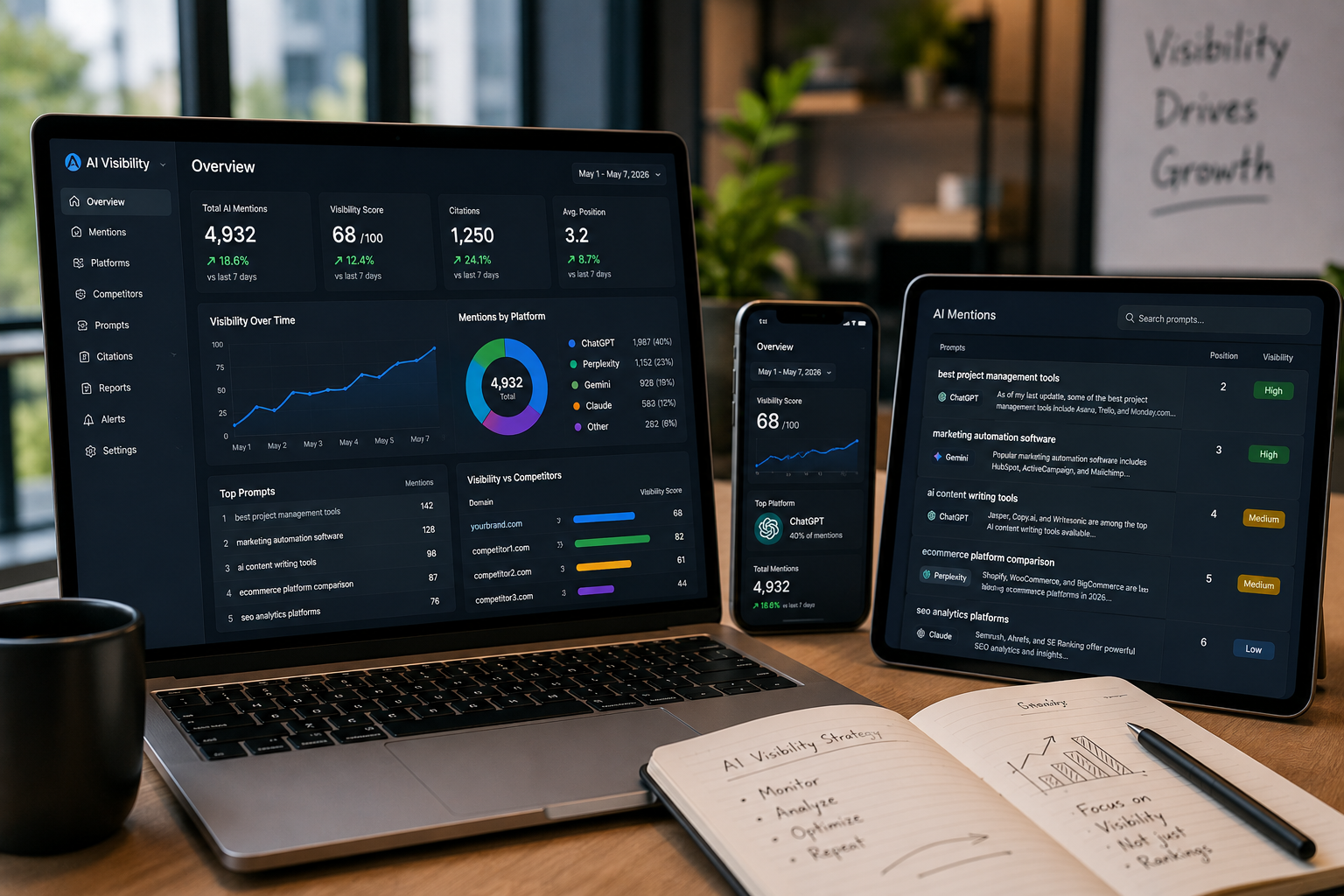
Here’s a confession — I ignored this whole category for way longer than I should have. Rank trackers used to be enough. Then a client asked me point blank why their competitor kept popping up in ChatGPT answers and they never did, and I genuinely had nothing.
That’s when hunting for the best AI visibility tools stopped being optional for me. I’ve spent months poking at a dozen different platforms since, cancelling subscriptions, keeping the ones worth the money, and this list is what survived that process.
The Old Rulebook Stopped Working
Search rankings used to tell the whole story. Rank on page one, get the click, done. That neat little formula doesn’t hold up the way it used to.
People increasingly just accept whatever answer an AI hands them and move on. No scrolling through ten blue links. If a brand isn’t part of that generated answer, it’s essentially left out of the conversation entirely — regardless of how well it ranks anywhere else.
The scale of this shift caught a lot of marketers off guard. AI-generated summaries now show up across a meaningful slice of everyday queries, and that number skews even higher when someone’s comparing options or clearly ready to buy something.
For the mechanics behind why this happened, GEO strategy explainer from Search Engine Land breaks it down well.
What Separates a Real Tool From a Dashboard With a Nice Logo
Not every platform in this space earns its price tag. Plenty are basically old-school trackers with an AI sticker slapped on top.
The ones worth using pull actual prompt data rather than assuming what people type into a chatbot. They watch more than a single model, because ChatGPT alone tells you maybe a third of the picture. And critically, they explain why a rival got picked up in an answer while you didn’t — not just the raw fact that it happened.
Sentiment matters here too. Being mentioned isn’t automatically good news if the AI keeps framing your brand as the cheap fallback option when your whole pitch is premium quality.
Best AI Visibility Tools Worth Actually Paying For

Pricing gets buried on a lot of these review sites, so let’s not do that here.
Profound
Enterprise teams gravitate toward this one, and I get why. It’s built around genuine prompt-volume data — real questions people type into AI systems — combined with analytics on how AI crawlers actually read your site. Budget-heavy teams who like detailed reporting will get the most mileage here. Just know it’s a sales conversation to get started, not a five-minute signup.
Semrush AI Toolkit
For teams already inside the Semrush ecosystem, this is the obvious next step. They’ve taken over a decade of search infrastructure and stretched it across LLM tracking, pulling granular results by model along with the exact source URLs feeding those mentions. Entry pricing sits around $99 a month, and it climbs from there depending on scale.
Otterly.AI
This one’s for the smaller operations. Straightforward AI-search monitoring aimed squarely at SMBs and agencies, clean dashboards, and pricing that starts near $29 a month. It won’t match the enterprise tools feature-for-feature, but as an entry point it does the job without draining a budget.
Peec AI
Berlin-built, GDPR-first, and refreshingly generous with seats — unlimited, actually, which matters more than people realize once agencies start adding client accounts one by one. Clean reporting, agency-friendly, priced from roughly €89 monthly.
Scrunch AI
The technical pick. It tracks exactly which AI crawlers — GPTBot, ClaudeBot, PerplexityBot, that whole family — are hitting which pages on your site, paired with a push toward making sites more machine-readable for AI agents. Dev-heavy teams tend to like this one the most.
Quick Comparison Table
| Tool | Best For | Starting Price | Standout Feature |
| Profound | Enterprise teams | Custom/sales-led | Prompt volume + crawler analytics |
| Semrush AI Toolkit | Existing Semrush users | ~$99/mo | Cross-LLM tracking, source URLs |
| Otterly.AI | SMBs, agencies | ~$29/mo | Simple alerts, affordable entry |
| Peec AI | EU-based agencies | ~€89/mo | Unlimited seats, GDPR-first |
| Scrunch AI | Technical/dev-heavy teams | Custom | Bot-level crawl analytics |
A Trend Quietly Reshaping This Space
Confidence-interval scoring is popping up more this year, and honestly it’s a smart move. Ask an AI the same question twice, get two different answers — that’s just how these systems behave. A growing number of platforms now report a statistical confidence range instead of one shaky, volatile percentage, which makes the whole scoring system feel less like guesswork.
Prompt-demand panels are the other shift worth watching. Rather than assuming what your audience might ask an AI, these panels show you the real questions people are typing in. That’s genuinely useful when deciding what to build next.
Where It Overlaps With Positioning Work
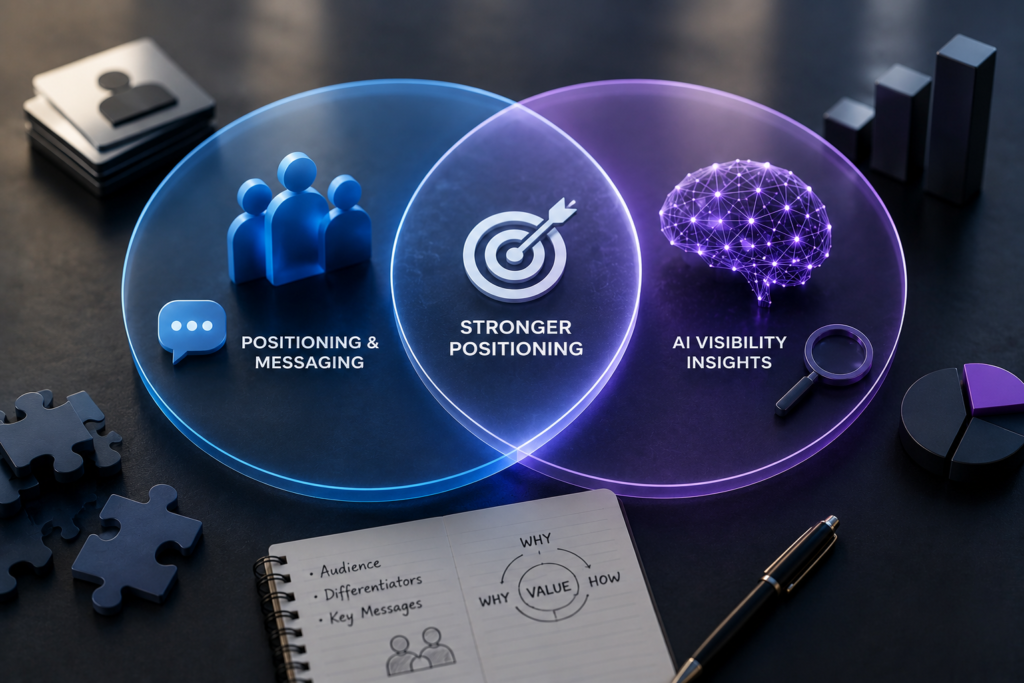
If your team already handles competitor positioning and messaging, it’s worth folding AI visibility data into that same process instead of treating it as a separate workflow. Knowing how AI describes you versus a rival is basically positioning data, just from a new source. This brand positioning tactics piece covers some of that groundwork.
Picking the Right One for Your Situation
Skip the tool with the loudest marketing and start with your actual budget ceiling, because prices here swing wildly — anywhere from $29 to several hundred dollars monthly.
Next, think about where your customers actually spend time. B2B buyers lean toward ChatGPT and Perplexity more often. Consumer brands might care more about what shows up in Google’s AI Overviews. Coverage varies a lot between platforms, so match the tool to where your audience actually is.
For Product and Reporting Teams
Product teams juggling this alongside roadmap work might find value in a broader look at what a product manager toolset usually includes, since a lot of the reporting habits and prioritization logic overlap with what visibility tracking demands.
What Each Plan Tier Typically Includes
| Tier | Typical Monthly Cost | What You Get |
| Starter | $0–$50 | Basic mention tracking, one or two engines |
| Mid | $50–$150 | Multi-engine tracking, sentiment scoring |
| Enterprise | $150+ | Crawler analytics, prompt panels, dedicated support |
Where Teams Usually Go Wrong
Chasing raw volume over accuracy trips up a lot of people. A platform running thousands of simulated prompts pulled straight from an API, instead of actual user interactions, can completely miss response formats like tables, maps, or comparison cards. That quietly skews the data without anyone noticing.
The other common mistake is treating a single week’s snapshot as the full truth. AI-generated answers shift constantly. This whole space behaves a lot like early-stage SEO did — you’re building authority in a genuinely new channel, and starting the measurement habit early pays off later. One rough week doesn’t mean the strategy failed.
Turning Numbers Into Something People Read
Since a lot of this reporting eventually needs to go somewhere visual for stakeholders, learning to visualize your metrics properly saves a ton of manual chart-building later. Nobody on a leadership team wants to read a raw export.
Where This Category Is Headed

I don’t expect things to settle down anytime soon. New AI engines keep launching, existing ones keep tweaking how they choose sources, and the tracking tools have to keep adjusting to match. The content that keeps getting cited tends to share one trait — it’s genuinely clear, well-sourced, and easy for a machine to trust, and that hasn’t changed even as the measurement tools around it get fancier.
For the more technical side of content structure, Search Engine Land’s Overviews content playbook gets into specifics worth bookmarking.
One More Resource Worth Bookmarking
For teams exploring the wider AI landscape beyond just visibility tracking, this look at wider automation options is a decent supplementary read for context on adjacent tooling.
Frequently Asked Questions
What exactly is an AI visibility tool?
It’s software that tracks how often and how favorably your brand gets mentioned inside AI-generated answers from tools like ChatGPT, Gemini, and Perplexity, similar to how rank trackers monitor Google positions.
Are AI visibility tools different from regular SEO tools?
Yes. Traditional SEO tools track keyword rankings on search engine results pages. Best AI Visibility Tools track brand mentions and citations inside AI-generated conversational answers instead.
Is there a free Best AI Visibility Tools I can start with?
A few platforms offer limited free tiers or free snapshots, though most meaningful tracking features sit behind paid plans starting around $29 a month.
How often should I check my AI visibility scores?
Weekly checks work well for most brands, since AI answers can shift noticeably between model updates, but monthly reviews are fine for smaller teams with limited bandwidth.
Can small businesses actually benefit from these tools?
Definitely. Entry-level platforms like Otterly.AI were built specifically for smaller budgets, so you don’t need enterprise pricing to start understanding your AI presence.
Do these tools also track competitors?
Most mid-tier and enterprise platforms include competitor tracking, showing you which brands are getting cited for the same prompts you care about.
Why does my brand show up in ChatGPT but not Google AI Overviews?
Each AI engine pulls from different data sources and weighs authority signals differently, so strong visibility in one doesn’t guarantee visibility in another.
What’s the biggest mistake brands make with Best AI Visibility Tools?
Treating it as a one-time audit instead of ongoing tracking. AI answers change often enough that a single snapshot goes stale within weeks.
Final Thoughts
Choosing the right Best AI Visibility Tools really comes down to being honest about budget and how much your team can actually act on the data it produces. There’s no real point paying for crawler-level enterprise analytics if nobody’s going to touch the technical recommendations coming out of it. On the other hand, brands with real budget and genuine ambition to shape how AI describes them will likely see Profound or Semrush’s AI Toolkit pay for itself once the visibility gaps become obvious.
For anyone starting from scratch, my honest advice is don’t overthink the first choice. Start with something affordable like Otterly.AI or Peec AI, get familiar with what the data even looks like week to week, then upgrade once a specific problem becomes clear. Most brands don’t need bot-level crawl analytics on day one — they need a straight answer to whether ChatGPT even knows they exist, and if it does, whether it’s saying anything worth repeating.
This whole space is still young, and that’s honestly the opportunity hiding in plain sight. Brands measuring this now, while plenty of competitors still treat AI search as a non-issue, are quietly building a head start that’s going to be hard to catch up to later. Give it six more months and this stops being optional.

An IT career coach with 7 years of experience helping beginners map out certification paths that actually lead to interviews, not just another resume line. He’s guided dozens of career-switchers through their first AWS or CompTIA exam and writes for itechnova.io, covering IT certifications, cybersecurity, and the software tools people actually need to know.
3 thoughts on “Best AI Visibility Tools That Actually Show Real Results in 2026”