

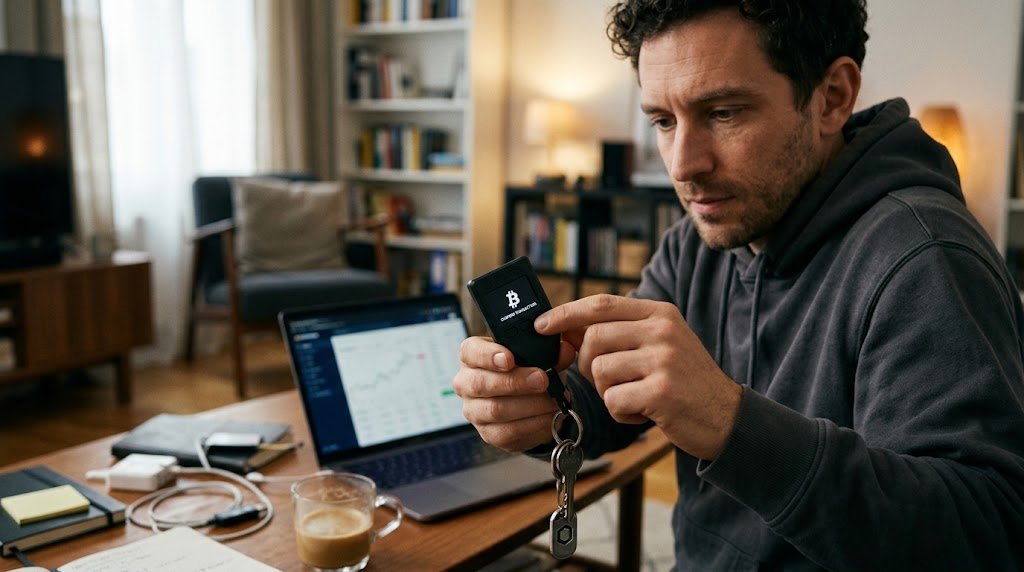
People argue about this like it’s a cricket final. Crypto is the future, crypto is a scam, pick your side and shout. Meanwhile someone with three thousand dollars in savings just wants to know whether they’ll get burned. They type “is cryptocurrency safe” into a search bar and get either a sales pitch or a eulogy.
So, is cryptocurrency safe? Depends which part you’re pointing at. The big networks, Bitcoin above all, have gone almost seventeen years without anyone cracking them. The apps, exchanges and strangers orbiting those networks are where people lose money, and they lose a lot of it. If any of the vocabulary still sounds like fog, a short primer on how coins and blockchains fit together will help.
The practical answer to “is cryptocurrency safe,” for anyone in a hurry: use a regulated exchange, protect your login with an authenticator app, never send coins to someone who contacted you first, and only hold what you could watch drop 80% without losing sleep. Follow those and you sidestep most of the sad stories. Ignore them and you’re the sad story.
What “safe” even means here
Ask a hundred people what safe means for money and they’ll mean a hundred things. With crypto it splits into four separate worries that people constantly mash together.
Is the network itself breakable? Will the company holding your coins stay honest and solvent? Will you, personally, mess up a password or fall for a story? And will the price be anywhere near where you left it?
I get annoyed when someone answers one and acts like the rest are settled. A Bitcoin fan tells you the chain has never been hacked (true) and then waves off his cousin who lost a year of savings to a fake “support agent” on Telegram. A skeptic points at a price crash and calls it all fraud, which is a market complaint wearing a security costume. Different problems, different odds. Any honest take on “is cryptocurrency safe” has to say which one it means.
What helps me is naming which worry a headline belongs to before I react. Exchange breached? Second worry. Coin down 40% in a week? Fourth. Stranger in your inbox promising to double your money? That’s the third, almost every time. So when a friend texts me “is cryptocurrency safe,” my first move is asking which of those four they mean.
Underneath all four sits something I’ll keep repeating because every story below hangs on it. Crypto transfers don’t come back.
No chargeback desk, no manager who’ll reverse it because you were tricked and sound sincere about it. Fans call that finality and I understand the appeal. It also turns every slip into a permanent one.
Can someone hack Bitcoin itself?

Nobody has managed it so far. The ledger started in January 2009 and nobody has rewritten it or printed coins from nothing, which is odd when you think about the money sitting on top and the number of clever people who’d love a payday. On the hacking side of “is cryptocurrency safe,” Bitcoin has the best record of anything in the space.
Mostly it comes down to ugly arithmetic. Thousands of computers hold copies of the ledger. To change history you’d have to out-compute most of them for hours while everybody else watched and refused to go along. I covered how mining works in another piece, but the gist is that cheating costs a fortune and playing fair pays steadily.
Small coins live by different rules. A network with little computing power behind it can suffer what’s called a 51 percent attack, where one party briefly controls enough muscle to rewrite recent transactions. Bitcoin Gold and Ethereum Classic have both been through it. If you hold something obscure, the “blockchain is secure” line people use for Bitcoin doesn’t follow you there. Whether “is cryptocurrency safe” applies to a small coin is a separate question, and usually the answer is worse.
Then there’s everything stacked on the chains: smart contracts, lending apps, bridges that shuttle coins between networks. Code written in a rush and audited lightly tends to break, and when it breaks the money is gone in minutes. The Ronin bridge lost over $600 million in 2022. In February 2025 the Bybit exchange lost roughly $1.5 billion, the biggest single crypto theft on record, and from what I’ve read the chain behaved perfectly. The attackers got in through the way the company approved transfers.
So when someone asks “is cryptocurrency safe” in the narrow sense of the big chains’ own code, my answer is yes, as far as anyone can tell. The layers on top make no such promise.
Quantum computers come up every time I discuss this, so briefly: researchers do worry that very powerful machines might one day threaten the signatures guarding wallets. Nobody I’d trust calls it a this-year problem, and developers are already talking about upgrades. I’d file it under “keep one ear open” and leave it there.
Where the money really disappears
Read any forum thread about crypto risk and it’s all hacks. Exchange breached, protocol drained, villain in a hoodie. Makes good TV, and anyone typing “is cryptocurrency safe” expects that story. It’s not where most of the cash goes.
Chainalysis estimated that about $17 billion went to scams and fraud in 2025, and impersonation scams alone grew more than 1,400% on the year before. Outright theft from hacks came to roughly $3.4 billion in the same report. They also say the scam number only covers what could be identified, so the real figure is probably higher. These are 2025 numbers, released in early 2026, and the whole breakdown is in their 2026 scam report if you like charts that make your stomach sink. For the question “is cryptocurrency safe,” the scam figure matters more than the hack figure.
Hacks have a nasty quirk, though: they bunch up. A handful of giant breaches usually make up most of a year’s damage, and a big share of 2025’s was pinned on North Korea-linked groups, which Chainalysis says stole more than $2 billion in total.
That’s state-level crime, and a stronger password won’t stop it. But a normal holder is far less likely to meet a government hacking unit than a friendly stranger on WhatsApp. That’s the uncomfortable answer to “is cryptocurrency safe” for most people: the danger is mostly persuasion, not code.
Think of the attacker as someone talking you into opening the door.
Scams you’ll probably meet first
Anyone asking “is cryptocurrency safe” in everyday life should read this section twice, because it’s where ordinary people actually lose money.
Start with the slow one. A message arrives, wrong number, polite, maybe a little flirty, on Instagram or LinkedIn or a dating app. Weeks of chat. Eventually they mention a trading platform that’s been treating them well, and would you like to see? The site looks professional, your balance climbs, a small withdrawal even goes through. So you add more. Much more.
Then the withdrawal button suddenly wants “taxes” or a “verification fee.” Investigators call it pig butchering, which is an ugly name for an ugly script. Chainalysis links a lot of it to scam compounds in Cambodia, Myanmar and nearby, where trafficked workers are forced to run the chats. Nobody searching “is cryptocurrency safe” imagines they’ll be the one chatting with a stranger for six weeks.
The fast one is impersonation. A caller claims to be from your exchange’s fraud team, or a bank, or some government office. Something’s wrong, your funds are at risk, so move them to a safe account now. That safe account belongs to the scammer. AI voices and fake video have made these calls much harder to wave off on instinct alone.
Crypto ATMs deserve their own rant. Those kiosks in corner shops turn cash into coins in a couple of minutes with barely any friction, and scammers love marching older relatives to them while keeping them on the phone. AARP says scams steering people to those machines rose almost tenfold between 2020 and 2023, and the FTC counted more than $1.4 billion lost by people paying scammers in crypto during 2024. If a kiosk shows up in any story where somebody else is giving you directions, it’s a scam. I can’t find a softer way to say that.
Then the technical tricks. Lookalike wallet addresses planted in your history so you copy the wrong one. Fake exchange sites bought as ads at the very top of search results. Token launches where the creators pull the money out the second enough people buy in. “Airdrop” links that ask you to sign something harmless-looking that quietly hands over your wallet.
One thing people get wrong is who falls for it. The assumption is naive, older, bad with computers. Early FTC data (2021 to 2022, so old by now) found people aged 20 to 49 about three times as likely to report a crypto scam as older groups. Take it loosely, but it matches the pattern: confident, internet-fluent people get caught partly because they’re sure they can’t be.
The FTC’s own advice boils down to rules worth taping next to your monitor. Nobody legitimate demands payment in crypto. Guaranteed returns are a lie. A new romantic interest who wants to teach you about investing is a red flag with a siren attached. That list is the cheapest answer to “is cryptocurrency safe” I know.
Exchanges fail, and FTX proved it
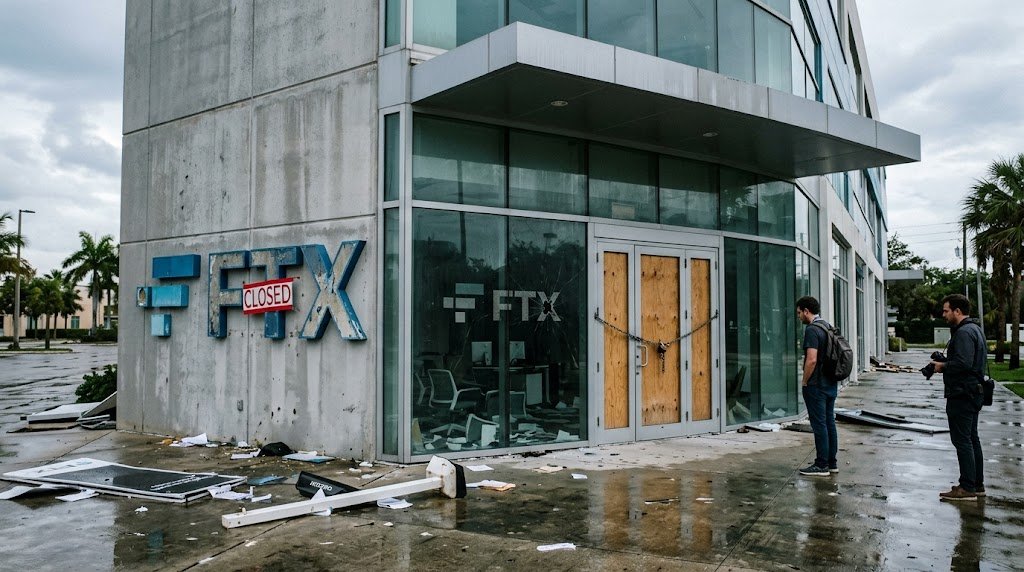
In early November 2022, withdrawals at FTX froze. Days later the company filed for bankruptcy, and customers learned that money they believed sat safe in their accounts had been lent to a sister trading firm, Alameda Research, and lost. Its founder, Sam Bankman-Fried, was convicted of fraud in November 2023 and sentenced to 25 years in March 2024.
What sticks with me isn’t the courtroom drama. It’s how normal FTX looked from outside. Sleek app, naming rights on a basketball arena, a Super Bowl ad. Nothing on screen told you that your balance was a promise from a company misusing the cash. Plenty of ordinary customers had done what seemed sensible: picked a famous exchange and left their coins there.
Many waited years in the bankruptcy process, and my understanding is that claims were valued at the crashed prices of November 2022, which hurt more once markets recovered. If it matters to you, check where the payouts stand now. FTX is the example I reach for whenever someone asks “is cryptocurrency safe” on a big, famous exchange.
Mt. Gox did the same thing in 2014 with different branding and lost hundreds of thousands of bitcoin. Exchanges repeat this because they’re companies, and companies can lie, gamble or get breached.
All of which brings up a slogan worn smooth by repetition: “not your keys, not your coins.” True! Also incomplete, and it bothers me that people who recite it so rarely mention what self-custody costs a normal person. Holding your own coins swaps company risk for you-risk, and your slips are just as final as theirs. More on that below.
If you’re going to use an exchange anyway, what should you look for? A license in a serious jurisdiction. A track record of years, not months. Public commitments to keep customer assets separate from company money. Audits that show what they owe as well as what they hold, since proof-of-reserves screenshots sometimes show only the happy half. And how they behaved the last time the market panicked, whether withdrawals kept flowing or support went silent.
None of it guarantees anything. If one platform holds more than you could stand having stuck for years, you’re over-exposed there. My answer to “is cryptocurrency safe” on an exchange for years at a stretch is no, not in large amounts.
No deposit insurance, by the way
Part of the answer to “is cryptocurrency safe” is a plain legal fact about insurance. An insured US bank covers deposits up to $250,000 per depositor, per bank, per ownership category. Crypto gets nothing like that. The FDIC says plainly that deposit insurance doesn’t apply when a non-bank such as a crypto company fails, and doesn’t cover crypto assets themselves. Its FDIC fact sheet on this is two pages and worth ten minutes of your evening.
Confusion lingers because some crypto firms muddied it on purpose or by accident. In 2022 the FDIC and the Federal Reserve sent a joint cease-and-desist letter to Voyager Digital over claims implying customers were insured, and the FDIC then sent letters to FTX US and four other companies over similar false suggestions. Often the nuance was that cash sat at an insured partner bank while the crypto sat nowhere near any protection.
Cute marketing, expensive misunderstanding.
Some platforms advertise their own insurance, and it may well exist, but read what it covers. In the published terms I’ve seen, it tends to cover narrow events like theft from the company’s own storage, not “the company went bust” and not “your account got phished.” The ceilings look small next to what these platforms hold.
Same caution, softer, applies to brokerage-style protection like SIPC in the US. It was written with securities in mind, and whether a particular crypto product falls under it depends on details you should get from the provider in writing. If a company can’t tell you plainly who protects your balance in a failure, assume nobody does. So when someone asks “is cryptocurrency safe” if the platform collapses, the legal answer is that you’re mostly on your own.
Holding your own keys
Moving coins off an exchange into a wallet you control takes the company out of the picture. It puts you in, and you’re a shakier component than you’d like to believe. This is where “is cryptocurrency safe” turns personal.
A wallet doesn’t actually contain coins. It holds the secret that proves you control them, usually twelve or twenty-four words called a seed phrase. Whoever has those words has your money, from anywhere, no permission required. Lose them and there’s no reset button. I wrote a longer wallet explainer if you want the mechanics.
Failures bunch up in a few places. Someone photographs the phrase for “safekeeping,” the picture syncs to a cloud account, and that account gets breached months later. Someone asks a question in a Telegram group and a helpful stranger DMs within a minute offering to fix it, which of course requires the phrase (no real company will ever ask for it, ever). A hardware device bought from a marketplace reseller shows up already set up with a seed the seller knows.
A paper copy burns in a house fire, or lives in a drawer nobody else knows about. And the quietest failure of all: the owner dies without telling anyone how to reach the coins, which is how a startling amount of crypto ended up frozen forever.
Hot wallets, meaning apps on your phone or browser, are handy and exposed to malware and phishing. Cold storage, a hardware device kept offline, is far harder to attack remotely and far easier to lose, break, or forget the PIN for. My own rule of thumb is spending money in the hot wallet, savings in cold storage, and written recovery notes that someone you trust could follow without you in the room. People ask “is cryptocurrency safe” in a personal wallet, and my reply is that it’s safe from companies and exposed to you.
I’m not sure everyone needs a hardware wallet. With a couple hundred dollars, a reputable exchange with a well-locked account may be the lower-risk home, because the biggest danger would be you botching self-custody. Once the balance makes your stomach tighten, I’d move the bulk off.
Is cryptocurrency safe to hold long term?

Now the other meaning of safe: will the value survive?
No promises there, and no setup fixes it. A perfectly secured wallet can still hold something worth a quarter of what you paid, so “is cryptocurrency safe” has two answers depending on whether you mean theft or price. Bitcoin went from roughly $69,000 in late 2021 to about $16,000 a year later, a fall of around three-quarters.
Coins ranked below it often fell further, and some never climbed back. Terra’s UST, a so-called stablecoin meant to hold a dollar, spiralled toward zero in May 2022 and took tens of billions of dollars in market value with it. Thousands of memecoins launched on a joke and a promise now trade at nothing, because most were never meant to be more than a quick trade.
Stablecoins need a separate mention. The fiat-backed ones, USDC and USDT for example, mostly hold the dollar peg by keeping reserves, so their safety rests on what’s in those reserves and who checks. The US passed the GENIUS Act in July 2025 to set rules for payment stablecoins, a real step forward as far as I can tell, though rollout was still going on at time of writing, so look up where it stands when you read this. Designs where a second token props up the peg deserve suspicion by default. Terra is the warning label.
Margin trading turns a risky asset into a dangerous one. Exchanges will happily lend you money to bet ten times your deposit, and a 10% move against you wipes it out. Most people I read about who say crypto “destroyed them” were using borrowed money, or had put everything into one token that a friend recommended.
My view, and I hold it loosely: Bitcoin and Ether act like volatile assets with a few years of history behind them. Thousands of other tokens act like lottery tickets with marketing departments. Lumping them all into one bucket called “crypto” is how people end up holding the second kind while believing they own the first.
Size matters more than selection. A starting position you could watch fall 80% without changing your life is a reasonable ceiling for most people, and I’d go lower if the money has a job in the next few years, like a flat deposit or school fees. If you want a step-by-step on making a first purchase, set your ceiling before you open any app, because deciding it while prices flash on screen goes badly. Buying in installments is mostly an emotional crutch. It won’t beat the market on average and I won’t pretend otherwise, but it stops people panic-buying at the top.
Crypto against a normal bank account
When someone compares crypto with a savings account, this table answers it bluntly (US-centric, at time of writing).
| Question | Insured US bank account | Crypto on an exchange | Crypto in your own wallet |
| Deposit insurance | Up to $250,000 per depositor, per bank, per ownership category | None for the crypto itself | None |
| Reversing a tricked payment | Sometimes possible, depends on method and speed | Rarely; blockchain transfers are final | Never |
| Who can freeze it | The bank, on legal or fraud grounds | The exchange, on legal or compliance grounds | Nobody |
| Forgotten password | Bank resets it after ID checks | Support can usually recover the account | Funds gone if the seed phrase is lost |
| Fraud help | Dispute process, fraud teams | Varies widely by platform | Yourself |
| Price swings | Stable in nominal terms | Large | Large |
The table doesn’t call it safe or unsafe. It shows which protections you trade away. Anyone weighing “is cryptocurrency safe” against a savings account should treat it as the honest answer, though banks aren’t flawless either. They freeze accounts, charge fees, and in some countries can’t be trusted at all.
The point is narrower. Crypto swaps protections you rarely think about for freedoms you’ll probably use less often than you imagine. For some people that’s a fair trade. A lot of buyers never realize they made it.
A setup that cuts most of the risk
Whether “is cryptocurrency safe” gets a comfortable answer for your situation comes down to habits like these. Nothing here makes risk vanish. It moves you out of the pool where most reported losses happen.
Buy only through a licensed exchange you’ve researched for more than five minutes, and skip anything you found through an ad or a DM. Lock the account with an authenticator app or a hardware security key instead of text-message codes, which can be hijacked through SIM swaps. Give crypto its own email address, used nowhere else, with a strong password from a manager.
If the platform offers withdrawal allowlists and a waiting period for new addresses, switch both on. They’re annoying, and that’s exactly why they work. Before any large transfer, send a small test one first, and check the whole address, not just the first and last few characters, since lookalike addresses copy those on purpose. Bookmark the real sites and apps, and never reach an exchange through a search ad or a message link.
Treat any unrequested contact about your crypto as hostile until proven otherwise. Hang up, then call back on the number printed on the official site. And write down, offline, how a trusted person could reach your holdings if something happened to you. Not fun to do. Worth it.
The same everyday security habits that protect your bank login and email apply to all of this, and people who already have those habits tend to coast through crypto without drama.
My favorite and least technical rule: whenever somebody is hurrying you, the transfer waits a day. Real opportunities survive a day. Scams usually can’t, because urgency is the engine that makes them run. I tell non-technical friends who ask “is cryptocurrency safe” that this rule alone cancels most scam stories.
After all of that, the honest reply to “is cryptocurrency safe” turns into “much safer,” not “yes.” Sealed-vault safe it will never be.
Who should skip it
Some people shouldn’t hold crypto at all, and I’d rather say so out loud.
If the money is next month’s rent, stay out. Anyone carrying high-interest debt will do better paying it off than chasing any return crypto offers. Plenty of people feel a physical jolt watching a number fall (no judgment, I do too), and for them the volatility costs more in bad decisions than gains can repay.
Gambling problems and round-the-clock markets full of lottery-ticket tokens make a rough pairing. And if the person pushing you to buy is someone whose motives you can’t verify, wait. For these people, “is cryptocurrency safe” is the wrong question. The better one is whether it fits their life right now.
Emergency funds belong somewhere else entirely. That job goes to a savings account.
None of this makes crypto bad. It makes it a poor fit for certain jobs, the way a motorbike is a poor fit for moving a sofa.
Legal and tax loose ends

Readers ask “is cryptocurrency safe” legally, and the only honest reply is “depends on your country.” Rules differ wildly. Some places license exchanges and tax gains on a clear schedule, others restrict or ban parts of the activity, and plenty sit in between with guidance that shifts every few months. Look up what your own country says about holding, trading and reporting before you buy.
The blockchain is anonymous” won’t help you with a tax office, and it isn’t anonymous anyway, since transfers leave a public trail that investigators have become very good at following.
In many countries, selling, swapping one coin for another, or spending crypto can trigger reporting even when no cash touches your bank account. Keep a simple record of dates, amounts and prices from day one. Rebuilding that history after three years of trading is miserable. This is general information, not tax advice, and a local accountant who has handled crypto before is worth the fee.
FAQs
Is cryptocurrency safe for a complete beginner?
It can be, if you start small, use a licensed exchange, lock your account properly, and ignore anyone who contacts you first. The risk is mostly scams and price swings, not the technology.
Can you lose all your money in crypto?
Yes, through a scam, a collapsed platform, a lost seed phrase, or a token going to zero. “Is cryptocurrency safe” never means “can’t lose it all,” so keep the amount modest and spread it sensibly.
Is Bitcoin safer than other cryptocurrencies?
Generally yes: it’s older, larger, more closely examined, and its network is far harder to attack than small coins. It still falls in price and still attracts scams aimed at its holders.
Is cryptocurrency safe on an exchange?
Some exchanges are much better run than others, but none is guaranteed. FTX showed that a polished app can sit on a broken company, so don’t park more than you can afford to have frozen.
Do I need a hardware wallet?
Not for small amounts. Once the balance would hurt to lose, a device bought directly from the maker, plus a safely stored recovery phrase, is a sensible step. That’s the best upgrade for anyone who keeps asking “is cryptocurrency safe” about their own savings.
Final Thoughts
Keeping score: the code at the heart of the big blockchains has held up better than almost anyone predicted in 2009. The money around it hasn’t been so lucky. Scams outweigh hacks by a wide margin in the best numbers available, exchanges can fail without warning, no deposit insurance sits behind your balance, and the price can drop three-quarters while you’re still making up your mind. None of that is hidden. It’s just scattered across a hundred articles, each telling one slice.
My short verdict on “is cryptocurrency safe”: safer than the scary headlines suggest if you’re boring, and far riskier than the ads suggest if you’re not. When someone asks me directly, I try not to answer with a flat yes or no, because either one sends them off with a false picture. I say it’s as safe as the number of avoidable mistakes they’ve already ruled out. Fewer weak spots, fewer ways to get hurt.
What I keep coming back to is that finality. Every quiet protection a bank gives you, the reversals, the resets, the dispute desk, is something crypto removes, and the same property is what its fans love. Both are true at once. It makes me uneasy when advocates describe only the freedom or critics describe only the danger, and I’d rather you carry both into your decision.
The practical wrap is short. Pick one trustworthy place to buy. Set up login protection on day one, not in month three. Decide your ceiling before you decide your coin. Ignore everybody who messages you first, including the friendly ones. Write recovery steps for someone you trust. And keep the amount at a level where a bad year is an annoyance, not a catastrophe. That’s my whole answer to “is cryptocurrency safe,” squeezed into a checklist.
My perspective, for what it’s worth, is that crypto rewards boring behavior. The people who come out fine in the stories I’ve read are rarely the clever ones. They’re the ones with a slow, dull process who said no to exciting offers.
If you’re thinking about starting, take the habits from the setup section, copy them somewhere you’ll see them, and work through them before you send a single dollar anywhere. If you already have coins sitting on an app you picked on impulse, a quiet hour this week to tighten the login and write down your recovery plan will do more for your safety than any market prediction. Asking “is cryptocurrency safe” before you buy already puts you ahead of most buyers. Then go look at the price a lot less often.

An IT career coach with 7 years of experience helping beginners map out certification paths that actually lead to interviews, not just another resume line. He’s guided dozens of career-switchers through their first AWS or CompTIA exam and writes for itechnova.io, covering IT certifications, cybersecurity, and the software tools people actually need to know.
1 thought on “Is Cryptocurrency Safe? Depends Who Holds the Keys”